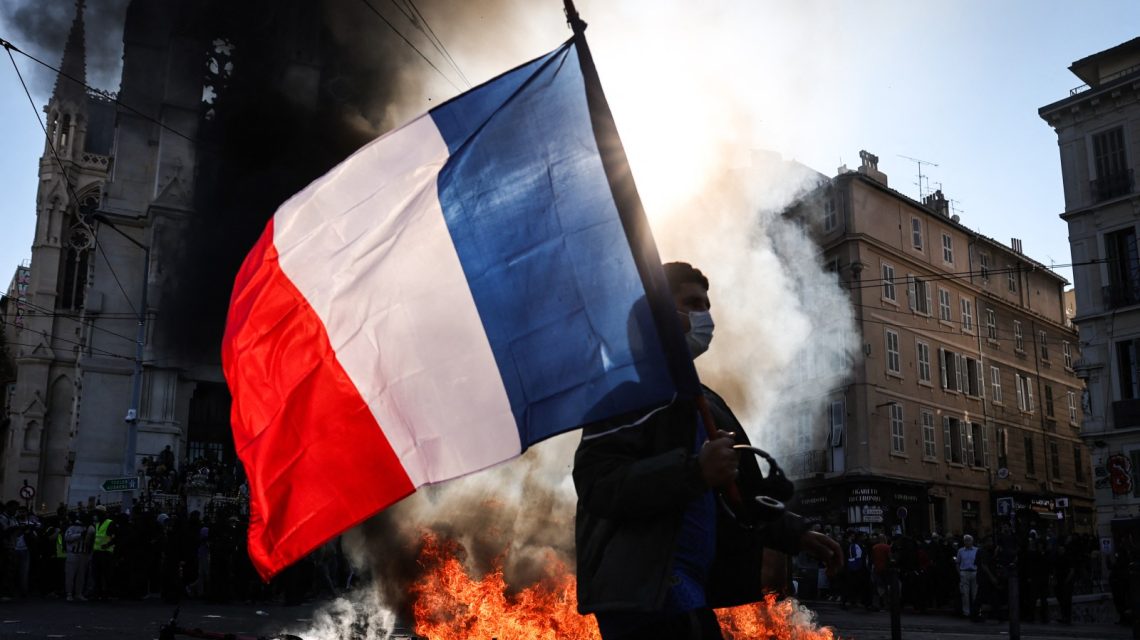
France is grappling with social and fiscal issues that could reshape its future. Since September, the nation has experienced widespread protests sparked by concerns over school staffing and funding. These protests have been fueled by broader economic difficulties and generational tensions.
Antonio Fatás, a professor of economics at the INSEAD business school, emphasized the growing sense of dissatisfaction in France. Many citizens feel that their lives are not progressing as they desire. This unrest coincides with critical political events, including budget debates and a forthcoming presidential election. These factors have turned what could have been a typical display of youthful discontent into a significant confrontation involving protesters, riot police, and differing visions for France’s future.
Observers from outside the country have described France as being “on the brink” or the “economic sick man of the Western world.” The inquiry “Will France make it?” has gained traction in public discourse. According to Fatás, the current unrest is distinctive due to the convergence of social, economic, and political factors.
The protests, which initially began in the Paris suburbs, have spread nationwide. Concerns about teacher shortages and crowded classrooms are part of a larger response against social inequality and the rising cost of living. The situation highlights a breakdown in France’s social contract. Youth unemployment, which slightly decreased to 20.6% in August, remains high compared to other countries like Germany, the United States, and the United Kingdom.
Participants from the 2018 Yellow Vest movement have joined the current protests, framing education issues alongside regional and class inequality concerns and President Emmanuel Macron’s policies.
Fiscal Difficulties
Mujtaba Rahman, managing director for Europe at Eurasia Group, described the fiscal crisis as particularly perilous. Years of budgetary mismanagement have brought France to a critical juncture. The country’s debt-to-GDP ratio and borrowing costs are concerning. France allocates approximately $100 billion annually to education, much of which goes to retired teachers’ pensions. Paul Krugman, a Nobel laureate in economics, has criticized this financial strategy as unsustainable.
Prime Minister Sébastien Lecornu’s recent budget plan, which aims for €54 billion in savings, faces significant challenges from a divided parliament and public discontent. The solutions to the fiscal crisis must come from an already strained budget. Fatás points out that financial constraints today are more complex than in prior years.
The fiscal and social challenges in France are interlinked. The country has been severely affected by a global bond sell-off, which has been exacerbated by ongoing protests. According to Zsolt Darvas of Bruegel, further budgetary gridlock could unsettle bond markets, increasing pressure on yields.
Political Pressure
France is experiencing heightened political volatility. The 2024 election resulted in a fragmented parliament, complicating governance and financial reform. With Macron leaving office in May, there is no clear successor from the political center. This instability has given rise to the far right, particularly the EU-skeptic National Rally party, which is leading in the polls for the 2027 election.
Darvas highlights that future policy decisions will dictate whether France enters a deep fiscal crisis or stabilizes its finances through a credible fiscal program. However, with an election approaching, reaching a compromise to address the fiscal and social issues is nearly impossible. The protests provide political figures an opportunity to promote their agendas. National Rally President Jordan Bardella has called on citizens to make informed political choices, emphasizing readiness to restore order.
The initial unrest over school conditions has evolved into a widespread movement involving students, unions, and other discontented groups. The protests have even influenced neighboring countries like Spain, Portugal, and Italy, where similar socioeconomic grievances have emerged.
The critical question remains: will this crisis be a temporary challenge, or will it fundamentally alter the Republic’s political landscape? Current political and economic conditions suggest the latter scenario is more probable.
 Australian Lawmaker Helen Haines Injured in Car Incident
 Calls for Action Amid Rising Violence Against Palestinian Christians in West Bank
 Texas Data Centers: Water Use Reporting and Political Implications
 Tensions Rise Between U.S. and Ukraine Over Intelligence Sharing and Energy Policies
 Justice Department Charges Noncitizens in California Election Dispute
 Democratic Candidates Aim to Reclaim Political Ground in Montana