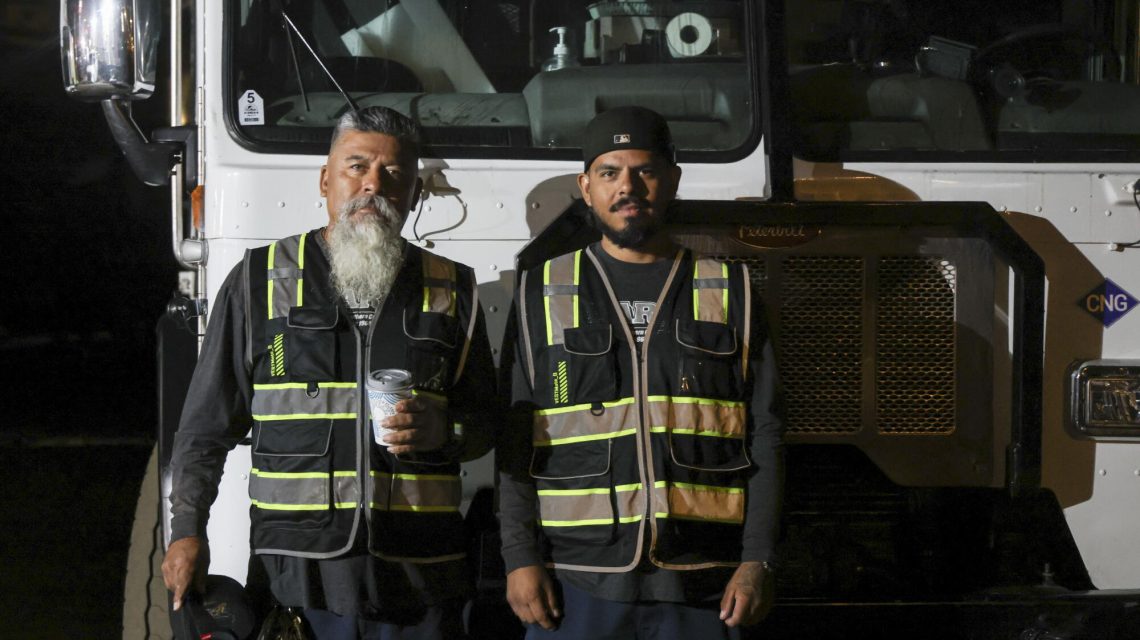
Salomon Olea starts his day early in Escondido, California, leaving his home of nearly three decades at 4 a.m. After packing a lunch, he picks up his son, Angel, from a nearby apartment complex. They embark on their daily route, driving commercial trash trucks for a private waste company. Their work involves emptying recycling and trash bins from various establishments across San Diego’s northern suburbs. This labor-intensive job provides a stable life for Salomon, enabling him to afford a home and raise a family.
Salomon, 55, belongs to a generation that found manual labor jobs could fulfill their American dream of homeownership. Between 1980 and 1990, men without college degrees experienced wage growth, allowing many, including construction workers and mechanics, to buy homes. However, this trend has declined, with rising home prices and stagnant wages making homeownership elusive for today’s manual laborers. Angel, at 33, works to save for a house but continues to rent.
Angel compares his situation to his father’s achievements, noting he and his peers feel left behind. Despite working similar hours and taking overtime, homeownership remains a distant dream. Angel reflects on why the same path doesn’t yield the same results.
We all came here almost expecting what our fathers accomplished. We’re doing the same amount of hours, taking overtime that’s available. … What are we doing wrong?— Angel
Salomon and Angel meet at the truck depot in north San Diego before sunrise. Joined by others, including drivers from Tijuana, they prepare for their routes. Safety videos and address lists guide them. Angel listens to ’90s House music as he drives his front loader Mack truck. His father follows behind.
Inspired by his father, Angel pursued a career in sanitation. As a child, Angel aspired to be a trash man, despite classmates’ laughter. Salomon started in sanitation at age 23, having held short-term jobs in construction and retail. His entry into sanitation drove him to pursue homeownership in Escondido for his family’s stability. He worked extensive hours to afford a house and achieved this goal in 1998.
Salomon’s determination stems from personal history. Having lost his parents early in life, he immigrated from Mexico to the U.S. as a teenager. Becoming a U.S. citizen and buying a home marked significant milestones in his life. His perseverance underscores the pursuit of the American dream.
Working conditions for Angel include unexpected challenges, such as encountering homeless individuals in trash bins. These moments underscore San Diego County’s housing issues, where a substantial portion of income goes toward unaffordable housing. Angel shares anecdotes of people sleeping in cars in parking lots along his route.
The housing thing, it’s affecting everyone. Some worse than others.— Angel
Angel’s family rents in Escondido, paying $2,800 monthly for a two-bedroom apartment shared among five. The couple hoped to buy a house close to Escondido but faced setbacks when savings diminished due to unforeseen expenses like car repairs and dental fees. Nonetheless, they continue weighing options, including relocating to afford a home.
The day for Salomon and Angel lengthens with rising temperatures, intensifying the work’s challenges. At various locations, the trash bins range from cafeteria scraps to business refuse. Salomon and Angel finish their work at a landfill and a recycling center, respectively, before heading home. They arrive back in Escondido 14 hours after departure.
The Olea family’s evenings are filled with simple pleasures and exhaustion. Salomon often eats and relaxes before bedtime, while Angel spends time with his children after a long day. Conversations during their commute reflect Angel’s frustration over achieving his father’s milestones.
Most of your cousins don’t have houses. It’s not like you’re failing. Most everyone has the same problem. It’s different times.— Salomon
This article is part of an initiative exploring the financial struggles faced by low-income workers in California and efforts to bridge the economic gap.
 Cargo Plane Crash at Miami International Airport
  Marine Veteran Suing Oregon School District Over Curriculum Reimbursement
  Freddy’s American Adventure: From Soccer to College Football
  Tennessee Execution Halted as Issues Persist with Lethal Injection Protocol
  Judge Dismisses Case Against Former Olympian Over Lincoln Memorial Incident
  Minnesota Family Files Civil Rights Lawsuit Over ICE Agent Shooting