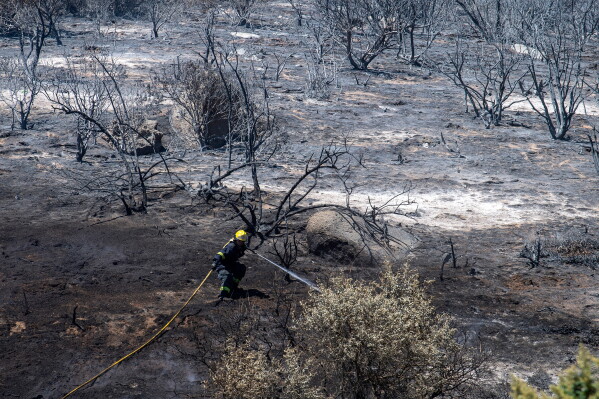
This summer, the planet seems to be ablaze with wildfires. However, despite severe fires in Europe and North America, global burning statistics have hit record lows. This is largely due to Africa and Asia managing to control fires more effectively. Experts attribute these contrasting trends to human activities impacting the Earth.
Contrasting Fire Trends
Fire scientist Mike Flannigan from Thompson Rivers University in Canada notes the paradoxical nature of rising wildfire incidents versus declining global totals. He emphasizes that both observations are valid. In Spain, wildfires have reached over 193 square miles, setting a record for the nation. Although European wildfires are closing in on the 2025 peak, figures from national wildfire centers show that in Canada and the United States, this summer’s wildfire land area is at least 25% above the 10-year average, more than double the figures from decades ago. Smoke has impaired air quality across large regions.
University of Colorado fire scientist Jennifer Balch highlights the increasing size, intensity, speed, and frequency of fires in North America and Europe. She warns of the rise of extreme wildfires globally.
Fires Decline in Africa and Asia
Despite the widespread wildfires, Copernicus, a European climate center, reported record-low global fire emissions this July. These decreased fires are attributed to changes in agricultural practices, improved fire management, and demographic shifts in Africa and Asia, according to Mark Parrington, a senior scientist at Copernicus. This year’s carbon emissions from fires are the lowest recorded since satellite monitoring began nearly 25 years ago, roughly half the levels seen in the early 2000s. UCLA water and fire scientist Park Williams states that Africa influences global fire activity significantly. Sub-Saharan Africa’s fire activity has reduced dramatically over the past 25 years.
Statistics from Copernicus indicate that more than three-quarters of global emissions from burning vegetation come from Africa and Asia, with less than one-eighth from North America and Europe. Traditionally, African savanna fires were annual, impacting global fire totals differently than intermittent forest fires elsewhere. Human interventions, such as urban and agricultural land development, are limiting savanna fires and creating barriers to prevent spreads, explains University of California Merced fire scientist John Abatzaglou. Fires in Asia and the Amazon often clear land for farming, reflecting human-driven demographic changes.
Human Influences on North American and European Fires
In North America and Europe, extreme fires show human influences rooted in climate change. Abatzaglou asserts that the burning of fossil fuels heightens temperatures, creating drier conditions optimal for fires. Five experts in the field confirm this. Balch notes the loss of natural nighttime recovery periods for forests and firefighters. Flannigan adds that increased heat draws more moisture from the earth, facilitating easier burning and extending the fire season.
Larger populations in areas affected by climate-induced extreme fires experience more property damage, explains Flannigan. Although North America historically excelled in fire suppression, climate change challenges this capability, says Abatzaglou.
El Nino’s Impact on Future Fires
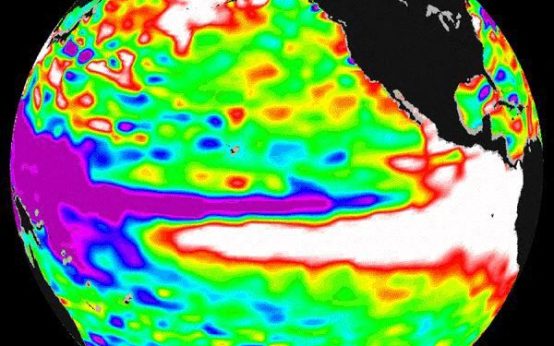
The developing strong El Nino is projected to exacerbate fire activity soon, particularly in tropical regions. Experts highlight South America’s preparations for increased fire risk. Williams anticipates intensified fires in the Amazon, Southeast Asia, and Western Pacific regions due to El Nino. While it brings more rain to the U.S. West, El Nino can cause increased grass growth in deserts, fueling grass fires.
Examples of destructive grass fires include incidents in Los Angeles in 2025 and Hawaii in 2023. Regardless of El Nino dynamics, scientists stress enhanced planning and adaptation efforts in North America and Europe. Prescribed burns to manage vegetation and reduce fire risks are essential.
Balch underscores the inevitability of landscapes burning, stressing the importance of preparedness.
“It’s not a question of whether our landscapes are going to burn, it’s the question of when they’re going to burn,” she states.
 Atlantic Ends September Without a Hurricane for First Time Since 1994
  Bobcat Sightings and Conservation Efforts in Illinois
  2026 El Niño: A Historical Comparison and Future Projections
  U.S. Records Warmest September in History
  Swiss Glaciers Show Effects of Ice Loss Amid Global Warming
  Climate-Resistant Rock Glaciers: Hidden Water Resources