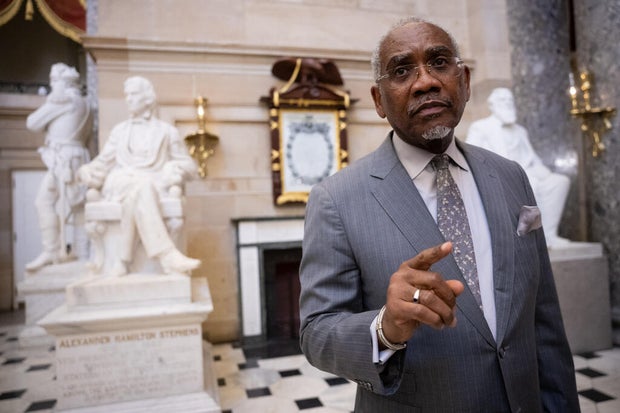
On Thursday, House Republicans postponed a vote concerning the withdrawal of U.S. forces from Iran, amid efforts by the Trump administration to secure congressional backing for the ongoing conflict. The vote was originally scheduled for a Democratic-proposed war powers resolution designed to restrict President Trump’s authority to engage with Iran militarily without congressional consent.
Due to anticipated insufficient votes to oppose the measure, GOP leaders opted to delay the vote. Representative Gregory Meeks of New York, the resolution’s sponsor and the leading Democrat on the House Foreign Affairs Committee, commented, “We had the votes without question and they knew it, and as a result they’re playing a political game,” highlighting the political dynamics at play.
“Polling shows most Americans disapprove of the U.S. taking military action against Iran.”
The ceaseless war started nearly three months ago. Although a ceasefire, effective since early April, has temporarily halted direct combat, uncertainties persist. Economic repercussions, including disrupted global shipping and increased gas prices resulting from the stalemate at the Strait of Hormuz, further complicate the situation.
Recently, the House narrowly dropped a war powers resolution in a 212-212 draw, influenced by three Republicans voting in favor. Meanwhile, the Senate advanced a similar resolution earlier this week, with notable support from four GOP senators and absences of three. Despite marking only the initial steps, it symbolizes progress for the Democrats after several unsuccessful attempts to address Iran-related issues.
Republican House Leader Steve Scalise explained the vote delay was to accommodate absent lawmakers, yet Speaker Mike Johnson refused to comment. Democratic leaders criticized the Republicans’ decision as “cowardly,” stressing the need for accountability for service members endangered by the ongoing conflict.
As skepticism over the war grows, public opinion shows general disapproval, questioning the effectiveness of the U.S. military intervention and straining congressional patience.
While most Republicans favor President Trump’s initiatives to dismantle Iran’s nuclear capacity, evolving viewpoints inside the party are raising concerns about the legal timeframe for unapproved military missions. A 1973 law mandates a 60-day limit for presidential wartime maneuvers before requiring congressional war declaration or authorization.
Representative Brian Fitzpatrick from Pennsylvania expressed intentions to vote for the resolution, stressing adherence to the law: “We’re past 60 days so it’s got to be brought to us to vote on.”
The White House argues the War Powers Resolution’s rules are no longer applicable due to the ceasefire, even as President Trump hinted at potential military escalation if Gulf allies fail to negotiate a resolution. On social media, he advised military leaders to prepare for a larger-scale engagement “on a moment’s notice, in the event that an acceptable Deal is not reached.”
The momentum toward passing the resolution may lead to legal conflicts over authoritative control concerning military affairs. If approved by both congressional chambers, the concurrent resolution could bypass Trump’s signature. However, Trump challenges the 1973 legislation — crafted during the Vietnam War era to reclaim Congress’s influence over foreign conflicts — as unconstitutional.
Senator Thom Tillis of North Carolina, who previously opposed the resolutions, criticized Defense Secretary Pete Hegseth’s inadequacies, indicating he could support military force authorization under different circumstances.
 The Trump Team’s Challenge to the Military Leadership
  Maryland First State to Restrict Electronic Pricing in Grocery Stores
  Activists Push for Nationwide Ban on Child Marriage in the U.S.
  Democratic Hopes and Historical Warnings in 2026 Senate Race
  Republicans Face Challenges Amidst Cost of Living Concerns
  A Different Kind of Fall for Congress This Year