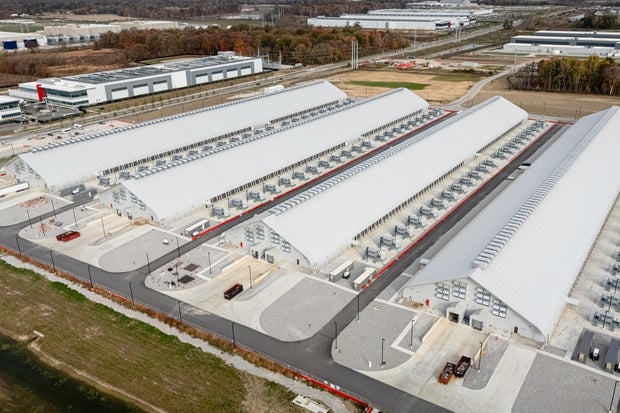
With data centers emerging around the United States, the energy infrastructure costs and who handles them have become hotly debated topics. A recent study offers some clarity. The study, conducted by Cornell University researchers and published in Nature Energy, reveals that in 2025, rising energy costs associated with AI data centers hit lower-income, rural households the hardest. These households bore a disproportionate share of the financial burden compared to the data centers.
The analysis focused on energy demand and infrastructure growth between 2020 and 2025 across four major U.S. power grids. Researchers examined data from 4,000 existing and proposed data centers nationwide. The findings indicate that the AI boom and data center expansion increased energy costs, placing the most economic strain on those who benefit the least from the technology.
Data centers raised wholesale power prices unevenly. These costs are set in an open marketplace where electricity is traded in bulk between power generators and utilities before it’s transmitted to consumers. The grids already under pressure saw the highest price increases. In California’s Southern Bay Area, data centers reportedly increased wholesale energy prices by nearly 20% last year. In Texas’ Dallas-Fort Worth, the price rise in 2025 was around 17%. Conversely, New York experienced minimal changes due to fewer data centers.
Higher wholesale prices impacted energy consumers; residential customers incurred substantial transmission costs built for data centers. The study reports that spending across the four power grids rose from $2 billion in 2020 to $34.2 billion in 2025, with data centers accounting for $8.25 billion of infrastructure costs last year. Residential users were responsible for nearly $3.5 billion but were billed over $16 billion, while data centers received bills totaling about $3 billion.
“It’s kind of a chicken-and-egg problem,” said Fengqi You, a study author. “You need to expand the power infrastructure to build a data center, but before they build, they’re not using energy.”
Residents in rural and lower-income areas saw their bills soar. In some cases, these costs were 76% larger than those for urban residents. The study highlighted that despite data centers clustering near metropolitan hubs, the financial burdens often spread into surrounding suburban and rural areas due to policies dictating regional energy cost-sharing. These policies need reevaluation.
There is a noted “paradoxical mismatch” in states with the largest energy price hikes tied to data centers and those using AI technology. States like West Virginia and Ohio faced significant cost increases yet reported low generative AI usage compared to others. Some states even saw price hikes due to AI data centers far away, such as New Jersey and Pennsylvania, who contributed to power grid updates linked to growth in Virginia.
“You don’t have to live next to a data center to help pay for its power infrastructure,” You noted. “Grid connections link communities across states, and cost-sharing rules connect them financially.”
Researchers suggested data centers should reduce energy use during peak demand or pay states directly for additional energy demands they place on power grids. Since regulating data centers was central in November’s midterm elections, You hopes these findings will aid lawmakers in making informed decisions.
“This issue connects directly to many state and congressional debates,” You emphasized. “We aim to provide science-based evidence and data for stakeholders to understand and weigh options.”
 The Daily Routine of Klook’s CEO Focused on Fitness and Efficiency
 The Jensen Huang Controversy: Silicon Valley’s Divided Opinion
 California Lawsuit Against OpenAI: Key Details and Implications
 Updates on Key International and Domestic Events
 E.l.f. Cosmetics Breaks Makeup World Record at TwitchCon
 Understanding Credit Freeze, Fraud Alert, and Identity Monitoring