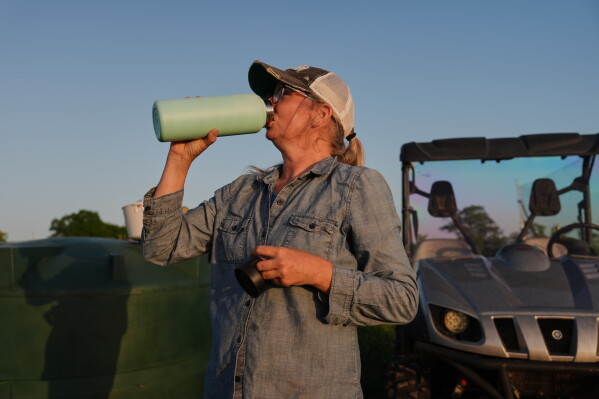
Annie Woods, a farmer in Brooksville, Kentucky, continues her work despite the lingering heat as the sun sets. Climate change drives extreme weather patterns, resulting in events like heat waves, flooding, and droughts. Farmers face challenges like reduced planting times and potential crop loss due to early-season heat followed by freezing temperatures.
Woods acknowledges that these heat waves are becoming routine. A recent heat dome, a high-pressure weather system trapping heat over areas, has impacted farmers growing specialty fruits and vegetables. Human-induced climate changes increase such heat waves and other severe weather conditions. To adapt, many farmers adjust their harvest schedules and work during cooler parts of the day. However, they often lack the safety nets that commodity crop farmers, such as those growing corn and soybeans, might have.
Melissa Widhalm from the Midwest Regional Climate Center warns about the health risks of heat domes for farmworkers. Woods works during the morning and evening and takes several water breaks to avoid dehydration. She manually plants and harvests unlike larger farms using machines. If heat intensifies during harvest, she uses a tent from farmer’s markets to create shade.
Impact on Crop Quality and Harvest Schedule
Heat and humidity do not only pose risks to humans; they can harm crops too. High temperatures, combined with rain, can bring diseases and pests that destroy crops. Currently, Woods prioritizes harvesting heat-sensitive crops like salad greens. She provides vegetables and herbs to local restaurants and a community-supported agriculture program.
Excessive heat affects harvested crops’ quality. This concern extends to seedlings meant for fall crops, which Woods keeps cool in a barn until they germinate, then move to a greenhouse with fans. Regular checks and watering are critical to keeping the plants alive.
Other farmers, like Paul Rasch in Iowa, have also faced shorter harvest windows due to heat. His fruit orchards require more rapid harvesting of delicate fruits like raspberries. His crew starts work as early as 6 a.m. to finish before the midday heat.
Crop Diversity as a Buffer
Both Woods and Rasch grow a variety of crops. This strategy protects against losses from weather events affecting specific crops. Woods notes that some crops will succeed even if others face challenges.
Specialty crop insurance differs from that for commodity crops. These farmers are more vulnerable to extreme weather, yet face challenges accessing insurance. Federal crop insurance primarily covers single crops with one growing season. Smaller farms cultivating diverse crops often find the insurance process cumbersome. Programs offering farm revenue coverage exist but are underutilized due to complexity.
Woods relies on her community-supported agriculture program for adaptability. It allows crop diversity to counteract the effects of heat, floods, and drought. By participating, customers support her farm throughout the season, regardless of which vegetables thrive.
 Swiss Glaciers Show Effects of Ice Loss Amid Global Warming
  Climate-Resistant Rock Glaciers: Hidden Water Resources
  Senators Reach Bipartisan Agreement on Permitting Reform
  Experts Warn of Critical Period for the Colorado River
  Future Cities: Ambitious Projects Aiming for Innovation and Sustainability
  Supreme Court Case Suncor vs. Boulder: Implications for Accountability in Climate Change