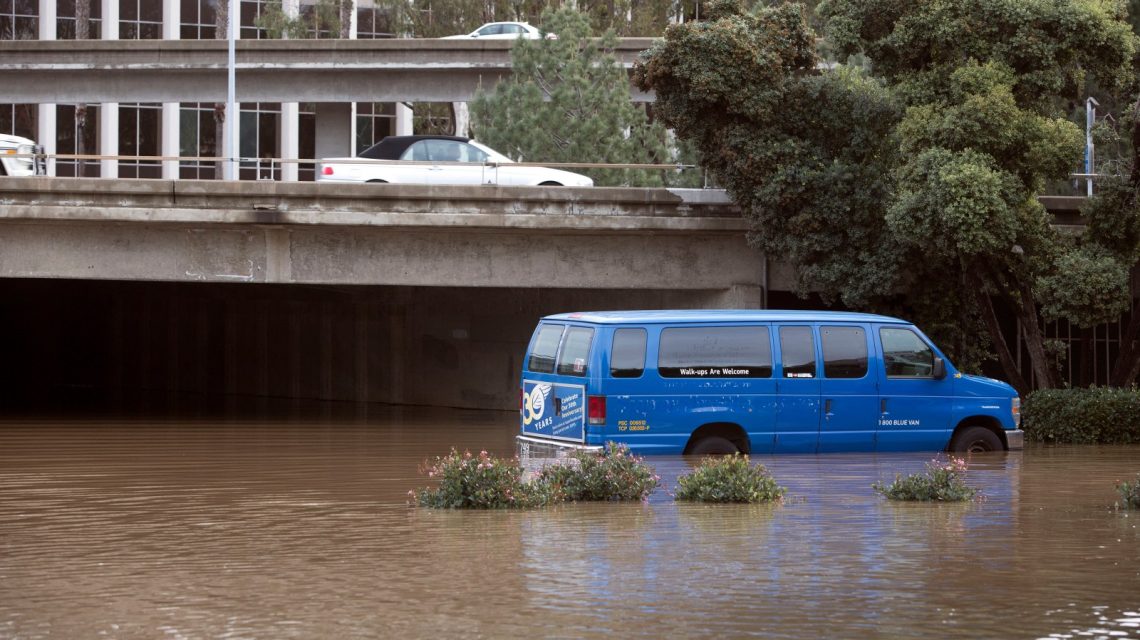
A potential historic El Niño event may heighten flood risks across several regions in the United States in the near future, as warned by weather specialists. Meteorologists have indicated that the most significant increase in flood risk is anticipated in California and the southern U.S., with the threat likely to peak during winter months.
Understanding El Niño
El Niño is a recurring climate phenomenon marked by warmer Pacific Ocean waters, influencing global temperature and precipitation patterns. The current El Niño, already record-breaking, is forecasted by federal experts to grow stronger by year-end and potentially reach unprecedented levels from October to December.
States at Risk
Heather Zons, a meteorologist with The Weather Channel, reported that El Niño heightens the subtropical jet stream, leading to above-average rainfall between Southern California and Florida. She noted heightened concerns for Southwest and South Florida areas, particularly from January to March.
Areas like Arizona and New Mexico may be especially susceptible due to geographical factors such as mountains and steep slopes funneling water onto roads and communities. Zons emphasized the potential for rapidly flowing water to overwhelm dry washes, severely affecting infrastructure.
South Florida faces challenges of a different nature. While its sandy soil typically manages rainfall well, increased development has reduced areas for water absorption, raising the chances of nuisance flooding.
Fox Weather Meteorologists Ian Oliver and Greg Diamond corroborated these risks, emphasizing California and the southern regions due to a stronger southern jet stream branch that could spur storm systems. This pattern might also increase flooding and severe weather threats in the Southeast, especially evident in fall and reaching its zenith during winter.
“Given the approaching historic strength of this El Niño, the upcoming cold season may be marked by numerous impactful weather events,” they noted.
Jane Minar, another Fox meteorologist, highlighted that California and Gulf Coast states typically face increased flooding risks during an El Niño winter. She pointed out a pattern suggesting January and February could be wetter months, raising flood potential for Florida, the Carolinas, and California.
Zons also pointed to the Great Lakes and Ohio Valley as regions to watch, referencing past heavy rainfall periods. She mentioned that milder El Niño conditions might lead to more rain than snow during winter.
 Swiss Glaciers Show Effects of Ice Loss Amid Global Warming
  Climate-Resistant Rock Glaciers: Hidden Water Resources
  Senators Reach Bipartisan Agreement on Permitting Reform
  Experts Warn of Critical Period for the Colorado River
  Future Cities: Ambitious Projects Aiming for Innovation and Sustainability
  Supreme Court Case Suncor vs. Boulder: Implications for Accountability in Climate Change