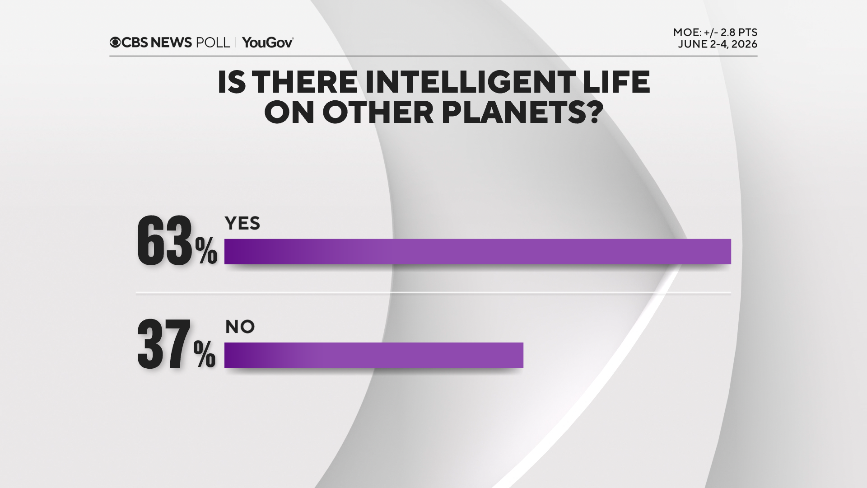
A recent survey suggests that most Americans believe intelligent life exists beyond Earth. Roughly 20% of respondents think these beings have already made contact with humanity, while others expect contact at some time in the future. Fascination and curiosity would likely greet alien visitors, although some unease remains.
Government disclosure of UFO files has fueled belief in visits by extraterrestrial life. A significant portion of those who viewed UFO videos in the released files believe in these encounters. The survey shows that eight out of ten people suspect government concealment of UFO information. The belief that intelligent life exists on other planets has grown stronger since 2010, with increased acceptance across various demographics.
Seventeen percent of survey participants report having seen objects they considered UFOs. This aligns with past Gallup polls, though percentage numbers have increased since the 1970s. Men report UFO sightings more than women. Those who claim to have seen UFOs mostly accept the presence of intelligent extraterrestrial life. A mixture of curiosity, excitement, and nervousness characterizes feelings about meeting such beings.
Opinions split on the origin of UFO sightings. Some attribute them to alien spacecraft, while others believe human or natural causes explain sightings. Individuals who believe in extraterrestrial life are more apt to view UFOs as alien visits. In contrast, skeptics lean toward earthly explanations.
A substantial number of Americans are aware of the government’s files and videos on Unidentified Anomalous Phenomena (UAP), also known as UFOs. About 40% have watched these releases. Viewing such material increases the likelihood of belief in alien visits to Earth, particularly among viewers.
Overall, Americans largely think the government holds undisclosed UFO knowledge. This belief transcends party affiliations, with Democrats, Republicans, and independents agreeing on potential government withholding.
This CBS News/YouGov survey involved 2,023 U.S. adults between June 2-4, 2026. The demographic weighting followed the U.S. Census American Community Survey guidelines. The margin of error is ±2.8 points.
 Climate-Resistant Rock Glaciers: Hidden Water Resources
  California Voters to Decide on $7.5 Billion State Research Fund
  Dutch Review Board’s Euthanasia Ruling and International Debate
  Israeli PM Commends Heroic Actions in Flight Emergency
  Rabbi and Jewish Leaders Criticize Adam Brody for ‘Genocide’ Comment
  Flydubai’s Emergency Landing Highlights Cockpit Security