
On September 22, during the United Nations General Assembly, U.S. President Donald Trump issued significant threats with global implications. He declared potential military action in Latin America and suggested total destruction for the Iranian government and civilians.
These declarations raised alarms due to their conflict with established international norms. The U.N. Charter explicitly outlaws threats of aggression. Furthermore, international humanitarian law, which is integrated into U.S. legislation, bans indiscriminate threats against civilians. These laws are crucial to maintaining peace and protecting non-combatants in conflict zones.
The president’s statements, made before an audience of diplomats and international leaders, openly disregarded these legal frameworks. Such actions not only breach the protocols that govern global peace efforts but also constitute a violation of international law.
Despite these violations, there remains a path for accountability. Foreign governments and U.S. legislators have the means to challenge and address the president’s actions. The involvement of these bodies is pivotal in upholding the rule of law and maintaining global stability.
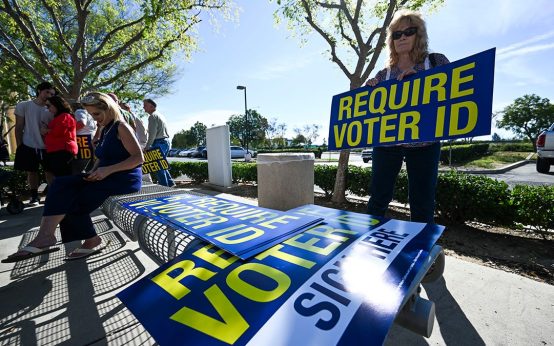 California Ballot Measure on Voter ID Spurs Debate
  Nevada Governor Race Intensifies as Lombardo and Ford Compete
  Trump Initiates Inquiry into Federal Reserve Governor’s Conduct
  Political Debates Intensify as Election Day Nears
  Revamping Congressional Functionality through Electoral Incentives
  The Nebraska Test: Evaluating Political Promises