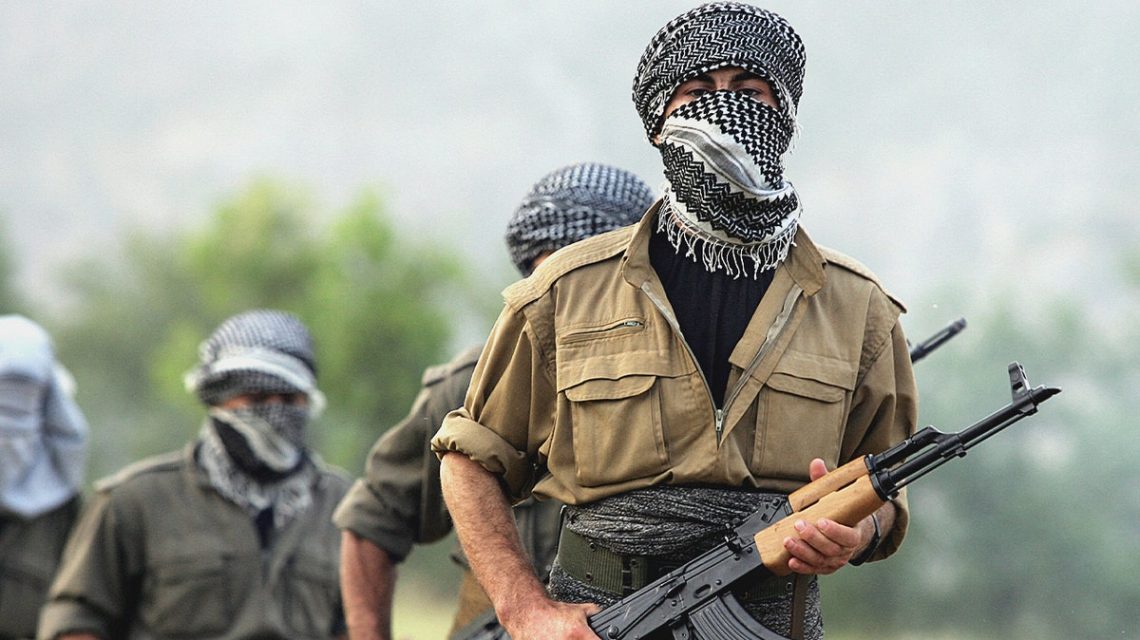
Iran’s Islamic Revolutionary Guard Corps (IRGC) is encountering increased clashes in the country’s Kurdish-majority west. This development raises concerns among experts that a dormant Kurdish insurgency may be gaining momentum as Iran and the U.S. continue delicate negotiations. Kurdish groups have recently been seen as a possible pressure point against Iran during the U.S.-Israeli conflict. However, some Kurdish voices worry they could be left vulnerable as diplomatic efforts between Washington and Tehran intensify.
Recent attacks in western and northwestern Iran have resulted in casualties among Iranian security forces. Reports indicate four Iranian security personnel were killed, with several others wounded in separate attacks. The Jerusalem Post, referring to Iraq’s Shafaq News, revealed details of these incidents.
Two IRGC members were reportedly killed, and two others injured in an “armed terrorist attack” in Paveh, a border city in Kermanshah Province, as reported by Tasnim News, which is close to the IRGC. In Baneh, gunmen targeted a police checkpoint, killing two officers and injuring three others, including a young child. Clashes have spread to cities like Paveh, Marivan, and Mahabad, according to Kurdish-focused media source Rojhelat.Info.
The Paveh attack was claimed by the group Xore Heva, indicating reprisal for Iran’s handling of protests after the 2022 death of Mahsa Amini, a Kurdish woman. Amini died following detainment by Iran’s morality police for allegedly violating hijab rules.
Kurds form one of the largest stateless ethnicities in the Middle East, residing in Iran, Iraq, Syria, and Turkey. In Iran, Kurds predominantly inhabit the mountainous west and northwest regions, where accusations against Iran include political repression and military crackdowns. Iranian authorities label armed Kurdish factions like PJAK as separatist or terrorist threats. The conflict involves political dimensions tied to Kurdish demands for rights and autonomy, Iran’s separatism fears, and the IRGC’s role in quelling dissent.
Jino Victoria Doabi, head of international relations at Hiwa, discussed recent confrontations, suggesting they might indicate an escalation. She noted that Kurdish forces portrayed initial attacks as retaliatory, but the widening geographic impact hints at continued conflict.
Doabi highlighted growing Kurdish dissatisfaction with the IRGC’s assaults on Kurdish parties without accountability. Iranian President Masoud Pezeshkian revealed Iran’s Supreme Leader approved a U.S.–Iran memorandum after assurance of Iran’s rights. Critics argue the deal favors Iranian authorities.
Kurdish skepticism remains over any agreement with Iran, fearing it could empower the regime. Doabi shares this sentiment and decries decades of repression in Kurdish areas.
Kurdish factions like PJAK and its armed wing, YRK, are in focus. YRK accused IRGC of recent missile attacks on its positions, prompting defensive responses. Past reports indicated potential Kurdish fronts against Iran during U.S.–Iran conflicts, aided by Israeli support. Yet, strategic obstacles hindered decisive Kurdish action.
Turkish President Recep Tayyip Erdogan reportedly influenced the abandonment of plans to arm Iranian opposition. Despite these tensions, the latest violence doesn’t confirm a coordinated insurgency. However, the spread of clashes, Kurdish militant involvement, and their opposition to U.S.–Iran talks highlight Iran’s western regions as a pressure point for Tehran in maintaining internal control and diplomatic progress.
 Dutch Review Board’s Euthanasia Ruling and International Debate
  Israeli PM Commends Heroic Actions in Flight Emergency
  Rabbi and Jewish Leaders Criticize Adam Brody for ‘Genocide’ Comment
  Flydubai’s Emergency Landing Highlights Cockpit Security
  Former Israeli PM Naftali Bennett Commends Passengers and Crew for In-Flight Heroism
  Diplomatic Complexities Unfold at U.S. National Archives Visit