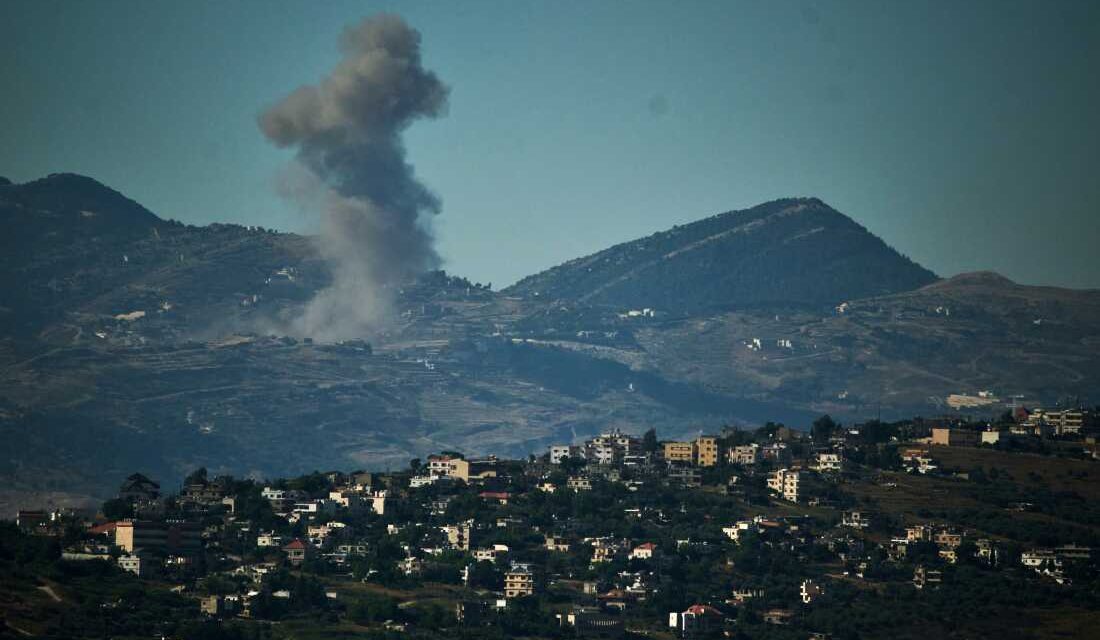
Smoke rose over southern Lebanon following Israeli military strikes, observed from northern Israel on Friday, June 19, 2026. The strikes, executed on Saturday, have claimed at least seven lives, including two children. This occurred shortly after news of a ceasefire agreement circulated.
The ongoing conflict poses a threat to an interim agreement between the United States and Iran aiming to conclude the Middle East war. According to Lebanon’s National News Agency, the strikes targeted the town of Nabatiyeh and nearby villages, with at least seven people still trapped under debris.
Mediators are actively working to cease hostilities between Israel and Hezbollah, following a significant exchange on Friday that resulted in the deaths of 47 individuals in Lebanon and four Israeli soldiers.
An Israeli military official noted that Hezbollah had launched over 50 projectiles at Israeli forces in southern Lebanon during the night. This prompted Israeli military action against the group.
The official provided this information anonymously, adhering to regulations. On Friday, Israeli ambassador Yechiel Leiter expressed on X that Israel remains dedicated to an immediate ceasefire if Hezbollah honors the agreement.
Hezbollah has publicly stated it will engage in a ceasefire if Israel consents, but no confirmation of a ceasefire has been established. A Hezbollah official, speaking anonymously, indicated ongoing efforts by Qatar, the U.S., and Iran to broker a ceasefire, though confirmation of a deal remains unverified.
Conflict Impacts U.S.-Iran Deal
The conflict between Hezbollah and Israel began shortly after the U.S. and Israel executed strikes on Iran on February 28. Hezbollah retaliated with rocket and drone attacks on northern Israeli communities, while Israel seized portions of southern Lebanon.
The interim U.S.-Iran agreement this week reopened the Strait of Hormuz, previously closed by Iran during the conflict. This closure disrupted global oil and gas supplies. The agreement also aims to restart talks on Iran’s nuclear program, a central issue in the conflict. Neither Israel nor Hezbollah are directly involved in the deal, which requires military operations in Lebanon to cease and the country’s sovereignty to be upheld.
With continued fighting, the agreement risk increases, delaying U.S.-Iran talks in Switzerland initially planned for Friday. No new date has been set.
Israeli and Hezbollah Stances
Israeli Prime Minister Benjamin Netanyahu has committed to maintaining Israeli military presence in southern Lebanon until all perceived threats are nullified. Hezbollah continues its attacks pending Israel’s withdrawal from Lebanon, aligning with Iran’s condition for the deal.
Saturday saw plumes of smoke over southern Lebanon and Israeli jets over Tyre. A strike in Barish killed a family of four. Additionally, a body was retrieved from a collapsed house in Arab Salim village, and drone strikes in Doueir and Kfar Rumman resulted in fatalities.
Netanyahu’s office has not commented on the ceasefire efforts. On Friday, he announced on X that, per his orders, Israeli forces had struck 150 Hezbollah targets.
Delayed Diplomatic Efforts
Iranian and U.S. officials postponed travel to Switzerland due to the conflict. Iran demands the cessation of the fighting as a precondition for talks. U.S. Vice President JD Vance also delayed his visit. Iran’s Foreign Ministry spokesman mentioned ongoing negotiations through mediators and anticipated discussions for a final U.S.-Iran agreement shortly.
The anticipated talks will center on Iran’s nuclear ambitions. Tehran asserts its nuclear program is peaceful, despite possessing enriched uranium nearing weapons-grade level. The International Atomic Energy Agency indicates this uranium could potentially be used for nuclear weapons, should Iran choose this path.
The anticipated negotiations in Switzerland promise to be challenging. The 2015 nuclear deal, dismantled during President Trump’s tenure, required over 18 months to finalize. The interim agreement offers a 60-day period to negotiate a nuclear deal with potential extensions.
This agreement promises substantial incentives for Iran, such as lifting international sanctions and a $300 billion postwar reconstruction fund. Following the interim deal, the U.S. lifted its blockade on Iran’s ports and permitted free oil sales. This deal also calls for the unfreezing of Iran’s assets, with timelines remaining unclear.
 British Police Arrest Man Suspected of Terror Plot
  Activists Push for Nationwide Ban on Child Marriage in the U.S.
  Investigation into Alleged Incident at Cornell University
  Rising Drone Threats Highlight Vulnerabilities in Moldova’s Airspace Defense
  Bolivia Faces Security Test Amid Unrest
  Incident on FlyDubai Flight Raises Security Concerns