The U.S. Department of Justice (DOJ) has filed lawsuits against several states, arguing that their laws illegally provide tuition benefits to undocumented immigrants at the expense of American citizens. States such as Vermont, Connecticut, and New York are now facing legal challenges over these issues.
These lawsuits are part of the Trump administration’s broader legal strategy. The administration previously targeted states like Oregon, Washington, New Mexico, and Arizona. The DOJ claims that their laws violate federal regulations that stipulate in-state benefits cannot be offered exclusively to undocumented immigrants unless these benefits are equally available to all U.S. students.
Federal Law and State Compliance
Assistant Attorney General Brett A. Shumate emphasized that the department is committed to protecting the rights of American students. “This Department of Justice will not tolerate American students being treated like second-class citizens in their own country,” Shumate stated. The DOJ’s legal actions are part of a commitment to ensure that federal laws are upheld nationwide.
Differential Tuition Costs
The contrast in tuition costs is at the heart of the DOJ’s case. For instance, at the University of Washington, residents pay $13,406, while out-of-state students face $44,460. This means an undocumented immigrant could enjoy a substantial tuition reduction if they meet specific state residency criteria.
“Our efforts will not cease until President Trump’s promise is fulfilled: Illegal aliens will not receive benefits denied to American citizens,” commented Associate Attorney General Stanley E. Woodward, Jr.
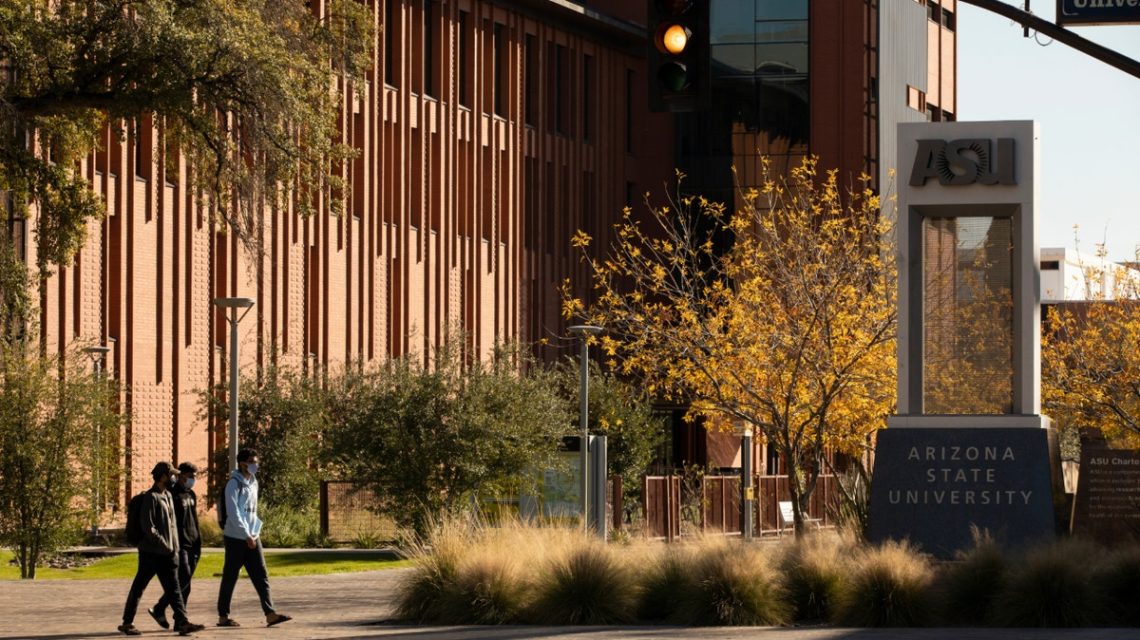
Specifically, in Arizona, significant cost differences exist between in-state and out-of-state tuition, estimated at $24,448 at Arizona State University. In fall 2025, it was reported that 432 undocumented immigrants benefited from in-state tuition there, resulting in reduced costs totaling $10.5 million.
State Reactions and Future Court Battles
States have not remained silent. Notably, Washington plans to defend its laws vigorously. Governor Bob Ferguson stressed the state’s commitment to providing opportunities, stating, “We’ll see them in court, and we expect to win.”
Currently, legal challenges are also pending in other states including Minnesota, Virginia, California, and Massachusetts. The DOJ’s ongoing legal effort seeks broader attention and compliance with federal directives concerning educational benefits.
These lawsuits represent a critical moment in the intersection of federal and state education policy, with significant implications for students and institutions across the country.
 New Jersey Voter Fraud Prompts Renewed Push for SAVE Act
  Concerns Over Changes to Voter-Registration Form for Americans Abroad
  Trump’s 2024 Campaign Targets Young Men Through Cryptocurrency
  Trump’s White House Visitor Center Proposal Gains Bipartisan Support
  State Department Simplifies Passport Process with Online Applications
  Becerra and Hilton Clash in California Gubernatorial Debate