Keiko Fujimori, daughter of the late former president Alberto Fujimori and leader of the influential conservative party Fuerza Popular, is now the president-elect of Peru. The National Jury of Elections confirmed on Friday that Fujimori secured 9,223,396 votes. Her opponent, progressive Roberto Sánchez from the Juntos por el Perú party, garnered 9,173,755 votes. With nearly a 50,000-vote lead, she succeeded on her fourth attempt to reach the presidency.
At 50 years old, the former first lady during her father’s administration (1990-2000) and ex-congresswoman presented herself as the best choice to instill order. She appealed to the memory of her father’s leadership during the 1990s when security forces defeated the terrorist group Shining Path. “I decided to run in this campaign because our country can no longer bear inexperienced leaders,” she stated at the end of her campaign in a popular area of Lima. Her promises focused on tackling crime with a ‘firm hand’ following the model of Salvadoran President Nayib Bukele. She pledged to construct a prison similar to El Salvador’s Center for Confinement of Terrorism and to introduce masked judges as seen during her father’s time in office.
Peru is facing a growing wave of insecurity. Reports of extortion have increased fivefold while murders have doubled over the past five years, according to official figures. Extortions impact small business owners and public transportation services. In 2025, 239 drivers were killed in extortion-related incidents. Fujimori also proposed to unblock major mining projects by reducing bureaucratic procedures to attract investments, boost employment, and encourage agro-exportation by expanding irrigation works on the Pacific coast’s arid lands.
Her opponents argue that due to her ambitions, Peru has endured a political crisis over the last decade. They blame her party’s role in Congress for the resignation or removal of several presidents. Fujimori’s party was instrumental in pressuring former President Pedro Pablo Kuczynski (2016-2018) to resign and voting for the removal of almost all subsequent leaders, including Martín Vizcarra (2018-2020), Pedro Castillo (2021-2022), and Dina Boluarte (2022-2025). Despite initially protecting Boluarte from seven removal requests, they voted for her vacancy when her popularity plummeted to 3%.
Keiko Fujimori pursued the presidency in 2011, 2016, and 2021. She reached the runoff stage each time, only to be defeated by Ollanta Humala (2011-2016), Kuczynski, and Castillo, respectively. She entered politics young, serving as first lady at 19 in 1994 following her parents’ separation after her mother claimed to the press that she had been tortured by military personnel on her husband’s orders.
Alberto Fujimori passed away in 2024, a year after being released from prison where he served over 16 years for corruption and the killing of 25 people executed by an army squad in the fight against Shining Path between 1991 and 1992. Keiko Fujimori launched her candidacy last year after the Constitutional Court shelved an investigation against her for allegedly laundering money from the Brazilian company Odebrecht and other sources. The court concluded that the prosecutor’s accusation lacked ‘legal basis’ because the asset reception mode of laundering was not punishable before 2016, when the alleged acts occurred.
 The Trump Team’s Challenge to the Military Leadership
  Maryland First State to Restrict Electronic Pricing in Grocery Stores
  Activists Push for Nationwide Ban on Child Marriage in the U.S.
 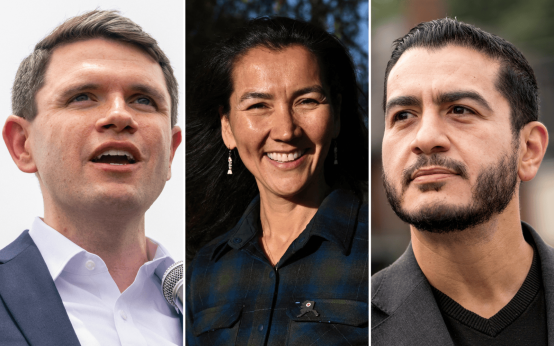 Democratic Hopes and Historical Warnings in 2026 Senate Race
  Republicans Face Challenges Amidst Cost of Living Concerns
  A Different Kind of Fall for Congress This Year