After his victory in Colombia’s presidential first round on May 31, Abelardo de la Espriella addressed U.S. President Donald Trump rather than his own country. De la Espriella, a Colombian criminal defense lawyer running on a strict anti-crime platform as a political outsider, expressed gratitude for Trump’s support by posting on X. Trump had praised de la Espriella as a formidable leader while criticizing his leftist opponent, Ivan Cepeda. This exchange hinted at a broader political shift in the hemisphere, heavily influenced by Trump, with Colombia and Peru nearing their own decisive elections this month.
Throughout Latin America, right-wing governments have risen to power, aligning the region more closely with Washington. If this trend continues, left-wing governments may become increasingly isolated, with only a few remaining strongholds such as Brazil, Mexico, and the authoritarian regimes in Cuba and Venezuela. Michael Shifter, former president of Inter-American Dialogue, commented on this rightward momentum, noting that more leaders seem to align with Trump’s administration and policies.
The Rightward Tide
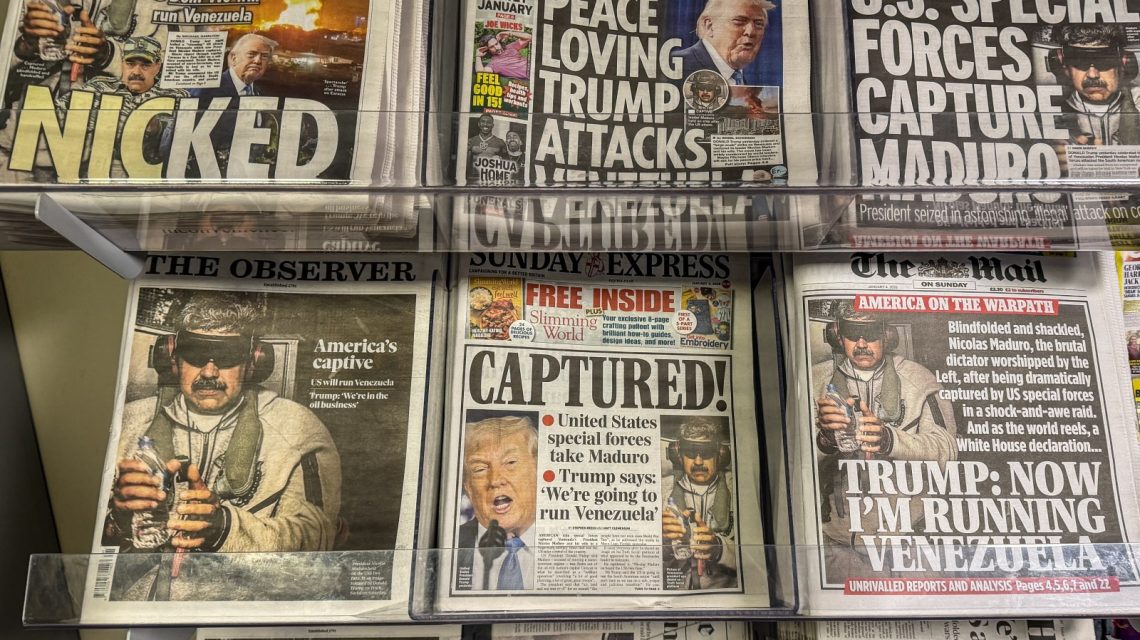
Venezuelan President Nicolas Maduro was once a significant adversary to Washington. Under Trump’s administration, a new strategy was devised. In November, a National Security Strategy was released, signaling increased intervention in the Americas. Following military pressure, U.S. special forces captured Maduro and his wife, charging them with narcoterrorism.
This operation epitomized the realignment across Latin America. In Argentina, libertarian leader Javier Milei secured U.S. support. In Honduras, Trump endorsed Nasry “Tito” Asfura, and in El Salvador, Nayib Bukele, a key ally, reshaped crime-fighting tactics. In December, Chilean right-winger José Antonio Kast won decisively with a stance similar to Trump’s policy.
A New Latin American Order
In March, Trump organized the “Shield of the Americas” summit in Florida. This summit reinforced a coalition focusing on security, migration control, and U.S. dominance. Leaders such as Milei and Bukele attended, but notable absentees included Brazil’s Luiz Inácio Lula da Silva, Mexico’s Claudia Sheinbaum, and Colombia’s Gustavo Petro.
A shift documented by the Konrad Adenauer Stiftung showed that nine out of fifteen Latin American democracies changed politically, six leaning from left to right. Shifter attributes this shift to ineffective economic policies by the left, the rising importance of crime issues, and Trump’s influence. Former Colombian President Ernesto Samper warned of a return to a violent, autocratic past, suggesting that resistance to U.S. influence could arise.
Peru: The Next Domino
Peru faces a pivotal election. Keiko Fujimori, daughter of former authoritarian President Alberto Fujimori, competes against leftist Roberto Sánchez. Crime dominates the agenda as violence and extortion rise. Fujimori promises stringent security measures, while Sánchez aligns with Chinese interests.
A Fujimori win would bolster Trump’s regional influence, whereas a victory for Sánchez could strengthen leftist resistance.
Colombia: An Election Shaped by U.S. Influence
Colombia’s stakes are substantial. De la Espriella’s surprising lead fits a regional trend of outsider candidates leveraging social media and populist platforms. The U.S.-Colombia relationship, under strain due to tensions over narcotics policy and other issues, might see a shift with a conservative win.
Conclusion
While right-leaning policies gain ground, the left remains active. Brazil’s Lula faces a challenging election, and Mexico’s Sheinbaum governs independently from U.S. influence. Cuba and Nicaragua resist managed transitions.
Shifter notes that the longevity of right-wing governments depends on their effectiveness in addressing economic and security issues. Benjamin Gedan highlights that incoming leaders face economic challenges that may hinder meeting voter expectations. The political landscape in the Americas remains dynamic, with significant elections like Colombia’s on June 21 poised to provide further insights.
 New Jersey Voter Fraud Prompts Renewed Push for SAVE Act
  Concerns Over Changes to Voter-Registration Form for Americans Abroad
  Trump’s 2024 Campaign Targets Young Men Through Cryptocurrency
  Trump’s White House Visitor Center Proposal Gains Bipartisan Support
  State Department Simplifies Passport Process with Online Applications
  Becerra and Hilton Clash in California Gubernatorial Debate