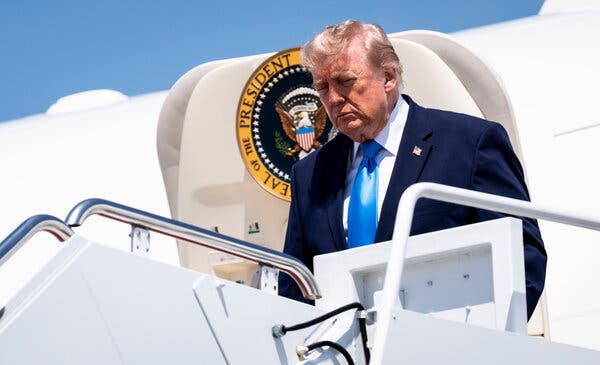
President Trump sought to force Iran to accept American demands for a peace deal through threats and military operations. For weeks, the Trump administration focused on a diplomatic agreement rather than returning to war with Iran.
Since President Trump announced a cease-fire with Iran in April, his approach combined threats and limited military operations to push Tehran toward a peace deal. However, the outline of a potential agreement indicates that the pressure campaign did not significantly shift Iran’s stance on its nuclear program.
The upcoming deal might reopen the Strait of Hormuz, a vital waterway for oil and gas, blocked by Iran since the U.S.-Israeli attacks initiated the war in late February. However, it could postpone major decisions on other contentious issues.
Trump had insisted on the open passage of the Strait as a condition for ceasing the war in April. U.S. officials believed that if shipments resumed, rising gas prices would decrease, reducing domestic unrest over the war and diminishing Iran’s leverage in negotiations. Yet, Iranian forces maintained control over the Strait, and U.S. efforts did not release their grip.
On April 13, the U.S. military launched a naval blockade of Iranian ports, still active. American forces redirected over 100 ships as part of the blockade, according to the military. In May, President Trump announced “Project Freedom,” aiming to help ships trapped by Iran’s blockade exit safely. Only two vessels succeeded under this initiative.
Shortly after, Trump suspended the project, and his administration’s appeal for European allies to assist in patrols fell flat. Despite various threats, Trump refrained from more assaults on Iran.
American public opinion, including within the Republican party, showed disapproval of the conflict with Iran, which raised oil and gas prices and stressed Washington’s Arab partners facing Iranian retaliation.
In late April, Trump extended the cease-fire deadline while negotiations continued. He continued to issue warnings primarily on his Truth Social platform, posting content ranging from memes to asserting that Iran’s time was limited.
Recently, Trump delayed another unannounced military move against Iran after requests from Gulf Arab leaders, due to ongoing “serious negotiations.”
Experts suggest Iran’s leadership feels strengthened, believing it withstood an effort to overthrow the Islamic Republic. Analysts believe Iran sees time working in its favor, partly due to its capacity to disrupt global energy markets.
 The Trump Team’s Challenge to the Military Leadership
  Maryland First State to Restrict Electronic Pricing in Grocery Stores
  British Police Arrest Man Suspected of Terror Plot
  Activists Push for Nationwide Ban on Child Marriage in the U.S.
  Democratic Hopes and Historical Warnings in 2026 Senate Race
  Republicans Face Challenges Amidst Cost of Living Concerns