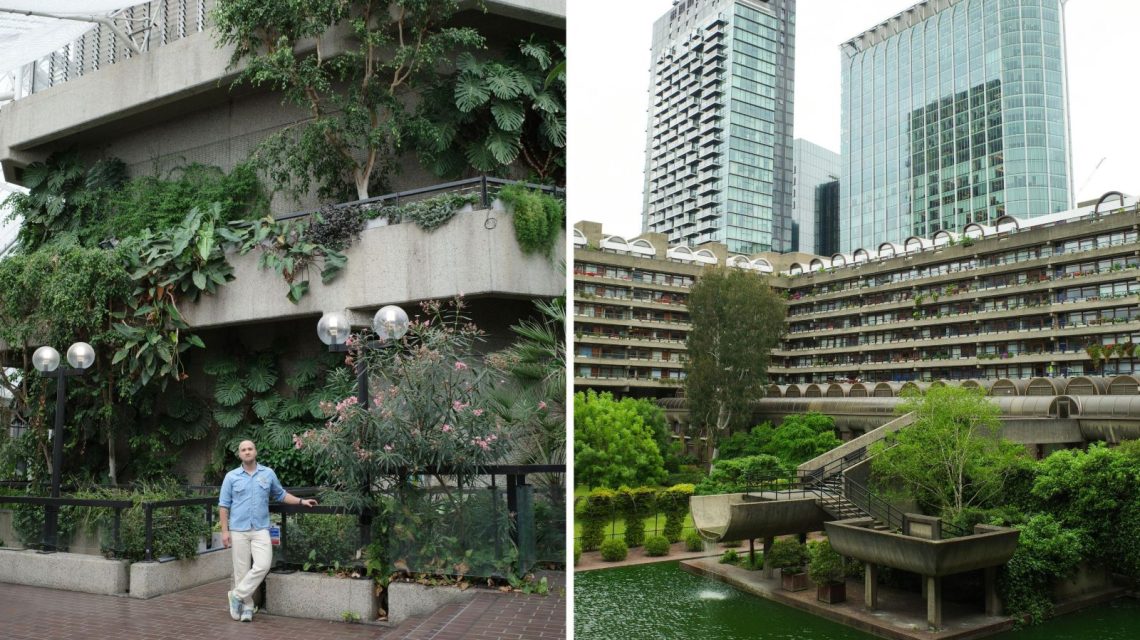
The Barbican in London is a prime example of brutalist architecture. This notable complex comprises concrete towers, cultural centers, and landscaped public areas. For Luke Kaluzny, who moved there with his husband in mid-2025, the Barbican is more than an architectural marvel. It serves as a source of inspiration and a personal sanctuary.
Brutalist architecture is characterized by its raw concrete and geometric shapes. Recently, it has gained renewed admiration. Buildings once seen as harsh are now preserved and celebrated. Changing public perceptions are driven by cultural interest and sustainability. This reevaluation recognizes postwar designs.
The younger generations play a key role in this revival. Social media trends highlight brutalism’s raw and bold forms as authentic and expressive. Hannah Simonson, a cultural planner at Page & Turnbull, confirms that online platforms offer fresh perspectives. Brutalist architecture is reaching new audiences.
Kaluzny, sharing glimpses of Barbican life on Instagram (@interluke), resides on its south side. The Barbican, designed by Chamberlin, Powell and Bon, was completed in 1982. Kaluzny’s interest in the estate stems from a passion for modernist housing and urban design. Inspired by his research on Le Corbusier’s Unité d’Habitation in Marseille, he visited London and was captivated by the Barbican’s scale and residential appeal. During this visit, he met his husband.
When they decided to settle, they prioritized places with architectural meaning. After viewing several properties, they felt an immediate connection to the Barbican.
Living at an Architectural Landmark
Kaluzny describes his life at the Barbican as “very convenient.” The estate offers numerous amenities, including theaters, galleries, and daily services like shops and a library. The estate’s car-free layout is unique. With parking situated underground, pedestrians can traverse the upper levels without traffic disturbances. This design reduces noise and pollution.
Residents also enjoy private green spaces, accessed via a “magic key.” Kaluzny favors the so-called “igloos,” sunken brick pods connected by walkways. These offer peaceful spots for reading or socializing in summer.
While amenities are vital, community is most significant to Kaluzny. The Barbican’s diverse residents range from artists to lawyers, all ages from 20s to 90s. This community shares an appreciation for what the Barbican symbolizes. It fosters an atmosphere not just defined by architecture, but by its inhabitants.
Balancing Urban and Tranquil Living
Kaluzny’s enthusiasm for the Barbican partly comes from his upbringing. Raised in isolated Washington state, he longed for proximity to others. Living in the Barbican fulfills his desire for both connection and space. It offers a balance of urban life and serenity.
Constructed on land scarred by World War II, the Barbican embodies optimistic and experimental rebuilding. Its ambitious spirit remains evident. Historical layers add continuity, as Roman walls and the ancient St Giles-without-Cripplegate church inhabit the area.
Do you have an architecture or design story? Share your story via [email protected] for a chance to be featured by Newsweek.
 Midwest Underground Railroad Network Gains National Recognition
  Art Collective Critiques Administration with Mall Installation
  American Hagwon: A Tale of Family and the Korean Diaspora
  Volunteer Enthusiasm Shines at Frank Lloyd Wright Home and Studio
  Bible’s Role in Times of War
  Arrival of Giant Pandas in Atlanta Marks Historic Agreement