NASA has announced the team of astronauts selected for the upcoming Artemis mission, marking a significant step forward for lunar exploration. The announcement took place at the Johnson Space Center in Houston, setting the stage for mission-specific training that will last a year or more.
Preparations for Artemis III
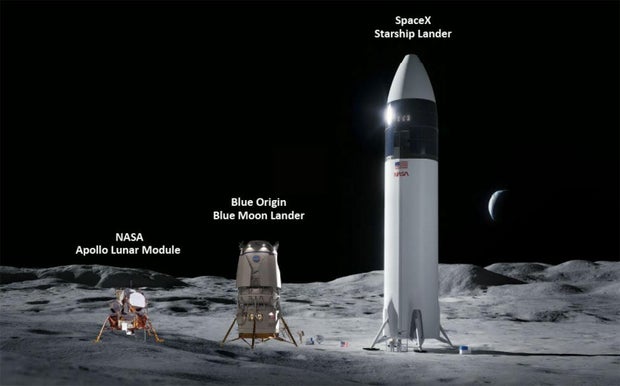
The Artemis III mission aims to test Earth orbit rendezvous and docking procedures using moon landers from SpaceX and Blue Origin. This mission is crucial before NASA attempts a moon landing in 2028. The mission will mimic the Apollo 9 flight from 1969, which successfully tested lunar excursion module operations in Earth orbit. Artemis III will follow a path similar to the Apollo 10 flight, which prepped for the moon landing in the Sea of Tranquility.
Reid Wiseman, Victor Glover, Christina Koch, and Canadian astronaut Jeremy Hansen recently completed a flight around the moon. Their mission laid the groundwork for Artemis III’s ambitious goals.
NASA’s Lunar Landing Strategy
Artemis III stands as NASA’s sole planned test flight before the anticipated 2028 moon landing. By then, both SpaceX and Blue Origin need to have successfully executed an uncrewed moon landing. NASA envisions using landers from these companies for the Artemis III mission.
Despite recent setbacks, Blue Origin aims to recover from a significant launch pad incident by year-end. SpaceX is also facing technical challenges with its Super Heavy-Starship rocket. NASA remains committed to advancing the Artemis III mission.
If only one lander becomes flight-ready, the mission will proceed. Should both landers be delayed, NASA plans to devise alternative strategies to ensure the program’s momentum.
Artemis Program’s Strategic Goals
Nasa aims to establish a lasting presence on the lunar surface by 2028, outpacing international rivals like China. Historical achievements from 1969 to 1972 placed NASA ahead in the space race, and the agency aims to lead in space travel and technology through the Artemis program.
As part of the initiative, NASA plans to deploy robotic landers and satellites, preparing for Artemis IV and V missions that will involve two astronaut landings each year. This will pave the way for a moon base near the lunar south pole by 2029-2030.
The lunar south pole offers potential due to its permanently shadowed craters, which might hold valuable ice deposits. NASA’s long-term vision includes establishing a sustainable human presence, bolstered by solar and nuclear power, allowing astronauts to live and work on the moon for extended durations.
Despite these ambitions, potential delays in rocket and lander readiness could postpone Artemis III to 2028, affecting subsequent missions. NASA is considering whether further test flights might be necessary between Artemis III and the moon landing.