Imagine if during World War II, individuals had protested outside factories producing essential war equipment, trying to shut them down. Or if, just before the Pearl Harbor attack, regulations had restricted the opening of new factories crucial for national defense. Any observer in 1940-1941 would see the beneficiaries of such actions as adversaries of the nation.
Today, we face a different kind of conflict, an artificial intelligence (AI) competition with China. The goals of both nations in AI technology are distinctly different. While the U.S. views AI as a means to enhance prosperity and individual freedom, China aims to use AI for domestic control and global dominance.
China and the U.S. control 90% of AI computing capacity, with the U.S. holding 75% compared to China’s 15%. Although China emphasizes industrial AI applications and considers it a strategic military asset, the U.S. leads in AI innovation and is rapidly advancing in industrial and military applications.
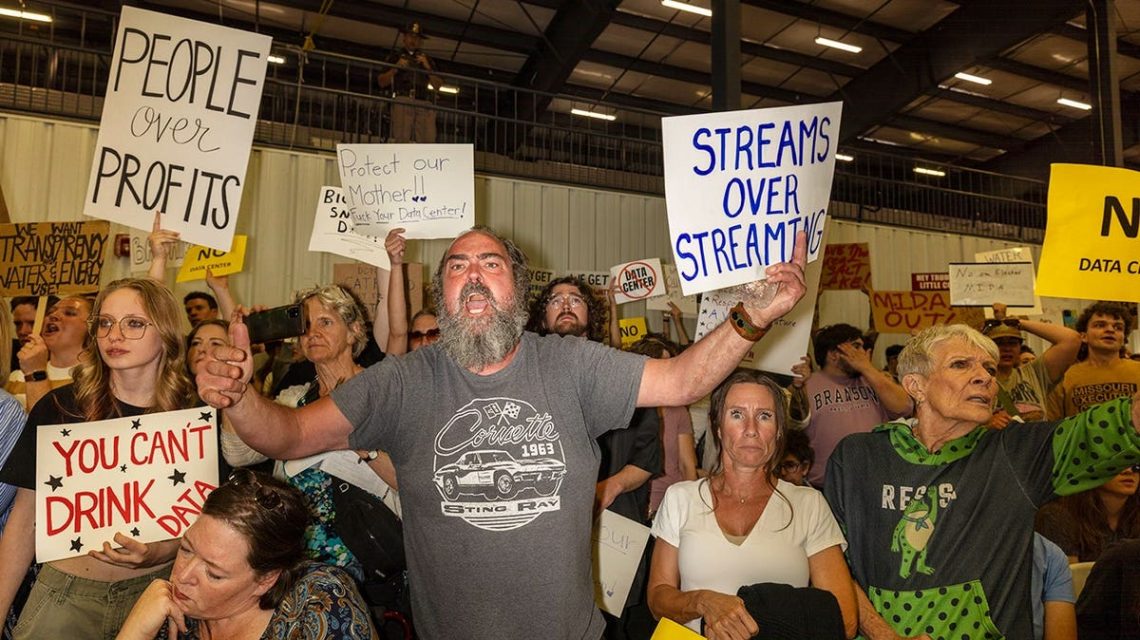
Recently, protests have arisen against AI data center projects, such as the one in Tremonton, Utah, due to concerns about water use, energy demand, and environmental impact.
Data Center Ban Movement
The data center ban movement has grown significantly. So far, 78 local jurisdictions have implemented temporary bans or moratoriums on new data centers. New York is the only state with a construction moratorium, but 14 other states, including Florida, Oklahoma, and Georgia, are considering similar measures.
If this movement gains momentum and political support, it could result in permanent bans. This would benefit China, much like stopping defense plant construction in World War II would have aided Germany and Japan.
Economic and Security Implications
The impact on the economy is substantial. In Georgia, a ban could jeopardize 552,000 jobs and $850 million in tax revenue. Additionally, data centers are vital for national security. They support the economy and are crucial for advancements in AI, which is essential for military applications and cybersecurity.
Dispelling Myths
Opponents of data centers argue they raise electricity costs, but they can lower costs by spreading them over more sales. While some claim data centers overuse water, they often use little or none. In comparison, golf courses consume far more water annually. Moreover, data centers spur job creation and local economic growth. A Brookings Institution study found that a new data center increases construction jobs by 11% and information sector employment by 22%, with wages rising 3%-4%.
The establishment of data centers is not only about economic benefit but also about supporting AI innovation, essential for startups and small businesses to thrive. The growth of AI and data centers could increase U.S. GDP by 1.5%-3.7% annually.
Conclusion
AI and its supporting data centers are vital for national security and economic prosperity. Decisions regarding data center development will significantly impact the nation’s future. It is crucial to prioritize choices that benefit the U.S. and its citizens over those that would empower China’s ambitions.
 Maryland First State to Restrict Electronic Pricing in Grocery Stores
  Activists Push for Nationwide Ban on Child Marriage in the U.S.
  Democratic Hopes and Historical Warnings in 2026 Senate Race
  Republicans Face Challenges Amidst Cost of Living Concerns
  A Different Kind of Fall for Congress This Year
  Cornel West and Sean Hannity Discuss Differences on Podcast