A senior NATO military official clarified that NATO poses no threat to Russia, countering Moscow’s claim of the alliance posing a direct danger in the Arctic. Colonel Martin O’Donnell, a spokesperson for NATO’s Supreme Headquarters Allied Powers Europe (SHAPE), emphasized, “NATO is a defensive alliance. We pose no threat to anyone.”
Russian Foreign Minister Sergey Lavrov accused NATO of increasing militarization and tensions in the Arctic. The region has drawn interest as climate change opens new routes for military and civilian use.
Of the eight Arctic states, only Russia is not a NATO member. It remains a dominant force in the harsh conditions of the High North. Moscow has resumed operations at Soviet-era bases, established an Arctic-focused military command, and built new infrastructure in the region, crucial for its nuclear submarine fleet.
NATO acknowledges Russia’s presence and China’s interest in the Arctic. The alliance has bolstered its presence, especially after tensions arose following efforts by Europe and Canada to address President Donald Trump’s demands to control Greenland, a strategic Danish territory in the Arctic.
Lavrov highlighted in an essay that military preparations are intensifying near Russia’s northern borders. NATO responded in February with the Arctic Sentry initiative, increasing activity and visibility in the Arctic through intelligence flights, maritime drills, and troop training for extreme conditions. This initiative is managed by NATO commanders in Norfolk, Virginia.
NATO has also introduced similar actions in the Baltic Sea and its eastern regions. This year, the alliance plans to station numerous troops from various NATO countries in Finland and Sweden to strengthen its northeastern border close to Russia.
Furthermore, in October 2025, NATO established a center in Bodø, Norway, to oversee air operations in the Arctic and northern Atlantic.
NATO Drills
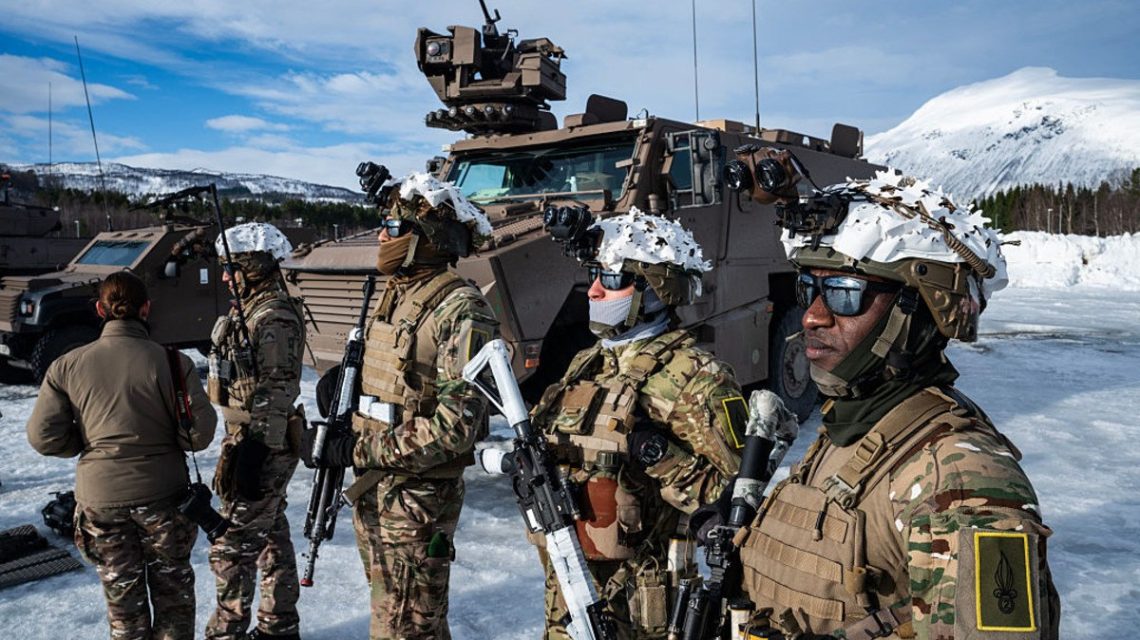
NATO frequently conducts military exercises in the Arctic. These exercises, similar to Russia’s, allow member troops to practice missions in extreme cold. These can include tasks such as rapidly capturing shoreline areas or navigating icy expanses.
The frequency of Arctic drills has increased over the past few years. Recently, U.S.-led exercises in Iceland, named Northern Viking, were held to practice defending the Nordic region and the Greenland-Iceland-United Kingdom (GIUK) Gap. This gap is a crucial exit for Russian submarines moving from the Arctic to the northern Atlantic, where they could pose a missile threat to the U.S.
Lieutenant Commander Tim Pietrack from NATO Maritime Command (MARCOM) clarified that the alliance’s Arctic stance is defensive and proportionate to the security context. He stated that NATO’s maritime forces would continue training and maintaining their presence in the Arctic.
In earlier drills this year, tens of thousands of troops participated, including about 4,000 U.S. Marines, in cold-weather exercises around Norway and Finland. These drills, part of the broader Arctic Sentry initiative, also included Danish-led exercises in Greenland.
 Bolivia Faces Security Test Amid Unrest
  Incident on FlyDubai Flight Raises Security Concerns
  Journalist Gershkovich Discusses Wrongful Detention and Release in Russian Prisoner Swap
  Pakistan Airstrikes in Afghanistan: Civilian Casualties Reported
  Ukraine Converts APCs to Explosive Devices in Donetsk Offensive
  Trump’s 2024 Campaign Targets Young Men Through Cryptocurrency