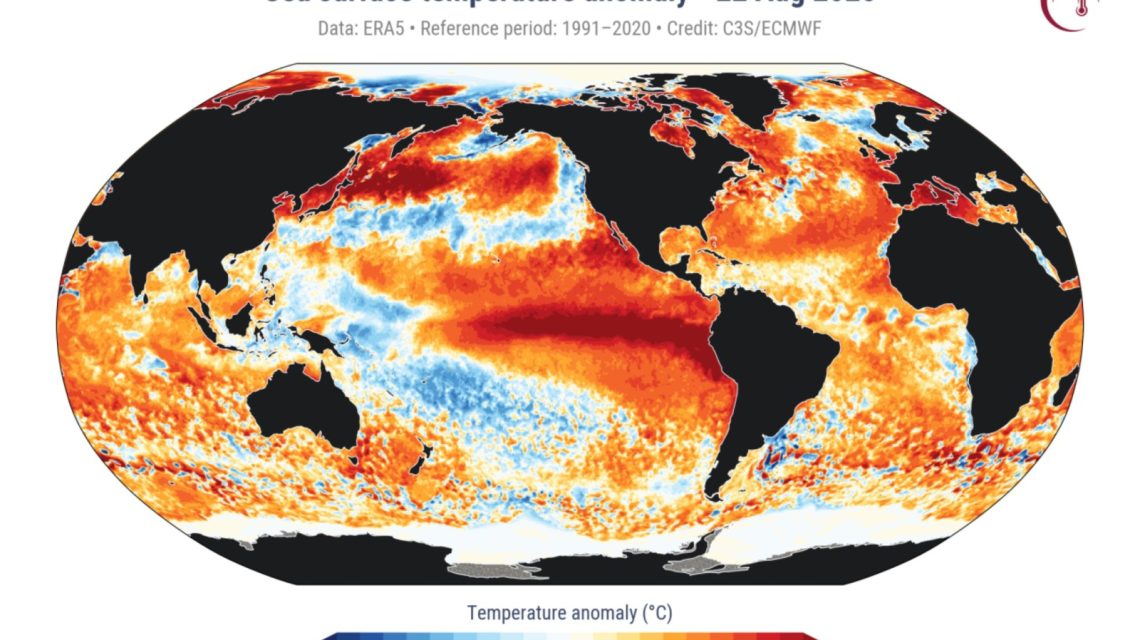
The average surface temperature of the world’s oceans has reached a new high, coinciding with the intensifying El Niño. According to the European Union’s Copernicus Climate Change Service, the average sea-surface temperature hit 21.1 degrees Celsius (70 degrees Fahrenheit) recently. This surpasses the previous record of 21.09 C from March 2024.
“The timing is especially significant,” Copernicus noted, as ocean temperatures usually peak between March and April post-austral summer. Yet, this record was reached in August.
AccuWeather meteorologist Alex DaSilva conveyed to Newsweek that the record pertains to oceans beyond the polar regions and indicates warming in several basins. “El Niño plays a major role in the Pacific Ocean, facilitating the breaking of records during these periods. Meanwhile, warmth across the Atlantic basin also contributes to this global record,” DaSilva explained.
Earlier reports from Copernicus highlighted that ocean temperatures had been consistently above long-term averages over the past three years, ranging from 0.35 C to 0.73 C above normal levels. This anomaly was noted again in June, when temperatures hit record levels, corresponding with El Niño’s emergence in the equatorial Pacific.
Understanding the Ocean Temperature Record
The latest maximum daily average temperature in the world’s oceans outside the polar regions stood at 21.1 C on August 22, 2026. This surpassed the former record of 21.09 C. August’s previous highest was 20.98 C, recorded in 2023, according to Copernicus.
Samantha Burgess from the European Centre for Medium-Range Weather Forecasts expressed concern, stating, “This record signals increasing stress on the oceans. El Niño contributes additional heat on top of decades of anthropogenic warming.” She warned of rising risks to marine ecosystems and coastal areas, citing the tripling of marine heatwave days since the 1990s.
DaSilva noted that the second and third records are from 2024 and 2023. “El Niño began in late 2023 and persisted into the start of 2024 before shifting towards La Niña,” he added. February and August usually witness the warmest ocean temperatures, thus limiting the likelihood of new records in September, he observed.
The Impacts and Strength of El Niño
El Niño, part of the El Niño-Southern Oscillation (ENSO), is characterized by warming in the central and eastern equatorial Pacific. It weakens trade winds and shifts tropical rainfall patterns east, impacting global weather, stated the National Oceanic and Atmospheric Administration (NOAA).
NOAA’s Climate Prediction Center disclosed on August 13 that El Niño was advancing, with over a 90% likelihood of becoming considerably strong during the upcoming Northern Hemisphere fall and winter into 2027. They also forecast a 69% probability of a historic event surpassing the strength of past El Niño phenomena back to 1950 during October-December 2026.
“Depending on El Niño’s strength in the fall, another oceanic temperature record could occur next March,” DaSilva mentioned. He noted that the previous sea-surface temperature record was set during March 2024, coinciding with the end of an El Niño phase.
 Atlantic Ends September Without a Hurricane for First Time Since 1994
  Bobcat Sightings and Conservation Efforts in Illinois
 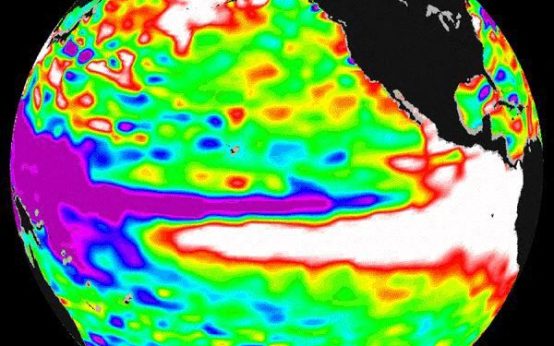 2026 El Niño: A Historical Comparison and Future Projections
  U.S. Records Warmest September in History
  Swiss Glaciers Show Effects of Ice Loss Amid Global Warming
  Climate-Resistant Rock Glaciers: Hidden Water Resources