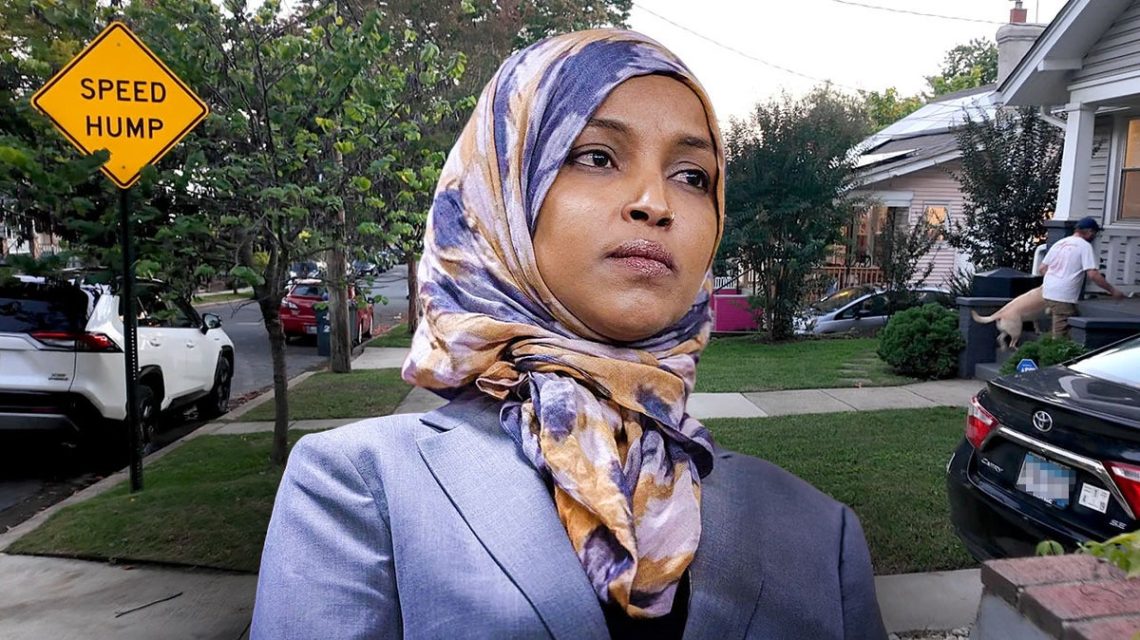
Republicans are eager for Democrats to lose re-election next week, but President Trump is focused on Rep. Ilhan Omar of Minnesota. Omar represents a strongly Democratic district and enjoys significant local support, having won nearly three-quarters of the vote two years ago.
President Trump questions whether Omar is qualified to serve due to alleged immigration issues. He argues that Omar used a false identity when taking her oath and has referred to her as a ‘troublemaker.’
The Department of Justice is investigating Omar for potential immigration fraud. Federal agents recently conducted a raid at her Washington, DC, residence and collected various items, including phones and notebooks.
President Trump contends that Omar’s real name is ‘Ilhan Nur Sayeed Elmi’, differing from the name listed in federal filings, ‘Ilhan Nur Said Elmi, a/k/a Ilhan Abdullahi Omar.’ He asserts she should resign.
Despite this, the Clerk of the House of Representatives documents her name as ‘Ilhan Omar’, consistent with previous records from the Minnesota state legislature.
President Trump wants congressional action regarding Omar. Although Article I, Section 5 of the Constitution gives Congress the right to decide membership eligibility, it’s rare and requires substantial reason.
Rep. Morgan Griffith acknowledges Congress has the power to expel members, but insists on substantial evidence for such a move. Historical precedent shows it’s uncommon, and standards are stringent.
House Republicans have limited options if they aim to act against Omar. The Constitution allows expulsion with a two-thirds vote, yet Omar has not been charged or convicted of any crimes. Constitutional provisions protect lawmakers in these contexts.
The House has expelled only six members in its history, most recently George Santos in 2023. The possibility of objecting to Omar’s seating next January exists, but it’s unlikely without conviction.
Historical cases like Rep. Adam Clayton Powell in 1968 illustrate the complexity of such actions, often scrutinized legally, as seen in Powell v. McCormack. The House can decline to seat someone temporarily but might face legal challenges if criteria are met.
While a motion could prevent Omar’s or others’ seating, the procedure would involve post-swearing investigation. Precedents like Frank McCloskey’s case in 1985 show the longevity and scrutiny of these matters.
Even if the House seats someone, expulsion remains an option but requires extensive support and evidence.
Ultimately, despite disputes over names, altering Omar’s congressional position seems improbable under current conditions.
 Mayor Mamdani’s Policing Reform Plans
 Gen Z Voter Shifts and Their Impact on the 2026 Midterm Elections
 Disappearance of US Senate Candidate Raises Questions
 DOJ Rule Change Reduces Appeal Time for Immigrants Facing Deportation
 Hakeem Jeffries’ Bid for House Speaker Faces Progressive Hurdles
 Ohio Judge Dismisses Defamation Lawsuit by Rep. Max Miller