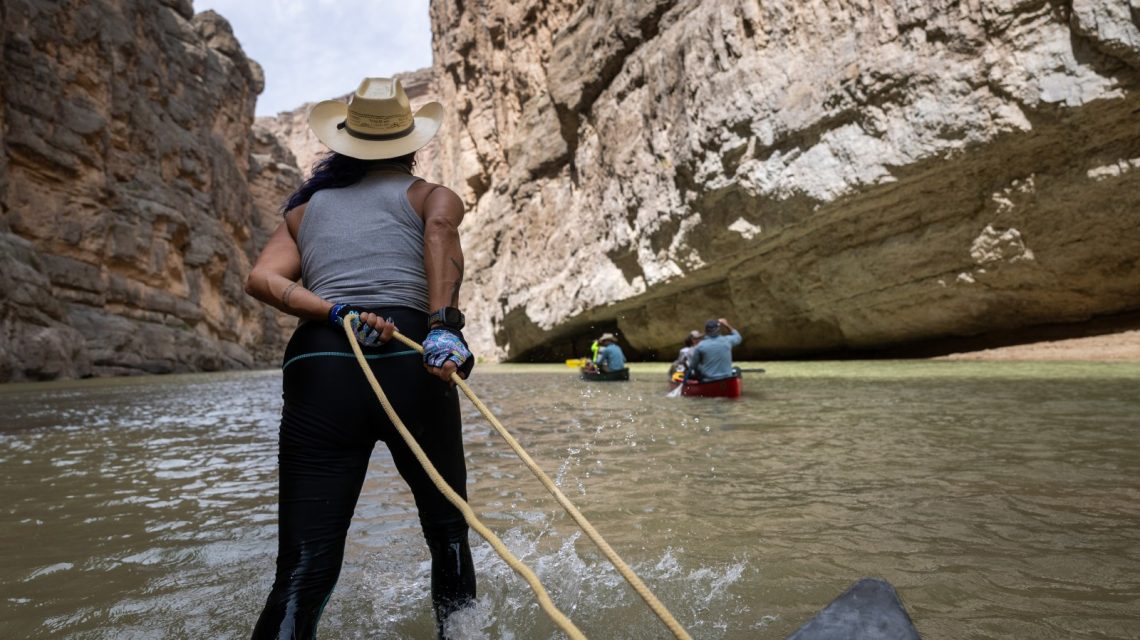
Over 140 Texas businesses and recreation groups are raising concerns about plans to build barriers and roads in Big Bend National Park, fearing negative impacts on the local tourism economy. A coalition of local officials, law enforcement, and outdoor businesses opposes the project, aiming to halt construction.
The opposition was formalized in a letter to Texas Republican Senators John Cornyn and Ted Cruz, and Governor Greg Abbott. Groups argue that the border barriers along the Rio Grande could damage one of the state’s key recreational areas without enhancing security.
To Washington D.C., this is just another construction project. But to all of us in West Texas, it’s a matter of our survival,
said Billy Bartko, owner of Far Flung Outdoor Center.
Customs and Border Protection plans to build vehicle barriers at river access points following a Department of Homeland Security (DHS) decision to waive certain protections. Newsweek reached out for comments from involved officials.
Business Concerns Over Tourism Impact
The letter emphasizes that access to the Rio Grande sustains a local recreation economy involving outfitters, guides, lodging providers, and other businesses. The proposed barriers could affect major sites used by commercial and recreational visitors.
Data shows Big Bend National Park had 561,459 visitors in 2024, with visitors spending $56.8 million and generating $63.7 million in regional economic output.
Sara Ryza of the Big Bend Tourism Alliance stated that tourism from this sector is crucial and supports local businesses.
Opposing Voices Unite
Opposition to the border project unites diverse local stakeholders. Five regional sheriffs issued a joint statement against barrier construction, noting that local terrain already presents natural obstacles.
The letter references a request from Texas border county judges for more transparency and regional security measures, alongside a petition with over 150,000 signatures against the project.
Low Border Crossing Figures
The opposition highlights the low number of migrant encounters in the Big Bend Sector compared to other border areas. The area accounted for only 1.3% of all Southern border apprehensions in fiscal 2025.
Critics argue the administration has not justified extensive new barriers in the park, given the few border crossings within it.
DHS, however, cites encounters and drug seizures as a need for additional infrastructure.
Requests from Business Coalition
The letter urges Senators Cornyn and Cruz, and Governor Abbott to:
- Prevent vehicle barriers from blocking Rio Grande access
- Amend construction contracts to prioritize technology over physical barriers
- Rescind waivers for the project
The coalition claims that existing security measures are sufficient, advocating for the expansion of technology-based surveillance to enhance security.
Big Bend National Park and the Rio Grande Wild and Scenic River are our shared natural heritage,
the letter concludes, urging elected officials to protect both local livelihoods and the environment.
 Families Fight Trump Administration’s Ban on Medical Care for Trans Youth
  Trump Announces $100 Checks for Seniors to Aid Medicare Part B Premiums
  Trump Suggests His Name for Major Alabama Bridge Project
  California’s Challenges: Solutions Needed at State Level
  Protests Against Proposed Trump Arch in Washington D.C.
  Republicans Boost Spending in Ohio Senate Race Amid Growing Concerns