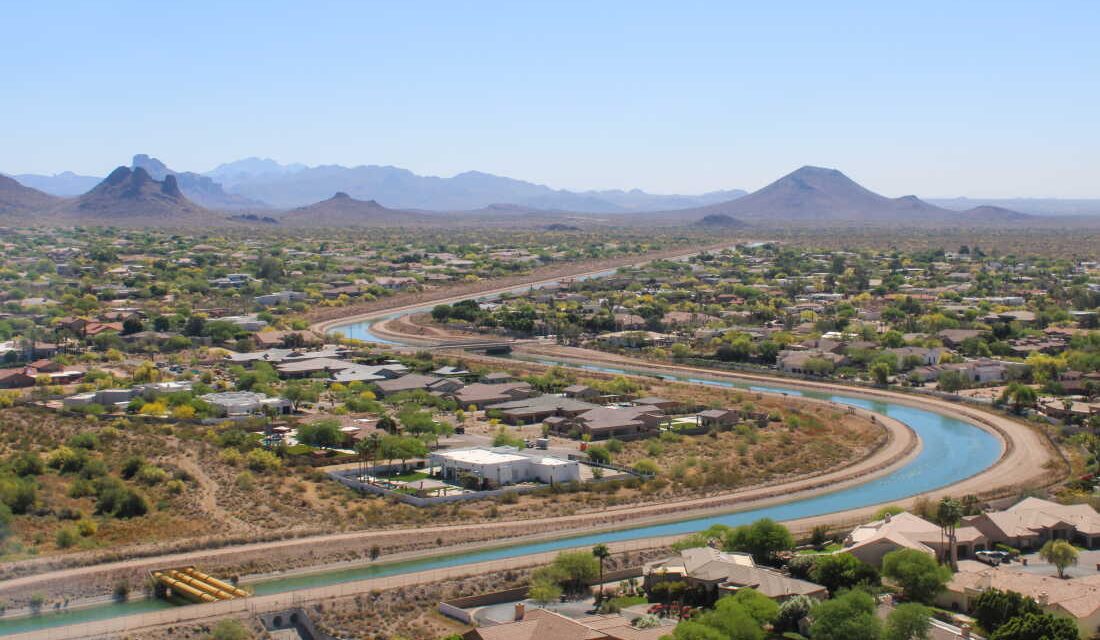
The Central Arizona Project canal runs through Phoenix, delivering essential water from the Colorado River. Come January 2026, users will face cuts under a new federal management plan. The reduction is 27% yearly for Arizona through 2028, possibly more afterwards.
Managing the Cutbacks
Max Wilson, Phoenix’s water resources management advisor, is committed to ensuring that the city’s 1.7 million residents continue to have water. Despite reduced supply, preparations keep sinks, showers, and sprinklers flowing. “Arizonans have solved water problems throughout history, and we’ll overcome this too,” Wilson stated.
The ongoing drought and climate change have depleted the Colorado River, leaving Lake Powell and Lake Mead, the nation’s largest reservoirs, at record lows. Efforts to manage water demand on the river by seven states failed, prompting federal intervention.
Engineering Feats and Financial Burden
The Central Arizona Project, covering 336 miles, faces major reductions. Colorado River water comprises 40% of Phoenix’s water supply. Yet, backups and large-scale projects are in place to prevent water shortages at homes. Although water delivery remains secure, residents will bear higher costs due to infrastructure expenses.
EPCOR USA, a private utility, ensures its treatment plants remain operational amidst these cuts by integrating infrastructure systems and securing rights to a share of water that is otherwise legally protected.
Decades of Planning
Phoenix’s water portfolio is diverse, tapping into the Salt and Verde River systems and groundwater. Historically, reservoirs constructed on these rivers have supported one of the fastest-growing urban areas in the country. The Roosevelt Dam and its successors enable water storage crucial to Phoenix’s survival through drought.
Phoenix completed a $300 million drought pipeline in early 2023. This pipeline moves water from the south to the north, ensuring that over 400,000 residents reliant on the Colorado River will receive necessary water from other sources.
Gilbert, a town reliant on the Colorado River, has invested in nature preserves and treatment plants to supply water during shortages. The town faced steep rate hikes to fund these necessary projects.
Anticipating the Future
The future demands even greater adaptations. EPCOR’s water plans, like a system of interconnected pipes and lease deals for water rights, offer some solutions. However, further expensive projects are anticipated. High water rates, especially during the summer, already influence consumer behavior by reducing demand.
The demand for careful long-term planning is pressing. Federal rules permit up to a 40% cut in water for states like Arizona starting in 2028. Municipalities are strategizing to address shortages and leverage stored water through the Arizona Water Banking Authority.
Preparing the Next Generation
Wilson envisions Phoenix’s future, supported by advanced projects like the Cave Creek Water Reclamation Plant. By 2029, the facility aims to recycle sewage into drinking water, requiring an investment of $359 million initially and $8.5 million annually for maintenance. Another larger reuse facility is planned by 2033, in partnership with nearby cities and EPCOR.
Wilson calls upon the federal government to share infrastructure costs, arguing that the federal decision to place responsibility on certain states necessitates national support for sustainable solutions.
 Atlantic Ends September Without a Hurricane for First Time Since 1994
  Bobcat Sightings and Conservation Efforts in Illinois
  2026 El Niño: A Historical Comparison and Future Projections
  U.S. Records Warmest September in History
  Swiss Glaciers Show Effects of Ice Loss Amid Global Warming
  Climate-Resistant Rock Glaciers: Hidden Water Resources