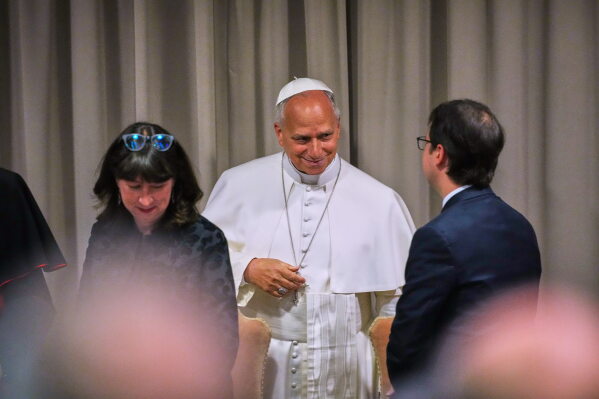
Pope Leo XIV issued a historic apology on Monday, acknowledging the Vatican’s role in legitimizing slavery and failing to condemn it over the centuries. He described this as a ‘wound in Christian memory.’ This marks the first time a pope has publicly acknowledged and apologized for past papal actions that granted European rulers the authority to subjugate and enslave ‘infidels.’
Acknowledging both personal and institutional history, Pope Leo XIV, the first U.S.-born pope and a descendant of both enslaved people and slave owners, made the apology in his first encyclical, Magnifica Humanitas (Magnificent Humanity), released on Monday. Within the encyclical, Leo XIV called for strict regulation of artificial intelligence, urging developers to prioritize the common good over profit as technology increasingly influences diverse areas from labor to warfare.
Leo drew connections between historical slavery and current technological trends, highlighting forms of ‘digital colonialism,’ such as problematic labor practices related to the extraction of rare minerals essential for AI chip production.
Anthea Butler, a senior fellow at the Koch History Center and an expert on Christianity in the U.S., emphasized the importance of acknowledging and atoning for the Catholic Church’s historical role in slavery to address modern issues related to technology and exploitation. She noted that Black American Catholics have long sought a specific apology from the Vatican concerning its involvement in historic slave trade activities.
“For descendants of enslaved persons, this is once again a much-needed apology from the pope,” Butler said.
An examination of past directives reveals a series of papal bulls starting from 1452, when Pope Nicholas V authorized Portuguese rulers to conquer lands in Africa and the Americas, enslaving non-Christians. Subsequent popes confirmed these permissions, which formed the basis of the Doctrine of Discovery, facilitating colonial land seizures.
In 2023, the Vatican repudiated this doctrine but has not formally rescinded the bulls themselves. However, the 1537 bull Sublimis Deus did assert that Indigenous peoples should not be deprived of their freedoms or property.
Leo XIV acknowledged the Holy See’s late condemnation of slavery historically, noting that significant denunciation only occurred with Pope Leo XIII in 1888. He stated that despite the long-standing doctrine of human dignity, it took centuries for slavery’s complete incompatibility with Catholic beliefs to be fully recognized.
The pope expressed a commitment to vehemently condemning all modern forms of exploitation linked with today’s technological advances to prevent a future need for apologies.
Rev. Christopher J. Kellerman, a Jesuit priest and author, praised Pope Leo XIV’s admission and apology, though noted more needs to be done to openly confront the church’s deep-rooted connections with slavery.
Leo’s apology comes amid a history of past papal apologies regarding Christian involvement in slavery. Notable mentions include St. John Paul II’s regrets during his visits to Africa, asking for forgiveness on behalf of participating Christians.
Genealogical research of Pope Leo XIV revealed ancestors who were both slaveholders and slaves, further contextualizing his personal connection to this issue. On a recent visit to Angola, the pope acknowledged the historical suffering endured by Angolans during the African slave trade without directly mentioning slavery.
 The Quest for the Knuckleball Dream
  Navigating Grief After a Sibling’s Overdose
  Dutch Review Board’s Euthanasia Ruling and International Debate
  Israeli PM Commends Heroic Actions in Flight Emergency
  Rabbi and Jewish Leaders Criticize Adam Brody for ‘Genocide’ Comment
  Flydubai’s Emergency Landing Highlights Cockpit Security