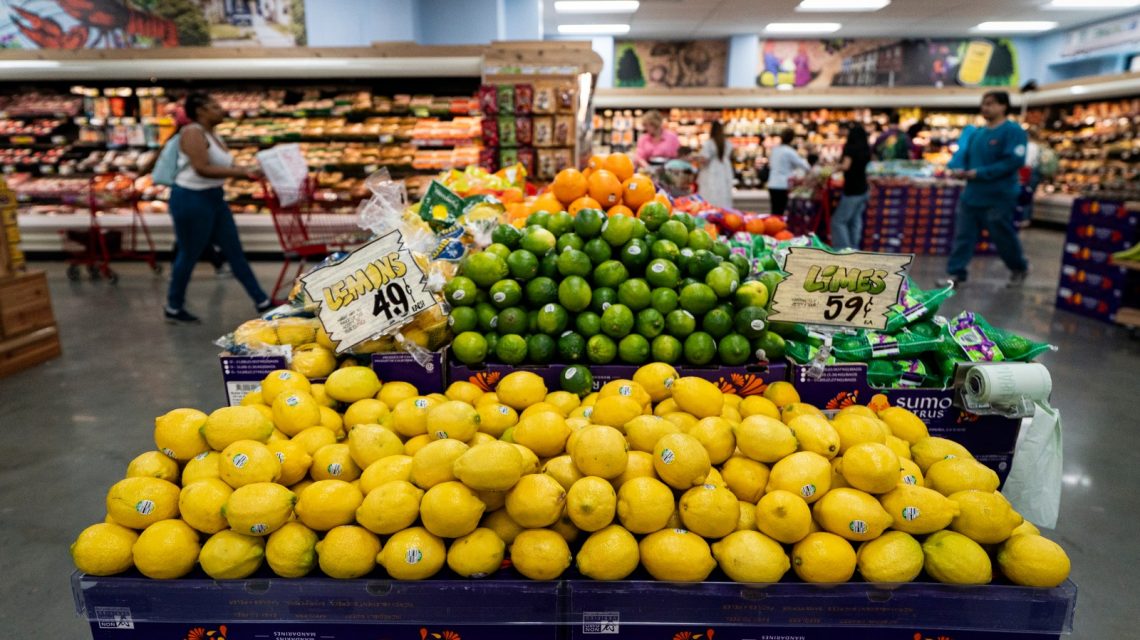
Analysts warn that a developing El Niño in the Pacific Ocean may increase global food prices. In July, the World Meteorological Organization (WMO) predicted that present El Niño conditions would rapidly intensify. This could lead to more heatwaves, droughts, heavy rainfall, and extreme weather globally.
The National Oceanographic and Atmospheric Administration (NOAA) reported an 81% chance of a “very strong” El Niño between October and December. This event could be among the largest recorded since 1950.
Meteorologists and economists, including World Bank analysts, caution that this “super” El Niño might disrupt global agriculture and food supply chains into next year. It could also worsen economic pressures worldwide.
Goldman Sachs, cited by The Guardian, suggests El Niño might cause a 15.8% increase in global food commodity prices, likely becoming evident by 2028’s second half.
Understanding El Niño
El Niño, meaning “little boy” in Spanish, is a climate pattern with unusually warm ocean surface temperatures in the central and eastern tropical Pacific. This warming disrupts global weather patterns, causing flooding and heavy rainfall in some areas, while triggering droughts and heatwaves in others.
The World Food Programme (WFP) notes that such weather extremes can simultaneously damage crops, livestock, and infrastructure, reducing food production and disrupting markets.
Impact on Food Prices
In June, the World Bank warned that El Niño might worsen existing food supply chain issues, which were already affected by oil, gas, and fertilizer shortages due to the U.S.-Iran conflict.
Schroders Wealth Management analysts indicated that a super El Niño could significantly increase food prices over the next year, compounded by ongoing economic and geopolitical challenges. They suggested that a very strong El Niño could potentially double global food prices from current levels.
Risilience, a climate-risk analytics firm, pointed out that an “extreme” scenario might cause a 14.3% drop in global agricultural production. This could result in around $342.2 billion in lost production, with price shocks between 10% and 50% for major food crops.
William A. Masters, a professor at Tufts University, commented that while El Niño will severely affect millions in Africa and Asia, its impact in the U.S. will be limited due to diversified import supply chains.
Chris Barrett, a professor at Cornell University, highlighted that regions like Australia and Southeast Asia will face extreme impacts from El Niño. This is likely to lead to higher prices for wheat, rice, and palm oil, adding strain to areas reliant on imports.
Barrett noted that global cereal stocks are currently high after successful harvests last year, which might mitigate some effects of El Niño if managed well.
Joseph Balagtas, a professor at Purdue University, explained that price impacts vary by crop. Fruits and vegetables, grown in concentrated areas, may see quick price changes due to local weather effects.
He pointed out significant concerns for rice-growing regions, emphasizing that rice is vital for billions in Asia. El Niño’s disruption of monsoon rains could threaten food security where rice is a staple.
Broader Impacts
The global consultancy Wood Mackenzie notes potential wide-ranging energy impacts. Their vice chairman for the Americas, Ed Crooks, stated that severe droughts might affect international energy trade. Changes in cloud cover, wind speeds, precipitation, and snow melting could have substantial effects on renewable energy generation.
 Swiss Glaciers Show Effects of Ice Loss Amid Global Warming
  Climate-Resistant Rock Glaciers: Hidden Water Resources
  Senators Reach Bipartisan Agreement on Permitting Reform
  Experts Warn of Critical Period for the Colorado River
  Future Cities: Ambitious Projects Aiming for Innovation and Sustainability
  Supreme Court Case Suncor vs. Boulder: Implications for Accountability in Climate Change