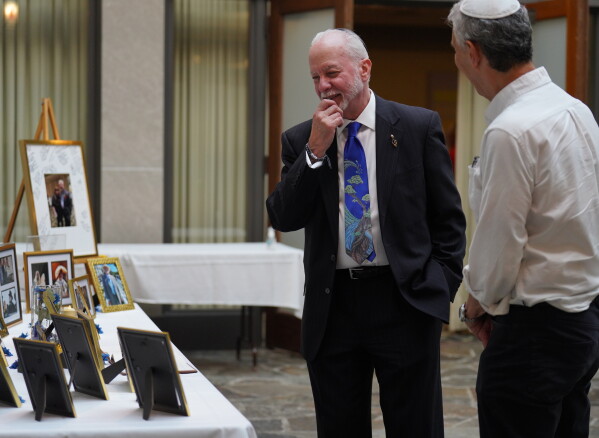
As the evening descended on Kochi’s Jew Town, Keith Hallegua walked to the synagogue. It was Shavuot, a Jewish holiday marking the day God gave the Torah to Moses. Hallegua, now the lone Jew in Jew Town, prepared to pray alone at the 458-year-old Paradesi Synagogue. A minyan, or quorum of ten males, required for communal prayers, was absent.
Elsewhere in Kochi, Elias “Babu” Josephai reminisced about “chukkunda,” fried dough his grandmother made for Shavuot. The memories brought tears to his eyes. Both men feel the loss of community and work to maintain what remains.
In the 1950s, many from Kochi’s Jewish community, historically known as Cochin Jews, migrated to Israel. Those remaining, like Hallegua and Josephai, represent the enduring legacy of a community that lived harmoniously with Hindus, Muslims, and Christians for centuries. Now, fewer than 5,000 Jews reside in India.
The Cochin Jews’ history is complex, with internal divisions over class and colorism. Hallegua is a Paradesi Jew, descended from fair-skinned Sephardic ancestors who fled the Spanish Inquisition. Meanwhile, Josephai is a Malabari Jew, with roots tracing back more than 2,000 years to King Solomon’s time.
Hallegua maintains the Paradesi Synagogue, often relying on tourists to complete prayer services. He questions why God left him alone in Jew Town. Josephai keeps the Kadavumbagam Synagogue alive, lighting lamps and preserving prayers. Yet, he remembers when the synagogue was vibrant and filled with worshippers.
“That will never come back,” Josephai reflects.
Hallegua and Josephai share pride in their heritage. Historic places like the Paradesi Synagogue are now surrounded by spice warehouses and antique shops. The synagogue’s main hall features porcelain tile floors, Belgian crystal chandeliers, and a carved Torah ark facing Jerusalem.
Synagogue trustee M.C. Praveen, a Hindu, aims to protect Cochin Jewish history. Growing up in Jew Town, he interacted closely with the Jewish community. He wants future generations to know the town’s history and people.
Shulamit Kotzer, born in Jew Town, dreams of returning by opening a hotel there. A museum was recently opened to showcase Kochi’s Jewish history, featuring historical documents granting religious freedom to Jews in 1000 CE.
Efforts to preserve Jewish history include contributions from other religions. Thaha Ibrahim, a Muslim, continues the embroidery tradition taught by Sarah Cohen, a Jewish matriarch. He observes Jewish customs, emphasizing human connections over religious divides.
Josephai, in Ernakulam, preserves Malabari Jewish heritage. The Kadavumbagam Synagogue, which he restored, is supported by diverse communities. A Muslim donated lamps, a Christian a Ten Commandments plaque, and a Hindu foundation paid for chandeliers.
Josephai hopes a Jewish organization will continue his work. He wishes to tell the community’s stories even as his legacy fades. Malabari Jew Thapan Dubayehudi calls Josephai “a one-man army” preserving history.
Keith Hallegua stayed in Jew Town to care for his family. He reflects on memories of Jewish holidays and his homeland. Despite the absence of community, he remains rooted in India, embodying both Indian and Jewish identities.
Hallegua vows, “I was born a Jew in India and I shall die in India, a Jew.”
 Lisdoonvarna Matchmaking Festival: A Unique Tradition
  Bolivia Faces Security Test Amid Unrest
  Incident on FlyDubai Flight Raises Security Concerns
  Journalist Gershkovich Discusses Wrongful Detention and Release in Russian Prisoner Swap
  Pakistan Airstrikes in Afghanistan: Civilian Casualties Reported
  Ukraine Converts APCs to Explosive Devices in Donetsk Offensive