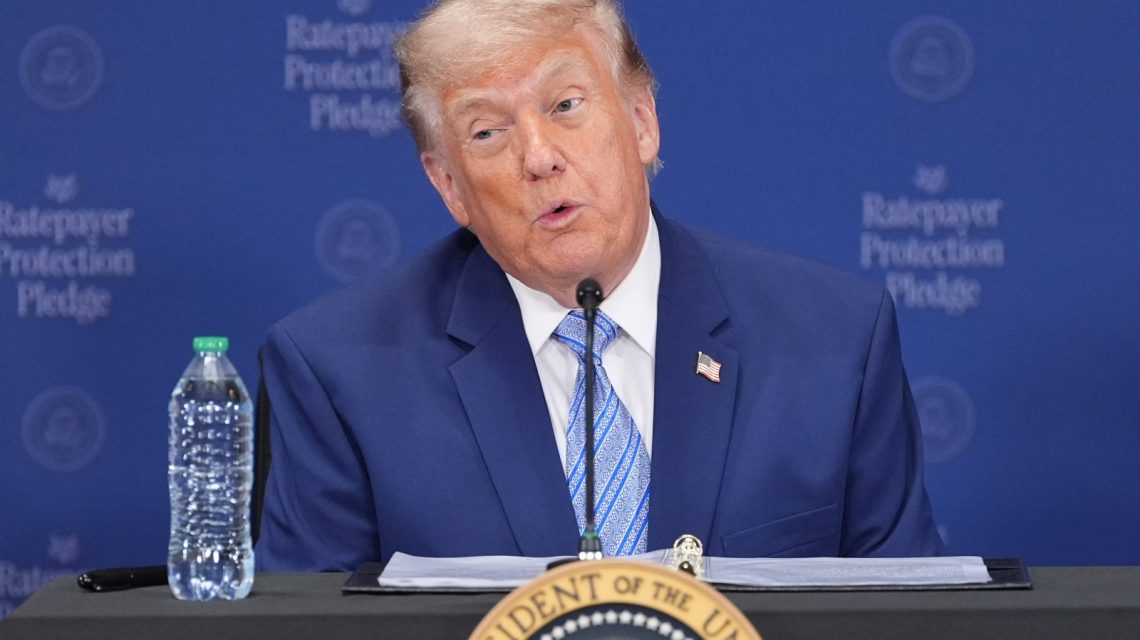
President Donald Trump announced on Thursday the reinstatement of a comprehensive global tariff system. The new tariffs, ranging from 10 percent to 12.5 percent, target imports from 60 countries. This action occurs just before the expiration of temporary tariffs that were implemented after a Supreme Court decision.
According to the administration, these new duties focus on countries that do not aggressively prohibit or enforce bans on goods produced through forced labor. This decision is one of the largest trade measures of Trump’s second term.
The tariffs will become effective at 12:01 a.m. on Friday. They will impact economies responsible for roughly 99 percent of U.S. imports. The administration argues these tariffs aim to support American workers by penalizing international markets that allow products associated with forced labor to penetrate global supply chains. Jamieson Greer, the U.S. Trade Representative, stated that the U.S. has long enforced restrictions against forced-labor goods and expects trading partners to adopt similar measures.
This action follows the Supreme Court’s rejection of Trump’s earlier attempt to enforce broad global tariffs under the International Emergency Economic Powers Act, ruling that this law did not authorize such duties. Consequently, the administration imposed temporary global tariffs at a 10 percent rate under Section 122 of the Trade Act of 1974, which expires Friday after 150 days. The new tariffs instead utilize Section 301 of the same law, a trade mechanism permitting the president to address foreign practices judged unfair or detrimental to U.S. trade, and one previously upheld in court.
Officials indicate that some countries have received reduced tariff rates as they have advanced efforts to battle forced labor in recent weeks. Countries adopting or committing to forced-labor prohibitions face a 10 percent tariff, while others are subject to 12.5 percent duties. Exceptions to the tariff include certain products such as oil, gas, and fertilizers, as well as goods eligible for duty-free status under the U.S.-Mexico-Canada Agreement.
This development is likely to reignite discussions about Trump’s vigorous trade policies as the November midterm elections approach.
Countries Facing Trump’s New Forced-Labor Tariffs
10% Tariff Group
- Argentina
- Bangladesh
- Cambodia
- Canada
- Ecuador
- El Salvador
- European Union
- Guatemala
- Indonesia
- Malaysia
- Mexico
- Pakistan
- Taiwan
- United Kingdom
12.5% Tariff Group
- Algeria
- Angola
- Australia
- Bahamas
- Bahrain
- Brazil
- Chile
- China
- Colombia
- Costa Rica
- Dominican Republic
- Egypt
- Guyana
- Honduras
- Hong Kong
- India
- Iraq
- Israel
- Japan
- Jordan
- Kazakhstan
- Kuwait
- Libya
- Morocco
- New Zealand
- Nicaragua
- Nigeria
- Norway
- Oman
- Peru
- Philippines
- Qatar
- Russia
- Saudi Arabia
- Singapore
- South Africa
- South Korea
- Sri Lanka
- Switzerland
- Thailand
- Trinidad and Tobago
- Türkiye
- United Arab Emirates
- Uruguay
- Venezuela
- Vietnam
This is a breaking news article. Further updates will follow.
 TikTok Couple Arrested for Alleged Arson in West Virginia
  21-Year-Old University of Georgia Student Survives Eight-Story Fall
  Texas Authorities Arrest Suspect Over Potential Capitol Attack
  Arizona State University Hockey Incident Leads to Coach’s Administrative Leave
  Senate Vote on Data Center Electricity Cost Legislation
  Fatal Hit-and-Run Leads to Additional Shooting Incident in Miami-Dade