
Growing Support for Social Security Tax Cap Adjustment
A proposal to raise or eliminate the Social Security payroll tax income cap is gaining momentum as the 2026 midterm elections approach. This initiative aims to address the Social Security Administration’s funding shortfall, which threatens an automatic benefit reduction by 2032 without congressional action.
Prominent Democrats, senior groups, and a surprise Republican ally in the Senate have started backing the idea. Recently, Iowa Senate candidate and Democratic state representative Josh Turek endorsed removing the income cap during an event with seniors. He emphasized his commitment to support the proposal as part of strengthening the program’s finances. Former Social Security Administration Commissioner Martin O’Malley also expressed support.
Bipartisan Effort Amidst Urgent Need
The Social Security wage cap debate becomes crucial as trustees predict its main retirement trust fund might be depleted by 2032 without action. According to the trustees’ report, incoming payroll tax revenue would only cover 78% of scheduled benefits. The proposal to lift the cap may become a significant campaign issue.
Senators Elizabeth Warren, a Democrat, and Bernie Moreno, a Republican, have partnered to advance legislation that removes this cap, arguing it would bolster the program’s finances without reducing retiree benefits.
Details of Current Law and Proposal
Currently, a 6.2% Social Security payroll tax applies to wages up to $184,500 in 2026. Earnings above this are untaxed for Social Security purposes. Removing the cap aims to equalize tax contributions among workers, regardless of income.
Warren and Moreno have advocated for high earners contributing the same percentage as middle-class workers. They believe this would strengthen Social Security’s financial health.
Endorsements and Opposition
Several advocacy organizations, including the National Committee to Preserve Social Security and Medicare, support adjusting the wage cap. They argue it would increase program revenue without immediate beneficiary impact. However, critics contend removing the cap could lead to significant tax hikes and impact traditional Social Security linkages between payroll contributions and future benefits.
The Tax Foundation and conservatives warn it may discourage investment, hiring, and wage growth. They suggest a comprehensive approach combining tax increases with retirement age or benefit modifications.
Future Developments
The Warren-Moreno legislation has not progressed through Congress yet, but interest is increasing. The topic will likely feature prominently in midterm campaigns, especially among candidates seeking support from older voters concerned about Social Security.
This bipartisan movement signifies a noteworthy shift in political dynamics, with possibilities for future compromise appearing more plausible than before.
 New Jersey Voter Fraud Prompts Renewed Push for SAVE Act
  Concerns Over Changes to Voter-Registration Form for Americans Abroad
  Trump’s 2024 Campaign Targets Young Men Through Cryptocurrency
  Trump’s White House Visitor Center Proposal Gains Bipartisan Support
  State Department Simplifies Passport Process with Online Applications
 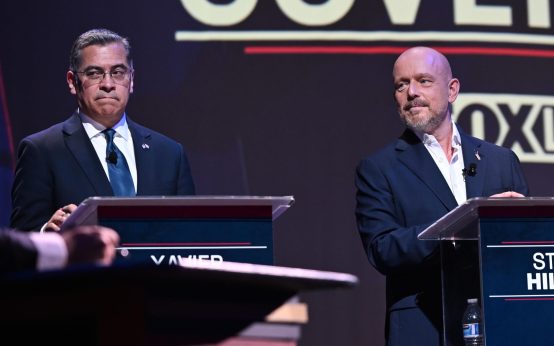 Becerra and Hilton Clash in California Gubernatorial Debate