
Quantum security has evolved from being a distant technical concern to a pressing infrastructure issue. Previously, companies viewed quantum risk as an abstract concept. However, the landscape is changing. Banks, custodians, payment firms, cloud providers, and digital asset platforms depend on cryptography to safeguard money, identity, communications, approvals, and transaction flows. A shift in cryptographic foundations requires a meticulous, lengthy, and sensitive migration process. It’s prudent to start early.
The worry over quantum computing is straightforward. Powerful quantum computers might eventually compromise many public-key cryptographic systems that secure digital signatures, encrypted communications, identity systems, and financial transactions. Institutions safeguarding high-value assets must prepare by adopting quantum-safe encryption techniques, which is a demanding process.
Challenges and Emerging Standards
The roadmap to quantum security remains unclear. Companies are advised to prepare for quantum risks even though the market hasn’t fully defined quantum-safe infrastructure. While standards are being developed, numerous implementation questions remain. Executives might delay quantum security investments due to these uncertainties, but that would be unwise. Companies investing now gain a head start on a complex infrastructure migration anticipated in the coming decade. Early experimentation allows institutions to understand their cryptographic dependencies, test new architectures, build internal expertise, and sidestep rushed decisions later.
Understanding Cryptographic Dependencies
Most large organizations lack a comprehensive map of cryptography across their infrastructure, which is a significant issue. Without understanding this, making a system quantum secure is challenging. Companies must identify signature schemes, encryption systems, key-management flows, authentication systems, vendor dependencies, cloud services, custody infrastructure, internal tools, and legacy systems. While seemingly basic, this task is rarely simple in large organizations with accumulated software, vendors, integrations, and operational workarounds. Early starters can tackle foundational questions. Which systems rely on vulnerable algorithms? Which keys protect significant assets or sensitive data? Understanding these dependencies enables companies to focus on urgent priorities rather than treating quantum migration as a monolithic project.
Revealing Development Needs Through Testing
The U.S. National Institute of Standards and Technology (NIST) plays a crucial role in this transition by evaluating and standardizing post-quantum cryptographic algorithms, essential in securing digital assets against future quantum threats. For institutions like banks and cloud providers, NIST serves as a benchmark for credible algorithm testing and eventual deployment.
Yet, standards alone do not create ready infrastructure. Institutions must understand how quantum-safe signatures and encryption operate in real systems. They must test these solutions against crucial operational factors like transaction size, latency, cost, approval workflows, key management, custody models, auditability, and resilience.
Smooth, Gradual Migration
Security migrations are not merely software updates. They require extensive testing, audits, compatibility checks, vendor coordination, customer communication, governance approvals, and potentially core infrastructure changes. Early adopters can pilot new systems, test hybrid architectures, and evaluate performance trade-offs, phasing upgrades into product roadmaps. Many organizations will temporarily run classic and post-quantum systems concurrently to test without jeopardizing existing infrastructures.
The worst scenario is waiting until it’s too late, leading to rushed infrastructure replacements during crises or under regulatory pressure. Starting now affords more control over the migration process.
Customers Reward Quantum-Readiness
Security is an essential consideration in commercial due diligence. Enterprises, financial institutions, custodians, exchanges, wallet providers, and infrastructure partners must demonstrate effective operational risk management. Quantum risk factors will become part of this discussion, as it influences major systems.
Providers unable to explain their quantum-readiness plans will appear unprepared. Customers and partners will seek details on quantum-readiness roadmaps, cryptographic inventories, testing of NIST-standardized algorithms, support for migrations, and understanding of system exposures.
Defining Market Standards
Early adopters in infrastructure shifts often set customer, partner, regulator, and vendor expectations. Quantum-safe security will follow a similar trajectory. Companies experimenting now help define migration timelines, hybrid deployment models, custody and signing architecture, risk governance, and vendor requirements. Their practical experience gives them a stronger voice and helps establish preparation benchmarks.
Notable Initiatives
Leading financial institutions and technology companies are already testing quantum-safe infrastructure. HSBC trialed quantum-secure technology to buy and sell tokenized gold. JPMorgan Chase is developing quantum-safe digital signature capabilities for financial use. Google incorporates post-quantum capabilities into core infrastructure.
These actions reflect seriousness toward quantum security. Institutions are actively testing, learning, and preparing their infrastructures for a transition requiring years of effort.
Quantum readiness will not arise from last-minute upgrades but through sustained preparation and practical testing.
Jay Prakash, founder and CEO of Silence Laboratories, emphasizes that the migration is underway. Institutions must prepare to keep pace.
 Senate Democrats Block Data Center Bill Over Efficiency Concerns
  Future Cities: Ambitious Projects Aiming for Innovation and Sustainability
 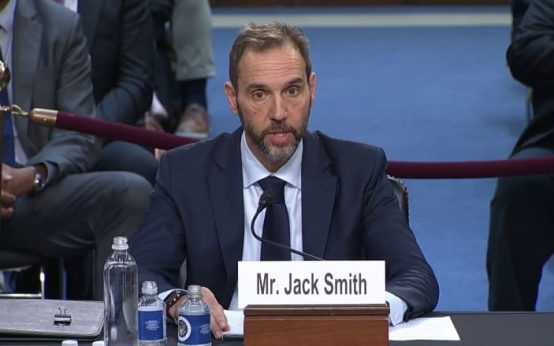 High-Profile Hearing and AI Developments: Key Political Moves
 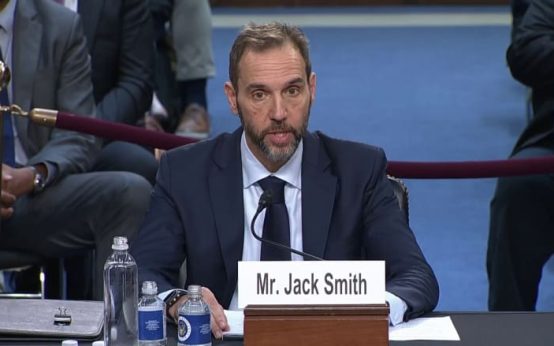 Key Events in Today’s Discussions Involving Jack Smith and President Trump
 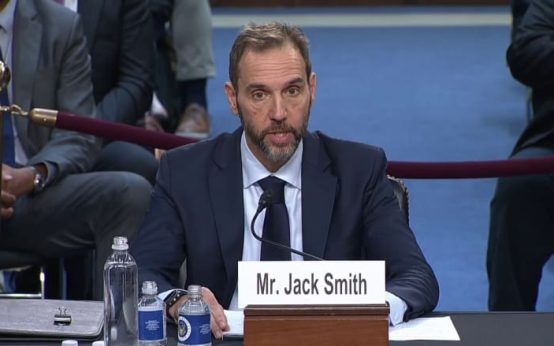 Jack Smith Faces Scrutiny Amid Investigations into Trump
  White House to Promote AI Benefits Amidst Security Concerns