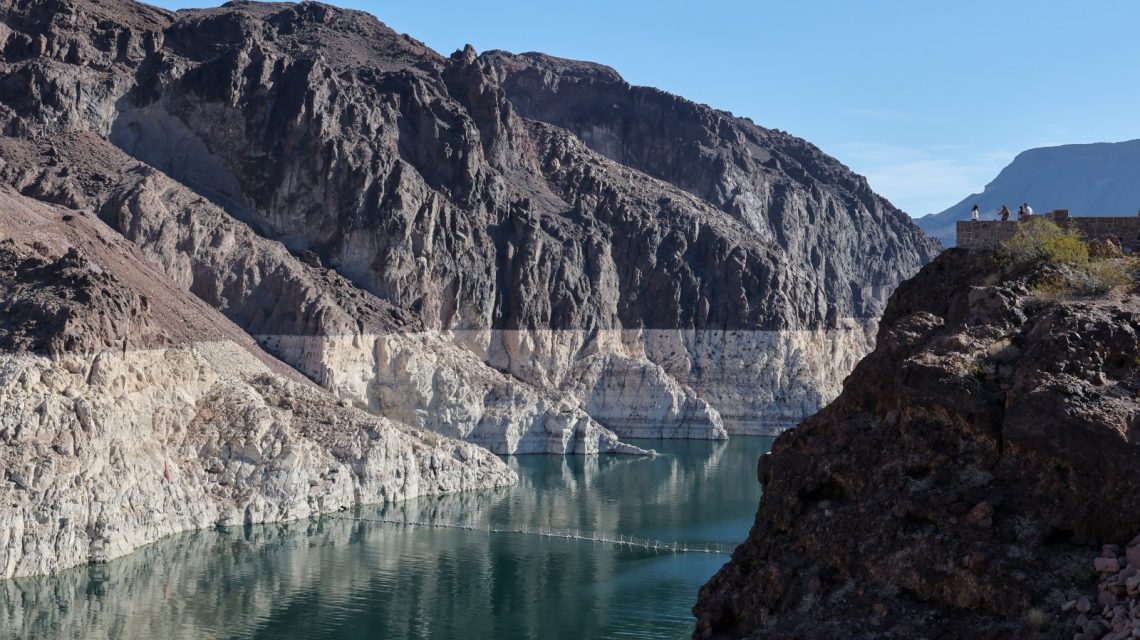
Lake Powell and Lake Mead, the largest reservoirs in the United States, have reached their lowest combined level ever recorded. According to a recent report, this marks an important development in the ongoing water supply crisis in the West.
Record Low for Combined Storage
On July 12, the total live storage in these reservoirs dropped to 12,675,509 acre-feet, surpassing the previous low of 12,677,161 acre-feet set on March 14, 2023. An acre-foot denotes the volume of water needed to cover an acre with one foot of water.
The report specifies that Lake Powell’s surface elevation was at 3,524.32 feet above sea level, constituting 5,505,869 acre-feet of live storage. Lake Mead was at 1,042.77 feet, totaling 7,169,640 acre-feet.
The report highlights that the last time these reservoirs held such low combined usable water was on May 23, 1957, with Lake Mead storing 12,668,000 acre-feet before Lake Powell’s existence. Often treated as separate entities, the report suggests that the reservoirs should be considered one connected storage system. Located in the Upper and Lower Colorado River Basins, they lie downstream of major Upper Basin water activities and upstream of significant Lower Basin uses. Essentially, they comprise one extensive reservoir divided by the Grand Canyon, where there are few consumptive uses.
Storage Losses Accelerated in 2026
The decline has seemingly accelerated in 2026. Since March, combined storage has decreased by about 16,000 acre-feet daily, except in May, when it slowed to roughly 11,000 acre-feet due to Rocky Mountain snowmelt and additional releases from Flaming Gorge Reservoir flowing into Lake Powell.
The monthly depletion rates since January are outlined as follows: 2,626 acre-feet per day in January, 6,494 in February, 15,733 in March, 16,861 in April, 11,001 in May, 16,230 in June, and 16,661 from July 1 to July 13.
The report warns that new record lows for combined storage are likely until runoff from the 2026-27 winter snowpack begins next spring.
The authors emphasize the significance of this moment in the Colorado River water supply crisis.
Importance of the Colorado River
The Colorado River stands as a crucial water system in North America. The Bureau of Reclamation states that it offers water supply, hydropower, recreation, and wildlife habitat benefits across states such as Arizona, California, Colorado, Nevada, New Mexico, Utah, and Wyoming, as well as Mexico.
Agriculture utilizes around 70 percent of its water, while 35 to 40 million people depend on it for a portion of their municipal supply.
Scientists caution that by 2028, reservoir levels might decrease to the extent that routine operations like water deliveries and hydropower production are jeopardized. Such a threshold defines a “system crash,” where the Colorado River’s infrastructure ceases to function effectively, endangering millions of people and significant agricultural economies.
Agreements Near Expiration
This storage low occurs as the government considers future management for the Colorado River. A U.S. plan may necessitate Arizona, California, and Nevada to reduce their river usage by about 20 percent in 2027 and 2028, with further cuts potentially arising later.
Arizona Governor Katie Hobbs has expressed that unreasonable reductions to her state’s allocation are unacceptable.
Several operating agreements are set to expire at the year’s end, with upcoming decisions pivotal to determining the distribution of the diminishing river.
As of Sunday, Lake Mead contained 7,061,904 acre-feet with only 27 percent of its capacity filled, and Lake Powell held 5,424,836 acre-feet, equating to 22 percent full.
 Atlantic Ends September Without a Hurricane for First Time Since 1994
  Bobcat Sightings and Conservation Efforts in Illinois
 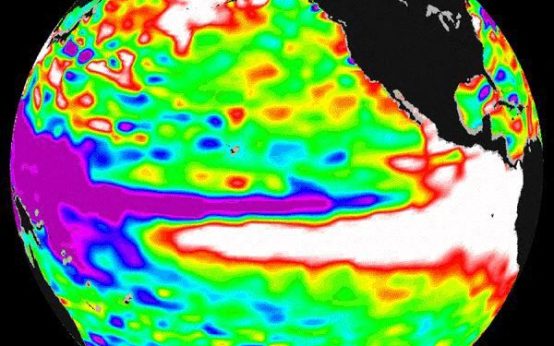 2026 El Niño: A Historical Comparison and Future Projections
  U.S. Records Warmest September in History
 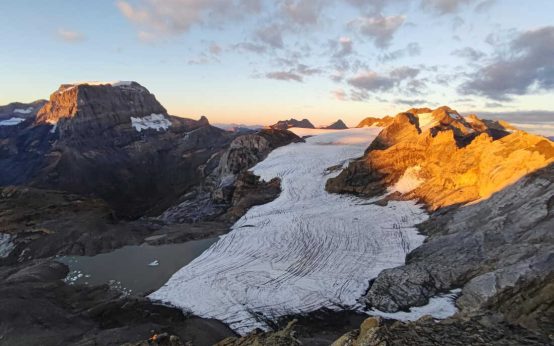 Swiss Glaciers Show Effects of Ice Loss Amid Global Warming
  Climate-Resistant Rock Glaciers: Hidden Water Resources