Renovation and Its Challenges
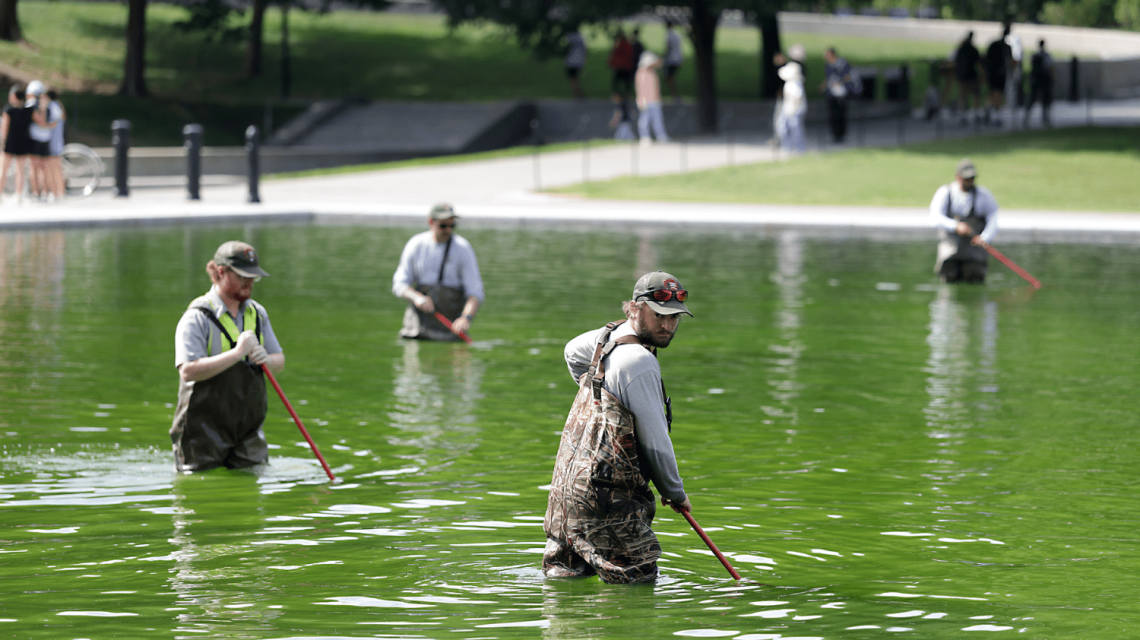
The Lincoln Memorial Reflecting Pool underwent a multimillion-dollar renovation aimed at giving it a deeper blue finish. Images show the water quickly turned green, raising concerns about conditions favoring algae blooms. Initiated by President Donald Trump, the renovation resurfaced the pool with a dark blue coating intended to improve appearance and seal leaks.
Trump’s initial cost estimate was between $1.5 million and $2 million, but records reveal the use of a no-bid contract brought expenses to around $14 million. This process has faced scrutiny, including a lawsuit from preservation group The Cultural Landscape Foundation, which contends that changes occurred without the necessary historic review.
A Persistent Algae Problem
The reflecting pool, stretching over 2,000 feet between the Lincoln Memorial and the Washington Monument, has been a D.C. landmark since 1923. Algae blooms have consistently been an issue, especially in summer when conditions such as heat, sunlight, and stagnant water prevail.
Previous renovations in 2012 saw similar outcomes. After a $34 million upgrade, algae appeared within weeks, forcing crews to drain and clean the pool again. This highlighted the difficulty in preventing algae growth in shallow, outdoor settings.
Potential Causes for Rapid Algae Growth
Residual Algae from Renovation
An Interior Department spokesperson mentioned residual algae as a factor. Supply lines sat dormant for weeks during construction, suggesting that the bloom might be a routine post-renovation effect.
Impact of Darker Coating
Some experts are examining whether the new dark blue coating contributes to algae growth. Darker surfaces may absorb more sunlight and heat, raising local temperatures and enhancing conditions for algae to thrive. Alla Silkina from Swansea University noted that while darker surfaces might aid growth, factors such as nutrient availability are more critical.
Weather Influence
Current weather conditions, such as warmth, sunlight, and stillness, may also be facilitating algae growth. Silkina elaborated that light aids photosynthesis while temperature affects metabolic rates, promoting faster growth if nutrients are available.
Infrastructure Challenges
Reports indicate persistent infrastructure issues, like reduced water circulation or aging pipes. Less circulation can lead to stagnation, providing a conducive environment for algae blooms.
The Green Appearance Explained
The green hue results from chlorophyll, the pigment in algae for photosynthesis. As algae multiply, they alter how light reflects off the water, overtaking the blue coating to appear green.
Silkina explained that under suitable conditions, algae populations can rapidly double, with blooms visible within days to weeks.
Speculation and Unverified Claims
A combination of residual algae, heat absorption, favorable weather, and water flow creates conditions scientists describe as a “perfect storm” for algae growth. Despite social media speculations alleging deliberate sabotage, no evidence supports these claims.
 Historical Events in Chicago on October 1st
  Patrick McEnroe Advocates for Collegiate Athletic Reform
  Push for Reparations Faces Challenges and Calls for Strict Eligibility
  Texas Man Arrested for Threatening State Capitol Attack
  The Key Debate Between Xavier Becerra and Steve Hilton: What You Need to Know
  Physicians Urge Senate to Reject FDA Nominee