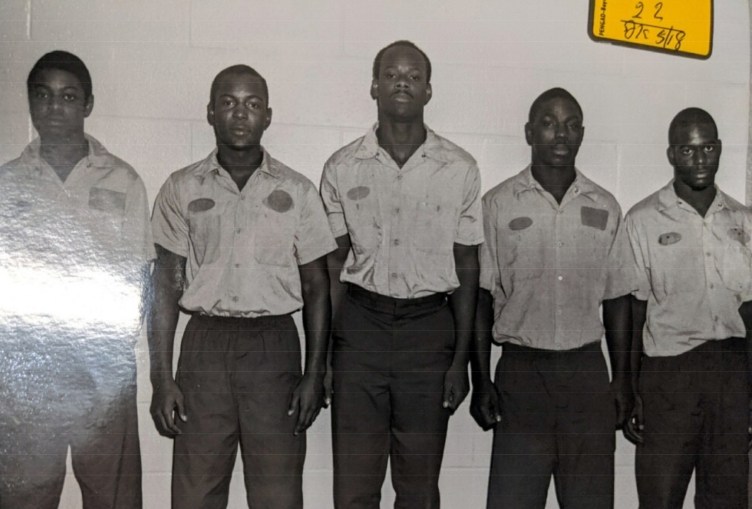
Alice Sebold, just after completing her freshman year at Syracuse University, was brutally raped on the night of May 8, 1981, while walking home through a park. Anthony Broadwater was arrested months later and convicted. He spent 16 years in prison, repeatedly denied parole for refusing to admit guilt. Although exonerated in 2021, he lived as a registered sex offender after his release in 1998. Sebold’s 1999 memoir, “Lucky,” recounts the attack and became widely read following the success of her novel, “The Lovely Bones.”
Forty years later, a court vacated Broadwater’s conviction, with the Syracuse district attorney joining a motion to clear him, stating Broadwater should not have been prosecuted. The exoneration was widely reported, but it raised questions about other potential victims in Syracuse and systemic failures in addressing these crimes.
Police brushed off rapes. Prosecutors bungled confessions or failed at trial. Judges overlooked irregularities.
In Syracuse in the early 1980s, a series of sexual assaults plagued the city. Sebold’s attack was the third such incident in Thornden Park within seven months, with another occurring nearby. Similar incidents were reported citywide, including assaults in dorms and homes. Descriptions of offenders often matched, yet urgency from law enforcement was lacking.
Police and University’s Response
Documents reveal that Syracuse University actively suppressed media coverage of campus-area crimes. Labeling a police report “NO PRESS” indicated that the university blocked the release of such information. A former detective noted that such designations were common.
The Investigation and Conviction
Sebold identified Broadwater on the street months after the assault, leading to his arrest and inclusion in a suspect lineup. However, she did not identify him in the lineup. Police had little evidence, relying on a pubic hair sample linked to Broadwater by race. Despite these shortcomings, the case proceeded quickly to indictment based primarily on Sebold’s affidavit, influenced by an assistant district attorney.
Hoping for a fairer process, Broadwater chose a bench trial over a jury trial. However, the judge appeared to favor Sebold, engaging with her personally and allowing the prosecutor to testify, creating an impression of Broadwater’s guilt. He was convicted without deliberation.
Continued Assaults and Alternate Suspects
Despite Broadwater’s conviction, rapes persisted in Syracuse. Thomas Weakfall, a high schooler, admitted to several sexual assaults nearby, matching elements of Sebold’s attacker’s description. Weakfall’s confession was invalid as it was obtained without his attorney present. He later pleaded guilty to burglary, receiving probation.
Weakfall confessed to further rapes after being linked to using a stolen ATM card, eventually serving a lengthy sentence. While his offenses were indoors, similar methods tied him to other assaults, though he denied attacking Sebold.
Film Project Sparks Exoneration
A movie adaptation of “Lucky” initiated a re-evaluation of Broadwater’s conviction. A private investigator’s review led to a motion filed by Syracuse lawyers, eventually overturning his conviction based on the flawed case.
More than 20 years post-release, Broadwater was cleared of all charges. Despite financial settlements, the stigma lingers.
Aftermath and Reflections
Sebold now accepts Broadwater’s innocence. She expressed regret for reporting the rape, believing it led to a miscarriage of justice. Broadwater continues to face challenges despite exoneration, struggling with normalcy.
Sebold wrote a personal letter to Broadwater, expressing sorrow for her role in his conviction. She considers it her most significant writing.
 Freddy’s American Adventure: From Soccer to College Football
  The Quest for the Knuckleball Dream
  Navigating Grief After a Sibling’s Overdose
  Tragedy and Immigration: The Impact on a Family
  The Journey of a Fox News Correspondent: From Infectious Diseases to On-Air Reporting and Beyond
  Midwest Underground Railroad Network Gains National Recognition