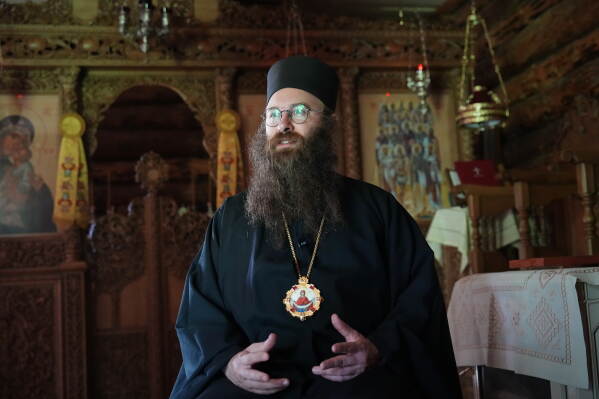
Bishop Damaskinos, dressed in traditional vestments of white and gold, recites prayers in Estonian in the small chapel of the Kirikla Orthodox Monastery. Located within a farmhouse, this monastery was founded last year in Estonia, one of Europe’s most secular countries. It is the first monastic establishment by the Estonian Apostolic Orthodox Church in many decades.
The collapse of the Soviet Union left the church sharing space with a Russian Orthodox counterpart affiliated with the Moscow Patriarchate, which has a larger following. However, the Estonian Apostolic Orthodox Church has long aimed to restore its monastic presence. Situated about 25 miles from the capital city, Tallinn, Bishop Damaskinos and Rev. Paisios live and pray at this new religious site.
With over 60 churches and a convent, the Estonian Apostolic Orthodox Church sees the monastery as a step toward renewing its religious community. The monks’ efforts extend beyond local borders, as Bishop Damaskinos explains, “The monastery’s purpose reaches globally as we pray for the entire world.”
Appeal of Monastic Life to Youth
Bishop Damaskinos, seen weeding in the garden, and Rev. Paisios, who works in the potato fields with youth volunteers, find fulfillment in their monastic lifestyle. Despite their busy schedules, they feel at peace. The simplicity and spirituality attract young visitors exploring faith in this predominantly secular country.
Priit Rohtmets, a church history professor, notes an uptick in religious interest among Estonian youth, free from Soviet-era anti-religious biases. Rohtmets outlines the potential for growth in religious communities due to this fresh perspective.
Becoming a Monk
To pursue monastic life, novices live for up to three years in a monastery, adopting the monks’ routines. If deemed ready, they vow to live in poverty, chastity, and obedience, committing to a lifelong monastic path.
Distinct from Orthodox priests who may marry, monks must remain celibate. Bishop Damaskinos values spiritual dedication over the number of monks. He emphasizes, “Our focus is the spiritual commitment to praying for the whole world.”
Their daily routine, learned from Mount Athos in Greece, starts with individual prayers at dawn, followed by group services, and garden or construction work. Evenings provide rare free time.
The Monastery’s Future
Kirikla is Estonia’s sole Orthodox monastery, yet other religious communities coexist. Despite the general decline in monastic commitments, Kirikla Monastery’s progress encourages its supporters.
Though limited to its farmhouse, donated by a local businessman, future plans include expanding facilities. To generate income, the monastery might sell garden produce or crafts. Nevertheless, Bishop Damaskinos prioritizes spiritual growth, stating, “We aim to cultivate brotherhood, building a strong foundation for monastic future in Estonia.”
The Associated Press’s religion reporting is supported by The Conversation US, funded by Lilly Endowment Inc.
 Readers React to Miss Manners Column
 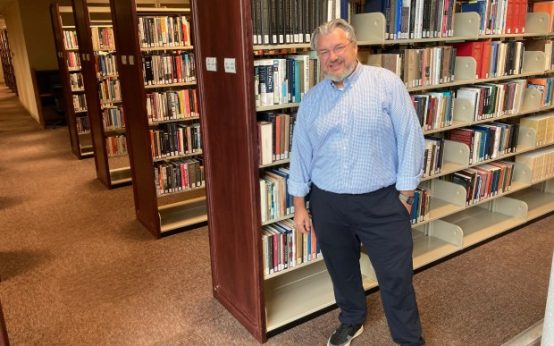 Troy Swanson: Award-Winning Librarian Transforming Academic Libraries
  Lisdoonvarna Matchmaking Festival: A Unique Tradition
  Atlantic Ends September Without a Hurricane for First Time Since 1994
 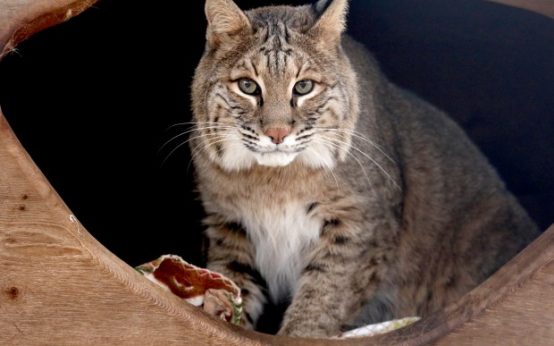 Bobcat Sightings and Conservation Efforts in Illinois
  2026 El Niño: A Historical Comparison and Future Projections