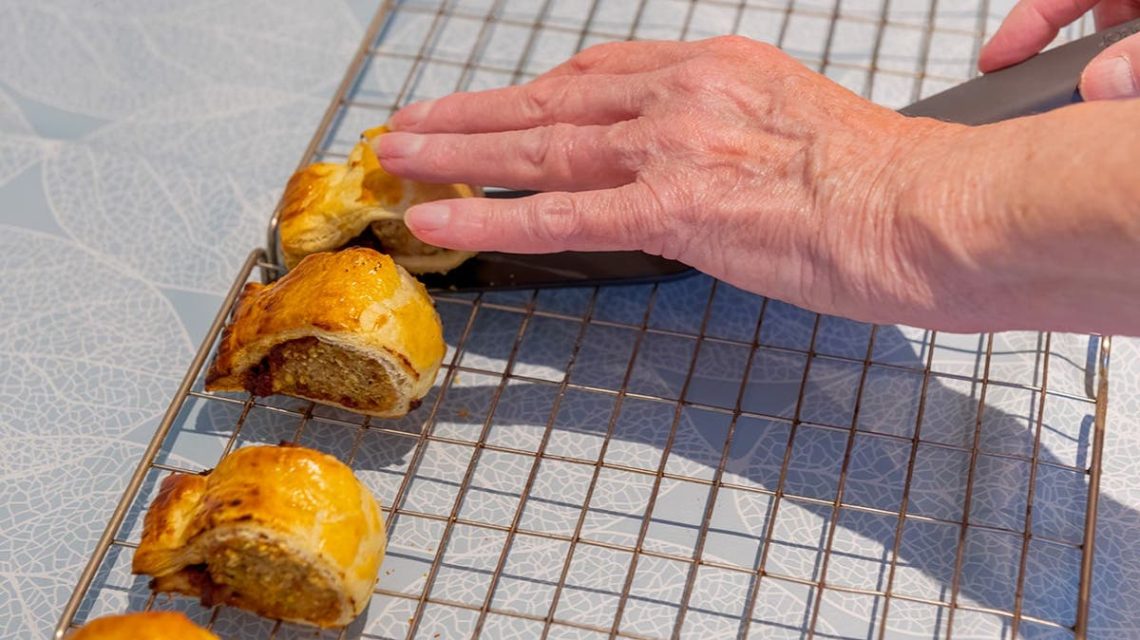
Scottish researchers are making strides toward creating a healthier version of the classic sausage roll by developing a plant-based alternative to traditional pastry fats. Scientists at Heriot-Watt University in Edinburgh have taken a significant step forward, moving their experiment from the lab to a partner’s kitchen. This initiative aims to blend innovative food science with everyday culinary practices to potentially enhance popular snacks while benefiting health and wellbeing.
According to Stephen Euston, a professor involved in the research, sausage rolls are a staple in the UK, with weekly sales reaching 10-15 million. However, these treats often contain high levels of saturated fat, with the most popular versions holding more than 60% of an adult’s recommended daily intake. Euston’s team is determined to create a pastry retaining familiar flavors and textures but with reduced saturated fat content. This research could extend beyond sausage rolls to other pastries like croissants, Danish pastries, and turnovers, all known for their complex flaky textures.
The challenge lies in the pastry-making process, which involves layering butter or lard between sheets of dough to achieve the desired flaky texture. Euston explains that simply substituting with healthier oils isn’t effective, as liquid oils lack the structure needed to separate layers properly. The team is exploring oleogelation, a method allowing plant-derived oils to mimic solid fats, thereby reducing saturated fat.
Euston emphasizes sustainability by using oils from crops that can be grown in the UK to minimize environmental impact. While initial findings are promising, dietitian Kelly Springer advises caution, noting more research is necessary to confirm the health benefits of these innovations.
The research comes amid a broader debate in the United States over the health impacts of seed oils. Critics argue such oils contribute to inflammation when consumed in processed foods. Yet, there is a divide on this opinion, with institutions like the British Heart Foundation and Johns Hopkins University supporting the use of seed oils due to their lower saturated fat content.
The Heriot-Watt research uses cold-pressed seed oil, involving only mechanical pressing and filtration, without chemical processing. An additional potential benefit for bakers is the reduced need to chill dough, which could streamline production. This feature may eventually lessen or eliminate the need for chilling altogether, according to Euston.
 Increased Funding Needed for Psychiatric Hospitals
  Trump Administration Distributes ACA Refund Checks
  Higher Consumption of Ultra-Processed Foods Linked to Increased Health Risks
  Understanding Inflammation: Myths and Facts
  Calm Parenting: Strategies to Manage Stress
  Trump’s Executive Order to Combat Mosquitoes and Ticks in D.C.