Senators Ted Cruz from Texas and Maria Cantwell from Washington have introduced a bipartisan bill aimed at reforming college sports. This bill seeks to regulate payments to athletes, restrict them to a single unrestricted transfer during their college careers, and limit coach movements during the season with a new ‘Lane Kiffin Rule’.
Addressing the Chaos
Cruz and Cantwell, key members of the Senate Commerce Committee responsible for overseeing college sports, shared their plans with the Associated Press. Cruz emphasized that this legislation is not solely focused on name, image, and likeness (NIL) payments, which have disrupted college sports with high payrolls. Instead, it aims for overall stability. Cantwell commented on the current chaos within the college sports system as the driving force behind the bill.
The bill resembles previous proposals called SCORE and SAFE, which failed to progress in recent months. It includes elements endorsed by the NCAA, such as a limited antitrust exemption and a provision to preempt varied state laws regulating NIL.
Support and Reactions
Meredith Page, chair of the NCAA Division I Student Athlete Advocacy Committee, praised the bill as a significant step forward in stabilizing college sports. NCAA President Charlie Baker acknowledged the review of the bill and expressed interest in continued discussions with Congress.
Tackling Issues
College sports have faced rising costs and challenges related to player payments and an unpredictable transfer portal. These issues threaten smaller sports, particularly women’s sports, which support the U.S. Olympic pipeline.
The Protect College Sports Act offers targeted antitrust protection for entities like the NCAA. In return, it provides athlete protections in areas including mandatory health insurance and scholarships, stricter NIL regulations, and protection against exploitative third parties and agents.
Rules for Athletes and Coaches
This bill introduces regulations limiting athletes to one unrestricted transfer during their college careers, an idea widely accepted across the nation. It also brings about a five-year eligibility period, aligning with upcoming NCAA plans.
The bill seeks to moderate coaching changes during the season. The ‘Lane Kiffin Rule’, named after a coach who switched teams abruptly, aims to prevent midseason coaching moves. Cruz highlighted the fairness of this rule, comparing it to similar structures in the NFL.
Media Rights and Financial Implications
The legislation proposes changes to the Sports Broadcasting Act, allowing conferences to collectively manage their TV rights. The possibility of increased revenue is appealing, though some argue it may not deliver significant financial benefits.
Conferences that engage in media pooling would need to allocate a portion of any increased revenue to support women’s and Olympic sports. This condition could be a sticking point for some conferences, like the SEC, which has considered breaking away from the NCAA.
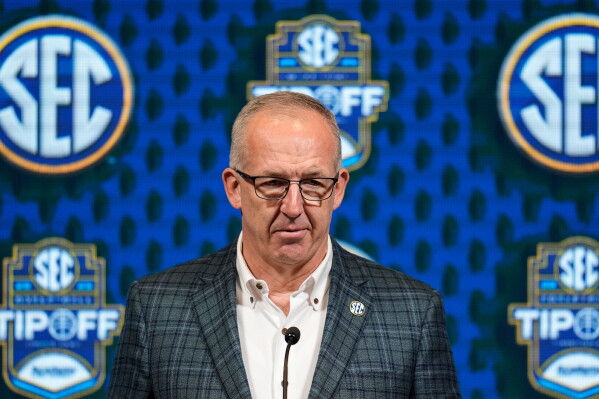
SEC Commissioner Greg Sankey and other conference leaders are examining the bill. Sankey acknowledged the importance of bipartisan efforts in Congress regarding these issues.
Challenges to Passage
The previous SCORE Act faced opposition from Democrats and was removed from the House schedule. Even if it passed the House, it faced an uncertain fate in the Senate, requiring 60 votes to bypass a possible filibuster.
Some Democrats, including Sen. Chris Murphy from Connecticut, raised concerns about the bill. While acknowledging benefits for athletes, Murphy criticized the antitrust exemptions granted to the NCAA. He argued that they favor the NCAA and influential figures in college sports to the detriment of athletes.
Sports law attorney Mit Winter expressed skepticism about the bill’s comprehensive nature and predicts challenges in its current form, especially concerning antitrust exemptions and liability protections.
This complex and comprehensive legislation faces a challenging road ahead. The desire for reform is evident, however. The path to achieving a broadly accepted solution remains uncertain.
AP College Sports Writer Eric Olson contributed to this report.
 Freddy’s American Adventure: From Soccer to College Football
  Troy Swanson: Award-Winning Librarian Transforming Academic Libraries
  Cornell University to Investigate Handling of Alleged Assault Case
  Brock Purdy’s Impressive Start in the 2026 NFL Season
  The Value of Retaining Miles McBride for the Knicks
  Penguins Make History with Dominant Season Opener