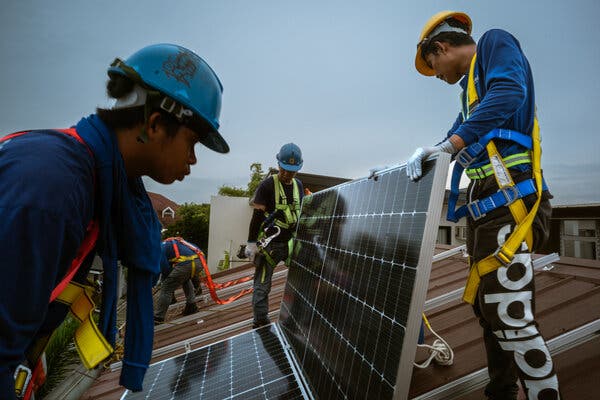
Homeowners and businesses in Southeast Asia are increasingly turning to rooftop solar panels in an effort to combat rising energy costs. This trend is especially significant in regions that depend heavily on imported oil.
Setting up a solar power system at a home in Quezon City, Philippines,
Jes Aznar captured the efforts to reduce energy expenses through renewable sources.
The shift began in March when the war in Iran disrupted energy markets. Heidi Mendoza, residing in Marikina, Philippines, installed solar panels shortly after the conflict escalated, to ensure she could continue teaching financial literacy classes online.
In a similar move, Ming Kuang Chai in Kuala Lumpur, Malaysia, decided to add solar panels to his home. His choice was influenced by the ongoing war and his need to manage living costs while driving an electric car.
Adiana Julia aims to add her parents’ house in Yogyakarta, Indonesia, to the growing list of solar-powered residences within the coming year. She believes reducing dependency on the grid is a prudent measure.
The conflict in Iran led to the effective closure of the Strait of Hormuz, impacting oil imports in Southeast Asia. Although a preliminary agreement between the United States and Iran might soon reopen the strait, economic challenges persist, encouraging lasting changes in consumer behavior.
Following U.S.-Israeli strikes on Iran, the Philippines declared a national emergency in response to skyrocketing oil prices and potential blackouts. This motivated Mendoza, 63, to invest in solar power, spending 390,000 Philippine pesos (approximately $6,500) to guarantee uninterrupted electricity supply for her online work.
The heightened demand for solar energy has been advantageous to China, the global leader in solar panel manufacturing. In March, China exported 5.5 gigawatts of solar capacity to Southeast Asia. According to Wood Mackenzie, this capacity could power 1.45 million homes for a year, emphasizes analyst Wan Afiq Naqiuddin.
 Collapse of Hawai’i’s Hōlei Sea Arch Amidst Storms
  Los Angeles Faces Uncommon Heatwave in October
  Drought Drives Black Bears Closer to Human Activity
  Atlantic Ends September Without a Hurricane for First Time Since 1994
  Bobcat Sightings and Conservation Efforts in Illinois
  2026 El Niño: A Historical Comparison and Future Projections