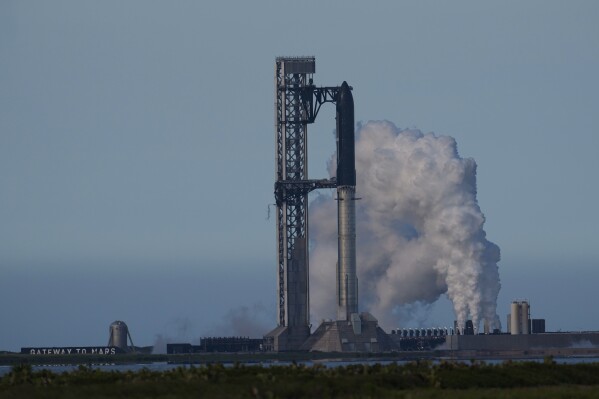
SpaceX has launched its largest Starship to date on a test flight. This new version is integral to NASA’s plans to land astronauts on the moon. The test occurred shortly after SpaceX CEO Elon Musk announced plans to take the company public. The launch took place from Texas, sending a payload of 20 mock Starlink satellites that were deployed midway through the flight. Although the spacecraft encountered engine issues, it reached the Indian Ocean, its intended destination, before exploding on impact, a result anticipated by SpaceX.
Musk described the launch and landing as ‘epic,’ stating, ‘You scored a goal for humanity,’ to his team via X. This event marked the 12th test of the Starship, which Musk envisions as a future vehicle for Mars exploration. Currently, the focus is on the moon, aligning with NASA’s Artemis program. Jared Isaacman, NASA Administrator, attended the launch, indicating that Starship has moved closer to lunar missions.
The last generation of Starships launched in October, with the newest version, named V3, launching from a new pad at Starbase near Mexico. Technical issues delayed an earlier launch attempt. During previous launches, midair explosions were common, but this time, there were no fireworks until the end. The spacecraft descended into the Indian Ocean seemingly under control before toppling and igniting. Not all engines operated as planned, but the vehicle continued its trajectory 120 miles up. Modified Starlink satellites captured brief in-flight views, a first for SpaceX.
This latest Starship, at 407 feet tall, is larger than its predecessors and features enhanced engine thrust. The booster is equipped with larger grid fins and a robust fuel line feeding 33 engines, comparable in size to the Falcon 9 booster. The stainless-steel spacecraft also boasts advanced cameras, navigation, and computing capabilities, alongside docking features for future missions.
Starship’s design aims for reusability, with mechanical arms intended for catching returning stages. However, this test did not involve component recovery. The booster completed its journey over the Gulf of Mexico, and the spacecraft ended in the Indian Ocean.
NASA has allocated significant funding to SpaceX and Blue Origin for lunar landers, vital to the Artemis initiative. Both companies are competing to lead in this domain. While Starship has executed several brief spaceflights, Blue Origin’s Blue Moon has yet to launch, though a prototype is nearly ready for testing.
NASA plans further tests, including a docking trial with an Orion capsule, part of the Artemis III mission. A lunar landing with two astronauts could occur in 2028, using either SpaceX’s Starship or Blue Origin’s lander, aiming to establish a lunar base operated by both humans and robots.
SpaceX has also opened bookings for private lunar and Mars trips aboard Starship. Dennis Tito, a former space tourist, has reserved a moon trip. Chun Wang, a bitcoin investor, is set for a future Mars mission with SpaceX, following a polar spaceflight around Earth’s poles.
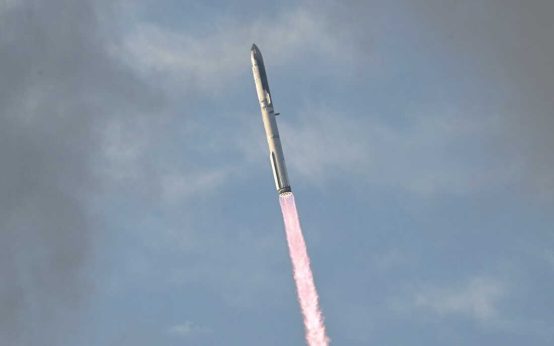 SpaceX Successfully Launches Starship Flight 14 into Orbit
  Pentagon Confirms US Possession of Space Weapons Amid Rising Tensions
  Countering Fear: A Pilot’s Approach to Calm Nervous Flyers
  Challenges in Establishing a Unique Identity for the United States Space Force
  NASA Launches Major Space Telescope for Cosmic Exploration
  NASA’s Roman Space Telescope Embarks on Mission to Unravel Cosmic Mysteries