A powerful 6.7-magnitude earthquake struck central Sulawesi, Indonesia, on Tuesday, causing widespread panic and damage. The quake led to at least one death and dozens of injuries, affecting infrastructure and homes and recalling memories of a devastating disaster in the same area eight years ago.
The U.S. Geological Survey reported the earthquake’s epicenter was approximately 27 miles east-southeast of Palu, 6 miles deep. The tremor caused residents in Palu, a city of about 400,000 people, to rush into open areas for safety. Hospitals relocated patients, many with IV drips, outdoors as a precaution.
Four nearby regencies, with a population of 1.3 million, have yet to be fully assessed. Preliminary data indicated that 312 people were displaced. One person died, and 38 others sustained injuries, 13 of which were serious. The hardest-hit area was Sigi regency, according to Abdul Muhari, spokesperson for the National Disaster Management Agency.
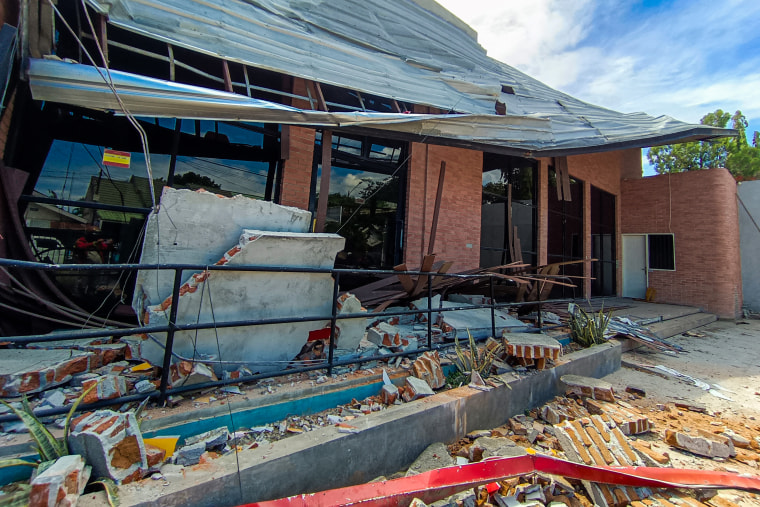
The earthquake inflicted significant damage on buildings and infrastructure. A total of 67 houses, six places of worship, four public facilities, two bridges, two government offices, and three business sites suffered damage. A provincial road connecting Palu with Sigi and Poso was also severed.
Palu resident Muhtar Ahmad described the shaking as strong, adding, “We are still traumatized by the previous earthquake, so we chose to remain outside because we are afraid that aftershocks may continue.”
In addition, at least 71 aftershocks were recorded throughout the day. This led to residents avoiding coastal areas due to potential tsunami threats, despite assurances from the Meteorology, Climatology and Geophysical Agency that there was no imminent risk. The agency warned that aftershocks might persist.
Images showed extensive structural damages; buildings had partially collapsed roofs and shattered walls, with debris scattered on the streets. Effendi Natali, a hotel manager in Palu, reported that all guests were evacuated safely, though the hotel sustained minor damage.
The current earthquake has revived anxiety among Sulawesi’s residents who remember the 2018 magnitude-7.5 earthquake. This past event resulted in a tsunami and soil liquefaction, claiming over 4,000 lives. In January 2021, another quake of magnitude 6.2 near Mamuju city resulted in over 100 fatalities.
Indonesia’s geographical setting makes it susceptible to earthquakes and volcanic activity, resting on the “Ring of Fire,” a belt of volcanoes and fault lines in the Pacific Basin.
 Investigation into Alleged Incident at Cornell University
  Rising Drone Threats Highlight Vulnerabilities in Moldova’s Airspace Defense
  Bolivia Faces Security Test Amid Unrest
  Incident on FlyDubai Flight Raises Security Concerns
  Journalist Gershkovich Discusses Wrongful Detention and Release in Russian Prisoner Swap
  Pakistan Airstrikes in Afghanistan: Civilian Casualties Reported