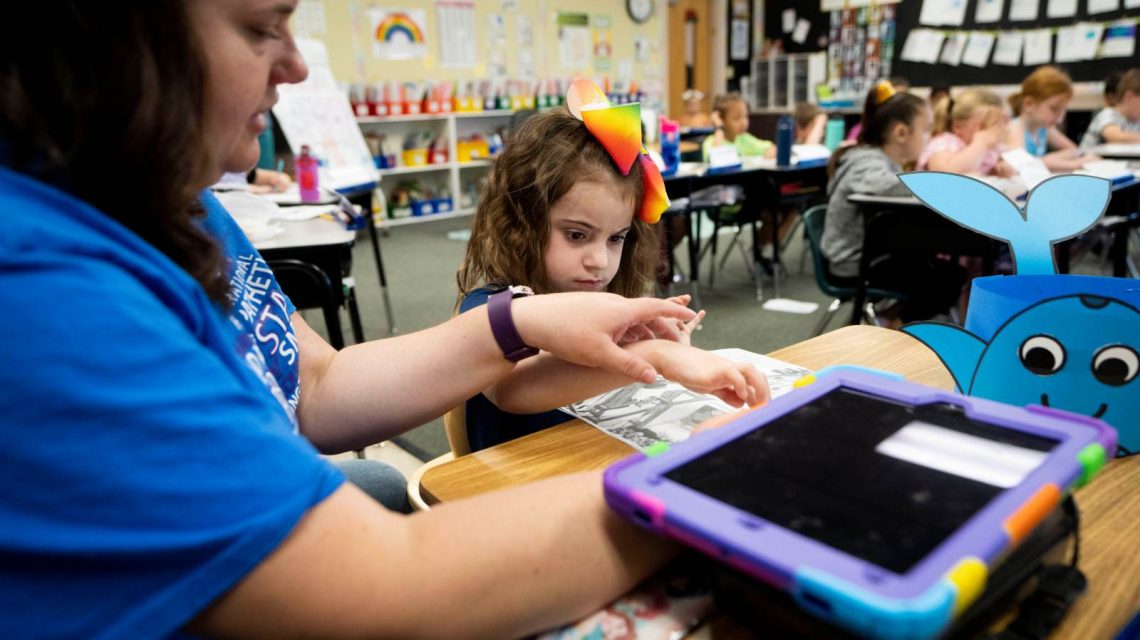
A group of Republican-led states is asking the Supreme Court to review a case that could redefine the connection between school choice, parental rights, and special education services across the United States.
States’ Arguments and Concerns
In a brief filed in support of two families in Massachusetts, attorneys general from 14 states contend that governments should not compel parents to leave private education by complicating their access to educational benefits. They argue that Massachusetts employs special education services as leverage to steer families back to public education.
The argument is that while states are not obligated to create educational benefits, if they do so, they must permit parental choice without restrictions. The states believe that some opponents of school choice aim to use taxpayer funds to coerce families into public education systems. Newsweek attempted to contact the Massachusetts attorney general’s office regarding this matter but did not receive a reply.
Impact on Families
Special education services have significant implications for millions of families nationwide. Over 7 million public-school students receive services like speech and occupational therapy, behavioral support, and specialized education. Many private schools also enroll students with disabilities.
The Supreme Court’s decision could influence whether states funding these services on private-school campuses must allow them to be delivered at the schools instead of a public or neutral location.
Details of the Hellman Supreme Court Case
The case, Hellman v. Massachusetts Department of Elementary and Secondary Education, debates whether private-school attending children can receive state-funded special education services within their schools. Services often encompass therapy, behavioral support, and specialized instruction.
The families suing argue they must choose between sending their children to private school and securing necessary services. The dispute involves two families with children who have disabilities attending Jewish day schools. Massachusetts law provides rights to special education for students in both public and private schools. David Hodges, representing the plaintiffs, expressed confidence in their case, emphasizing the importance of addressing whether a government can deny benefits based on a parent’s educational choices.
The core of the controversy is Massachusetts’ policy requiring service delivery at public or neutral sites, not on private school grounds. The families argue that this imposes hardships, causing lost instructional time, travel during school, and potential stigma, sometimes leading to families forgoing services altogether. Their constitutional claim refers to the Supreme Court decision in Pierce v. Society of Sisters, which affirmed parents’ rights to private education. The case raises questions about the state’s restrictions and parental rights.
Republican States’ Support and Position
The briefing, led by West Virginia and South Carolina, includes Alabama, Alaska, Arkansas, Florida, Georgia, Iowa, Kansas, Louisiana, Montana, Nebraska, South Dakota, and Texas. They argue that this case impacts school choice beyond Massachusetts, citing that many states have programs allowing parental choice for children’s education. They are concerned that the ruling could provide a framework for opponents to challenge school-choice programs, warning against using educational benefits as a means to direct students back to public schools.
Massachusetts’ Stance on Funding
Massachusetts argues it isn’t denying services but adhering to its Constitution’s provisions preventing public funds from aiding private schools. The state insists services are available at public schools or neutral locations but not in private schools. The First Circuit acknowledged this, citing constitutional compliance as a basis for restrictions.
Supporters of the families challenge this rationale, pointing to historical biases against certain groups influencing current policies. Organizations argue that these restrictions burden parental choice and indirectly penalize constitutional rights.
Future Implications
The Supreme Court has yet to decide on hearing the case. If they proceed, it could test the limits of constitutional protections for parental educational choices and state-imposed funding restrictions.
 Democratic Hopes and Historical Warnings in 2026 Senate Race
  Troy Swanson: Award-Winning Librarian Transforming Academic Libraries
  Cornell University to Investigate Handling of Alleged Assault Case
  Upcoming Congressional Elections: Key Districts to Watch
  Legal Challenge Against School Funding Inequalities in West Virginia
  Potential Changes Loom for School Voucher Programs