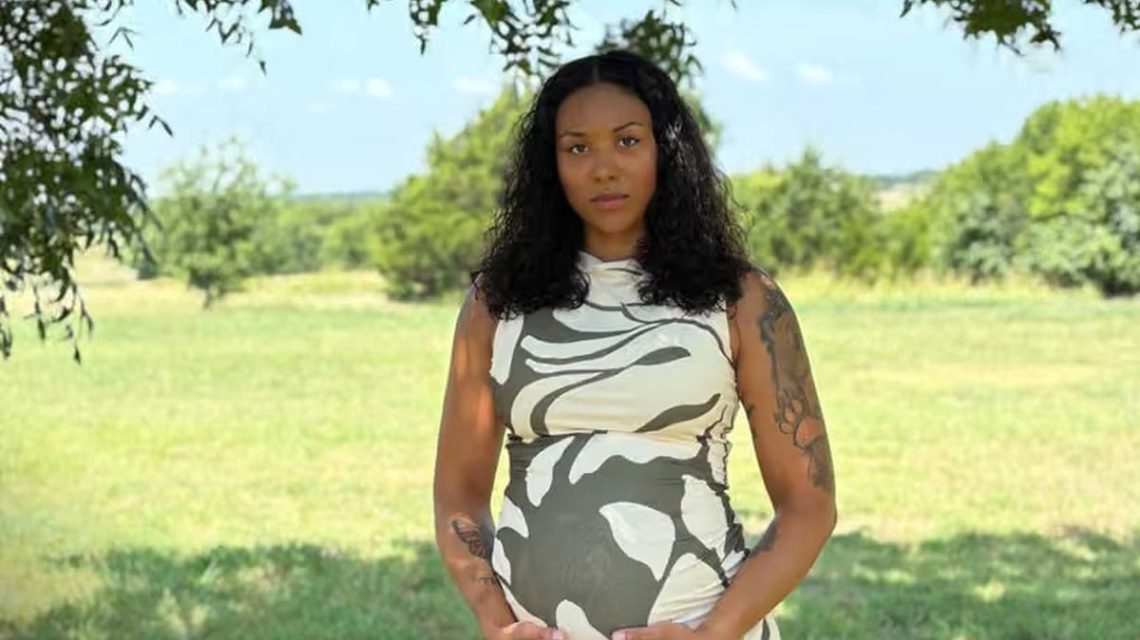
The surrogate who refused an abortion at the request of the biological parents has filed an updated brief with the U.S. Supreme Court. McKenna West, a resident of Alaska, is engaged in a legal conflict with a California couple referred to as the commissioning parties. This follows her decision to decline their request to terminate her pregnancy after the unborn child was diagnosed with Hypoplastic Left Heart Syndrome (HLHS), a serious heart condition.
McKenna, supported by attorneys from Alliance Defending Freedom and First & Fourteenth PLLC, has urged Justice Elena Kagan for an administrative stay. This comes amid concerns that the legal process is progressing quicker than anticipated. She seeks a stay pending a potential petition for certiorari to contest jurisdictional decisions.
“Surrogate mother McKenna West fled to Texas after the child’s biological parents asked for an abortion.”
Her legal team argues that the California courts breached federal due process by interpreting her jurisdictional defense as consent. They emphasize the importance of keeping the child in Texas to ensure West’s involvement in medical decisions, highlighting fears of early relocation to California for hospice care.
Monday’s courtroom tension arose from the surrogate’s concern that the child might be moved out of Texas sooner than expected. She has requested the Supreme Court’s intervention by 1 p.m. Eastern Time on Tuesday.
Recently, a California court declared the commissioning couple as the child’s legal parents, sidelining West’s custody challenge. The couple asserts California’s jurisdiction over the case, based on the surrogacy agreement.
West, in response, gave birth in Texas, a state with abortion restrictions, to maintain access to specialized medical care unavailable elsewhere. She sought parentage and protective orders in both Alaska and Texas. However, the commissioning parents initiated a parentage lawsuit in the Los Angeles Superior Court. As a result, West appeared in court to challenge personal jurisdiction and objected to the forum.
The California court adjudged West’s jurisdictional arguments and evidence as a general appearance, suggesting her consent to litigate there. Subsequently, the court ruled in favor of the commissioning parents for parentage. Following the child’s birth on August 12 in Texas, a Texas court acknowledged the California ruling and dismissed West’s claims, precluding further challenges.
 TikTok Couple Arrested for Alleged Arson in West Virginia
  21-Year-Old University of Georgia Student Survives Eight-Story Fall
  Texas Authorities Arrest Suspect Over Potential Capitol Attack
  Arizona State University Hockey Incident Leads to Coach’s Administrative Leave
  Senate Vote on Data Center Electricity Cost Legislation
  Fatal Hit-and-Run Leads to Additional Shooting Incident in Miami-Dade