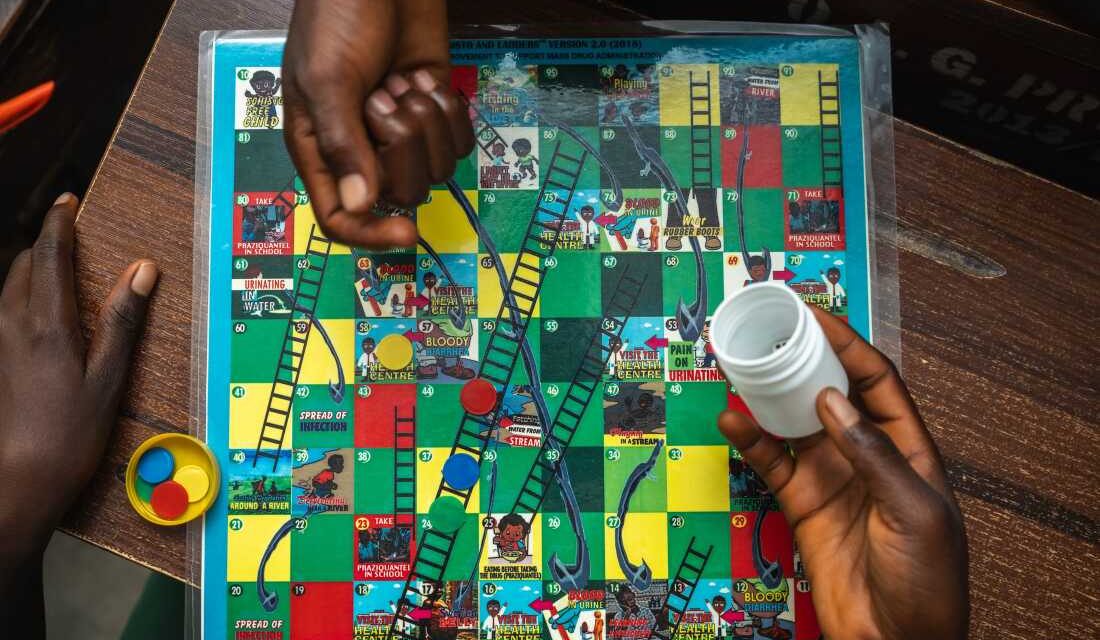
“Schisto & Ladders,” a modified version of “Chutes & Ladders,” is introduced in elementary schools in Nigerian regions affected by schistosomiasis, a neglected tropical disease caused by parasitic worms. The goal of this educational tool is to teach children how to avoid infection and understand treatment options if infected.
This game is part of a broader initiative led by educator Cynthia Umunnakwe and her colleagues, aimed at combating schistosomiasis. It creatively uses a familiar board game format to engage kids in learning crucial health information. In the adapted game, players aim to avoid infection by making smart choices, such as avoiding playing in infected rivers, illustrated by a worm in place of the traditional chute.
The Threat of Schistosomiasis
Schistosomiasis is a serious issue in rural areas, where water bodies heavily infested with parasites are used for daily activities. Common in children, it affects over 200 million people across sub-Saharan Africa. If untreated, it can lead to severe health problems, including organ damage and increased bladder cancer risk.
Unfortunately, despite effective medication, challenges remain due to limited access to clean water, testing, and treatment facilities. Education on disease transmission is crucial, as mere contact with infested water can cause infection.
The Game and Its Educational Impact
Developed in 2014 by Professor Uwem Ekpo and his team, “Schisto & Ladders” follows the classic board game format. Players advance by rolling dice and can move up ladders or down worms, depending on the actions they land on. Positive actions, like taking medications or removing snail habitats, help players advance in the game.
On a July 2025 visit to Apojola village, Umunnakwe helped children play the game as part of a health program that included testing and treatment for schistosomiasis. The game illustrates the disease transmission cycle, promoting behaviors that interrupt it, such as not defecating near water bodies and avoiding infected water.
Dr. Olubukola Adelakun contributed to awareness efforts by showing the children live snails, identifying the hosts of the parasite. This practical approach helps children recognize risks in their environment.
Research and Results
Umunnakwe’s research featured the game in six schools involving 275 students, showing significant improvement in understanding and acceptance of treatment. Prior resistance to the oral drug praziquantel, due to misinformation, was reduced. More than two-thirds of students recognized the drug’s safety by the end of the study.
The initiative aims to translate game-based learning into real-world behavior changes among schoolchildren, addressing public health challenges with an educational twist. Kids not only gain knowledge but also enjoy the process, as highlighted by the joy of a boy reaching the “Schisto-free child” square.
 U.S. Monitors Russian Plague Scare
  Student Activists Protest Cornell University’s Handling of Rape Allegations
  Guide to Choosing the Best Probiotic Powder for Gut Health
  Screencaps: Insights into Sports, Pop Culture, and College Trends
  2026 Nobel Prize in Physiology or Medicine Awarded for Optogenetics Research
  ProPublica’s Experiment in Opening Private Schools