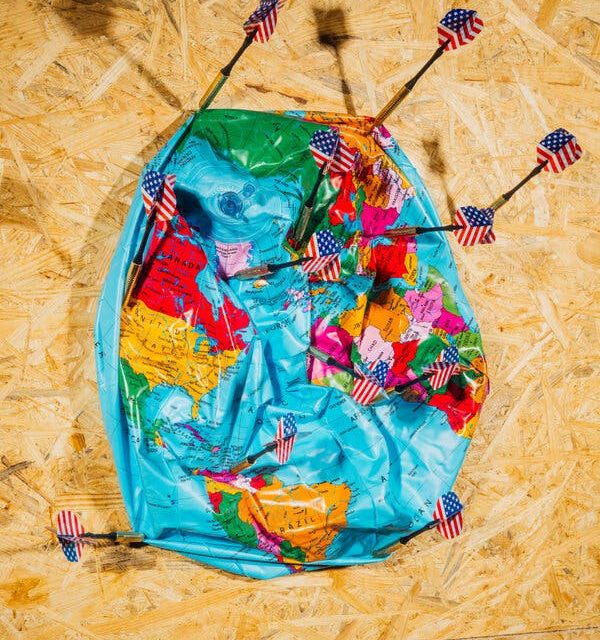
As the conflict in Iran reaches a delicate conclusion, questions linger about its effectiveness. Why did a country like Iran, facing isolation and economic strain, withstand a global superpower with a $29 billion military investment?
The answer lies in the United States’ approach. Opting mainly for an alliance with Israel, President Trump relied on military strength to compel Iran’s compliance. However, by bypassing the U.N. Security Council, as mandated by the U.N. Charter, the war initiated was illegal. This decision alienated many traditional U.S. allies. There was minimal regional consultation, which put allies at risk. Despite a strategy of continuous military pressure, the effort failed.
Iran retaliated by blocking the Strait of Hormuz and launching attacks on neighboring nations. When President Trump later sought broader support against Iran, it was too late. NATO allies were unwilling to join an illegal war that had negatively impacted their economies.
Long-standing U.S. allies actively distanced themselves. Key nations like Spain, France, Italy, and Switzerland restricted access to their airspace and bases for U.S. operations. Britain, though deeply aligned with the U.S., only permitted defensive use of its bases. Prime Minister Keir Starmer stated, “We are not engaging in offensive actions taken by the U.S. and Israel.”
The Iranian conflict emphasized a crucial point: a powerful nation cannot achieve its goals in isolation. This realization presents a broader issue within the president’s foreign policy. The ambition to restore American greatness overlooks an essential factor—America’s strength came not from unilateral power but from building international alliances that shared its values.
The United Nations exemplifies this. The U.S. State Department, led by Under Secretary Sumner Welles, initially crafted the U.N. Charter to uphold post-World War II peace. The aim was to avoid future global conflicts through cooperative international governance. Yet, the Trump administration repeatedly contravened this charter, taking military actions in Iran, Venezuela, and the Caribbean.
 The Trump Team’s Challenge to the Military Leadership
  Maryland First State to Restrict Electronic Pricing in Grocery Stores
  British Police Arrest Man Suspected of Terror Plot
  Activists Push for Nationwide Ban on Child Marriage in the U.S.
  Democratic Hopes and Historical Warnings in 2026 Senate Race
  Republicans Face Challenges Amidst Cost of Living Concerns