
The last moments of Bernard Cowan’s life were captured by a body camera from one of the gunmen who killed him. On the morning of October 7, 2023, Hamas gunmen traversed Kibbutz Sufa, less than two miles from Gaza. Cowan, a 57-year-old British-Israeli grandfather, had left his family’s safe room due to his claustrophobia, as his brother later explained. His wife, Margaret, remained inside. A gunman noticed Cowan sitting inside the house and fired twice through the window, leading to Cowan’s collapse. The camera continued capturing the attackers as they moved through the kibbutz, shooting at homes and the tires of an ambulance. The footage also showed a telephone still ringing on a kitchen table. Cowan was among roughly 1,200 individuals killed during the attacks on October 7 in Israel. Such a number, while tragic, may not fully convey the impact of the atrocity on a nation like Israel.
America recently marked the 25th anniversary of 9/11, where 2,977 Americans lost their lives to 19 hijackers. An incident equivalent to October 7 in America would have resulted in about 40,000 casualties. This comparison highlights a proportional sense that mere casualty figures cannot express: Hamas inflicted a national trauma that made an overwhelming Israeli response both likely and foreseeable on political and psychological grounds.
While many analyses of October 7 emphasize what Hamas aimed to achieve with the attack—hostages, the release of prisoners, regional war, or disrupting Israeli-Saudi normalization—Dov Waxman, a scholar at UCLA, believes Hamas might have calculated that the very nature of Israel’s reaction could further its objectives. According to Waxman, the decision to film their actions using GoPro cameras and broadcast the atrocities they committed suggested a strategic move. He compares this logic to Osama bin Laden’s plan during September 11, where a weaker force cannot directly defeat a stronger power but can provoke a reaction that alters the political landscape.
Three years later, the paradox of October 7 emerges: Hamas did not annihilate Israel. Yet, much of Hamas’ senior leadership faced demise. Its military power was severely weakened. Gaza suffered a significant Israeli offensive and humanitarian disaster that resulted in tens of thousands of innocent deaths and displaced a large proportion of its populace.
The political landscape shifted as well. The Palestinian cause returned to the forefront of global politics, while Israel’s international reputation significantly declined. Among young Americans, Palestinians are increasingly viewed more favorably than Israelis, to the point where support for Israel is seen as an ideological test. For different reasons, avoidance of U.S. support for Israel is a purity test for some conservatives. This generation will eventually ascend to positions of authority.
Hamas lost the war it thought it was initiating. It possibly won something else; a lasting change in global perception of Israel, particularly from those who will one day lead its closest ally.
What Did Hamas Aim For?
For three years, discussions have revolved around what Hamas accomplished on October 7. Yet, considering what Hamas thought it was achieving offers unique insights. Daniel Sobelman, a professor of international security at the Hebrew University of Jerusalem, interprets Hamas’ strategy as audacious. Documents now with Israel reveal Hamas’ explicit goal: “The destruction of Israel, the liberation of Palestine.” The behavior exhibited by Hamas’ leadership on that morning aligned with this ambition; they urged Hezbollah to join in, and leaders publicly called on regional allies to partake in the offensive.
For a few remarkable hours, Hamas’ fantasy did not seem wholly unrealistic as Israeli military positions crumbled, Hamas infiltrated across borders guarded by sophisticated defenses, and communities were overtaken.
Israeli peace activist Gershon Baskin, involved in dialogue with Hamas, suggests that Hamas underestimated the success of its initial strike. Baskin recounts hearing from Hamas leaders that they sent 1,500 fighters across the border expecting heavy casualties.
Hamas anticipated Israel’s collapse would incite a regional response—a coalition rising against Israel, as Bashkin describes. Yet the anticipated broad mobilization did not materialize.
Within a year of the October 7 attack, significant figures within Hamas—Saleh al-Arouri, Ismail Haniyeh, Mohammed Deif, and Yahya Sinwar—were killed. Hamas faced not only the decimation of leadership but also a lack of the sweeping regional assault that Sobelman anticipated. Hezbollah opened a northern frontier but did not launch the widespread invasion expected.
Gaza itself suffered greatly. Around 75,000 Palestinians died, per Gaza Health Ministry statistics reported by the Associated Press. A World Bank assessment with the United Nations and European Union estimated nearly $30 billion in infrastructure damage within the first year. Housing incurred the largest share of destruction.
On September 16, 2026, a structurally unstable Gaza City building, damaged by previous Israeli strikes, collapsed, killing at least 21 people, exemplifying ongoing devastation. AP journalists documented bodies being pulled from the debris.
Baskin’s interactions with Hamas officials do not indicate that events transpired as they expected. He reported no expressions of regret or affirmation of the attack’s worth.
Hamas aimed to seize Israelis, compel a prisoner release, and ignite a regional offensive. Baskin traces Hamas leader Sinwar’s intent back to his own release in a prisoner exchange in 2011, believing that Hamas needed a larger operation.
Professor Shibley Telhami of the University of Maryland questions whether Hamas genuinely expected to eliminate the Israeli state; he argues they likely aimed to alter an unfavorable political climate marked by occupation and stalled negotiations.
The Results
Assessing October 7 involves questioning not only what Hamas expected but also if the subsequent war advanced its intended global shift. By spring 2022, 55% of Americans viewed Israel favorably. By March 2026, favorability dropped to 37%, while the unfavorable views increased to 60%. These figures illustrate a decline in Israel’s reputation rather than an embrace of Hamas.
Beyond approval ratings, Israel’s international status fell, as the Global Soft Power Index positioned Israel 39th in 2026, plummeting six places in a year. Israel ranked near the bottom for perceived world impact. The Nation Brands Index documented the most severe drop for Israel in its history by 2025.
David Makovsky, at the Washington Institute for Near East Policy, cautions that Israel’s current global standing could change with its government, especially given Prime Minister Benjamin Netanyahu’s struggles.
With elections approaching, Makovsky envisions a new administration could behave differently, ameliorate extremist violence, adjust alienating policies, and enhance external messaging. However, a transformative shift seems inevitable as new generations take charge. UCLA’s Waxman emphasizes the significant impact of recent events on young Americans’ perceptions.
The actual policy implications may depend on future governmental changes in Israel rather than perpetual deterioration of U.S.-Israel relations.
While shifting dynamics could stop America-Israel indifference, many Americans view the nation itself differently.
Historically, American support for Israel transcended political disagreements on settlements or peace negotiations. But now, arguments challenge longstanding alliances from both progressive and isolationist ends.
Progressive critics emphasize Gaza-related civilian suffering, while some conservatives question Israel’s foreign policy privileging. Concurrently, conversations characterize U.S. support for Israel as complicit in Gaza incidents. This is echoed in commentary by Democratic figures like Bernie Sanders, while conservatives, more concerned about entanglements, ponder support rationale.
Generational shifts in U.S. politics exemplify changing views on Israel. Maxwell Frost, the first Gen Z Congress member, remarked to Axios about shifting attitudes towards aid for Israel’s Iron Dome, previously deemed fringe.
In July, a significant faction of Democrats challenged military aid to Israel. Though unsuccessful, it illustrated altering opinions within the American political spectrum.
On the right, “America First” sentiment restricts broader support for Israel among younger conservatives.
The changing political landscape reflects evolving attitudes in both party bases, raising questions about future U.S.-Israel relations.
Hamas lost the battle it sought. Nonetheless, the political aftermath will be influenced by generational innovation, shaping perspectives and policy from Washington.
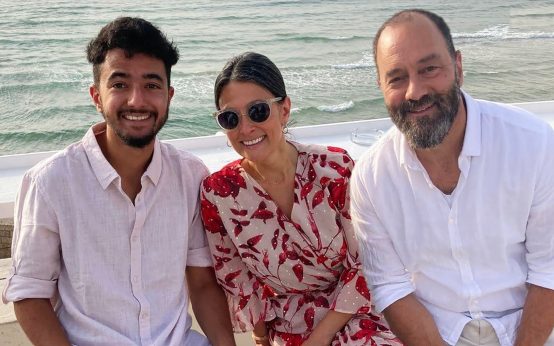 Grief and Memory: Families and Nations Respond to Tragedy
  Remembering Hersh Goldberg-Polin
  Commemoration of the Oct. 7, 2023 Hamas Attack on Israel
  French Government Faces Scrutiny Over Student Protest Handling
  California Realtor Arrested as Suspected Chinese Agent
  German Ex-Spy Chief Arrested for Suspected Espionage