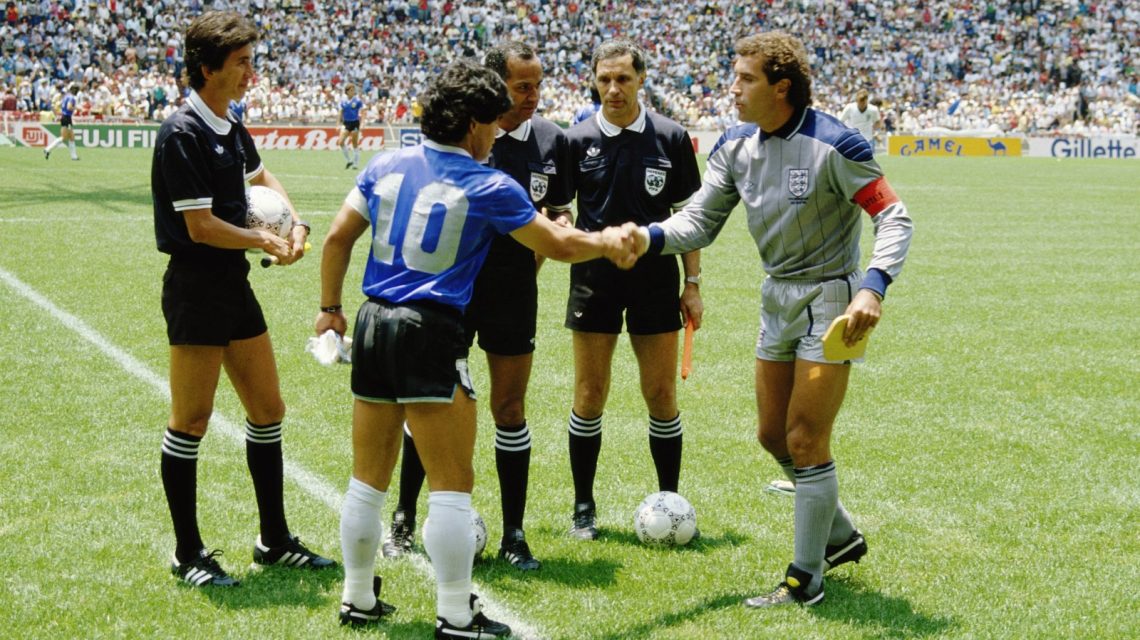
The 1986 World Cup quarterfinal between England and Argentina transcends mere sports history. When Diego Maradona scored against England at Estadio Azteca, perceptions shifted. To many Argentines, his controversial goals represented more than points on the board. They viewed them as settling a score from the Falklands War, a conflict four years prior that claimed numerous lives—649 Argentine and 255 British service members, in addition to three islanders.
Although Argentina lost the war, it achieved a bitter-sweet triumph over England on June 22, 1986. Maradona, initially insisting the game was unrelated to the war, later described it as symbolic revenge for the fallen Argentines. In a 2019 documentary by Asif Kapadia, he reiterated this sentiment, calling the victory over England a symbolic act.
Years later, as Argentina and England gear up for a World Cup semifinal in Atlanta, memories of the war and the iconic match loom. The encounter, their first since a 2002 World Cup meeting, stirs geopolitical tensions rooted in history. Even now, chants and anthems evoke the unresolved question of sovereignty over the Falklands, which Argentina calls ‘Las Malvinas.’
Continued Soccer Rivalry
The intense rivalry, set against a backdrop of territorial disputes, highlights tensions that go beyond the soccer pitch. Argentine players, including Lionel Messi, were seen singing in the locker room about the Malvinas. FIFA, despite rules against political gestures, has not penalized the Argentine team, further demonstrating the deep-seated national sentiments around the issue.
During past tournaments, such as the 1998 and 2002 World Cups, matches between these teams carried similar intensity. David Beckham’s infamous red card in 1998 and his penalty-fueled win for England in 2002 are key moments in this storied rivalry.
Oil: A New Dimension to the Falklands Dispute
Today, the islands are not only symbolic. They hold economic promise due to the discovery of oil in the North Falkland Basin. Developers, led by Navitas Petroleum and Rockhopper Exploration, are advancing the ‘Sea Lion’ project, with substantial financial returns expected to benefit the Falkland Islands.
The field promises to deliver 170 million barrels of oil in its first phase, with peak production reaching around 50,000 barrels a day. Critically, the project could transform the islands’ finances, generating £4 billion over its lifespan. However, Argentina, asserting its sovereignty over the islands, views such activities as illegal.
Political Stances and Complexities
President Javier Milei of Argentina has taken a firm yet paradoxical stance. While pursuing closer ties with Britain and understanding the islanders’ wish to remain a British Overseas Territory, he commits to asserting Argentina’s claim. Such dynamics reflect the layered political landscape in which the country navigates its claim over the islands.
Internationally, views on the dispute vary. A 2023 YouGov survey illustrated American support for British sovereignty, contrasting with Argentina’s unified position. As the political landscape evolves, the Falklands’ future remains intertwined with historical grievances and economic opportunities.
With the backdrop of new oil developments, local and international politics may intensify, especially as Argentina approaches its October presidential elections. The opposition accuses Milei of weakening the national claim, indicating that tensions are unlikely to dissipate soon.
As the world watches the upcoming soccer match, memories of Maradona’s triumph and the complex geopolitical ties underpin the event. Beyond the game, the stakes involve economic ambitions and enduring historical narratives, ensuring that emotions on both sides of the dispute remain charged.
 The Value of Retaining Miles McBride for the Knicks
  Penguins Make History with Dominant Season Opener
  Sonny Gray Expresses Frustration After Game Against Yankees
  Colorado Avalanche’s Nathan MacKinnon Shines in Season Opener
  Yankees Sweep Red Sox in AL Wild Card Series
  Arike Ogunbowale Shines in Dallas Wings’ Overtime Victory