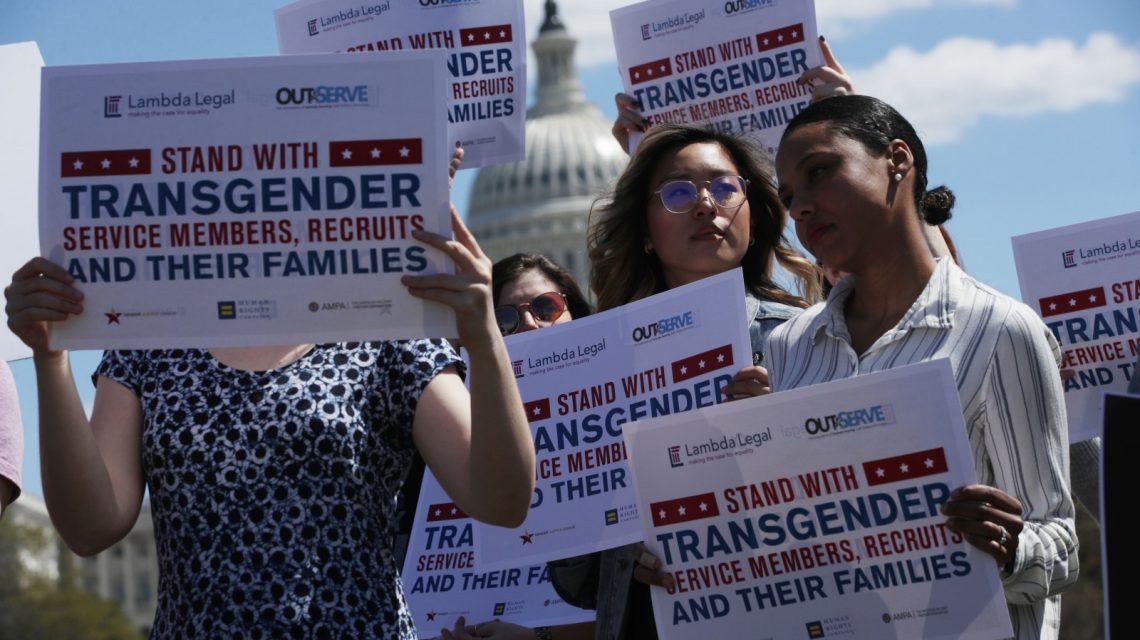
The case of Ireland v. U.S.A., involving 17 transgender veterans and service members, challenges the revocation of retirement benefits under the Trump administration’s military transgender policy. Argued in the U.S. Court of Federal Claims, the lawsuit questions whether the Air Force unlawfully canceled early retirement approvals after President Donald Trump’s executive order restricted transgender military service.
The plaintiffs assert that the Air Force reversed their retirement approvals without cause, denying them significant financial support. This case is crucial, as it could determine the receipt of military pensions and health benefits for affected service members. If unresolved, veterans near retirement face losing substantial lifetime income and healthcare benefits after more than 15 years of service.
“The Air Force abruptly reversed that promise without cause — ripping away the financial support and benefits that these service members earned, and their families were counting on,” stated the plaintiffs’ attorneys.
Case Details
This lawsuit, involving the Air Force and Space Force veterans, claims early retirements under the Temporary Early Retirement Authority (TERA) program were approved and then rescinded. Among the plaintiffs is Logan Ireland, a former Master Sergeant with service in Afghanistan, who contends the government’s actions disrupted planned futures.
“I raised my hand and served my country honorably for 15 years, including a deployment to Afghanistan,” Ireland said. “Long-serving service members and their families build their lives around the promise of earned retirement. When that promise is revoked, it does not just affect a paycheck, it affects housing, health care, family stability, and a lifetime of financial security.”
Focus of This Week’s Hearing
The hearing concentrated on the government’s motion to dismiss the case. Federal attorneys argue that the Court of Federal Claims lacks jurisdiction, while plaintiffs’ attorneys claim the court can evaluate claims concerning military pay and retirement benefits.
Central to the dispute is Trump’s executive order revoking the transgender service policy. This order impacted troops with gender dysphoria, subjecting them to separation. Plaintiffs sought early retirement to avoid separation and had their approvals rescinded.
Alex Beene told Newsweek that this rescinding raises questions about service member reliance on promised benefits amidst policy changes.
Broader Legal Challenges
This lawsuit forms part of broader disputes over transgender military service policies. In June, a federal appeals court deemed the policy likely unconstitutional, allowing certain plaintiffs to continue serving during litigation. For the current case, the issue is whether the government can nullify promised retirement benefits.
Michael Ryan stated, “It’s not about whether they should’ve been allowed to serve. It’s about whether the government can dangle earned retirement, get people to sign up for it, then reverse course without consequence.”
Next Steps
The Court of Federal Claims must decide whether to grant the government’s dismissal motion or allow the case’s progression. If jurisdiction is established, the lawsuit will proceed to address claims of unlawful early retirement cancellations by the Air Force. A win for the plaintiffs would set a precedent for honoring federal commitments irrespective of political shifts.
Ryan added, “This case could force the government to honor commitments or pay the damage.”
 The Trump Team’s Challenge to the Military Leadership
  Maryland First State to Restrict Electronic Pricing in Grocery Stores
  Activists Push for Nationwide Ban on Child Marriage in the U.S.
  Democratic Hopes and Historical Warnings in 2026 Senate Race
  Republicans Face Challenges Amidst Cost of Living Concerns
  A Different Kind of Fall for Congress This Year