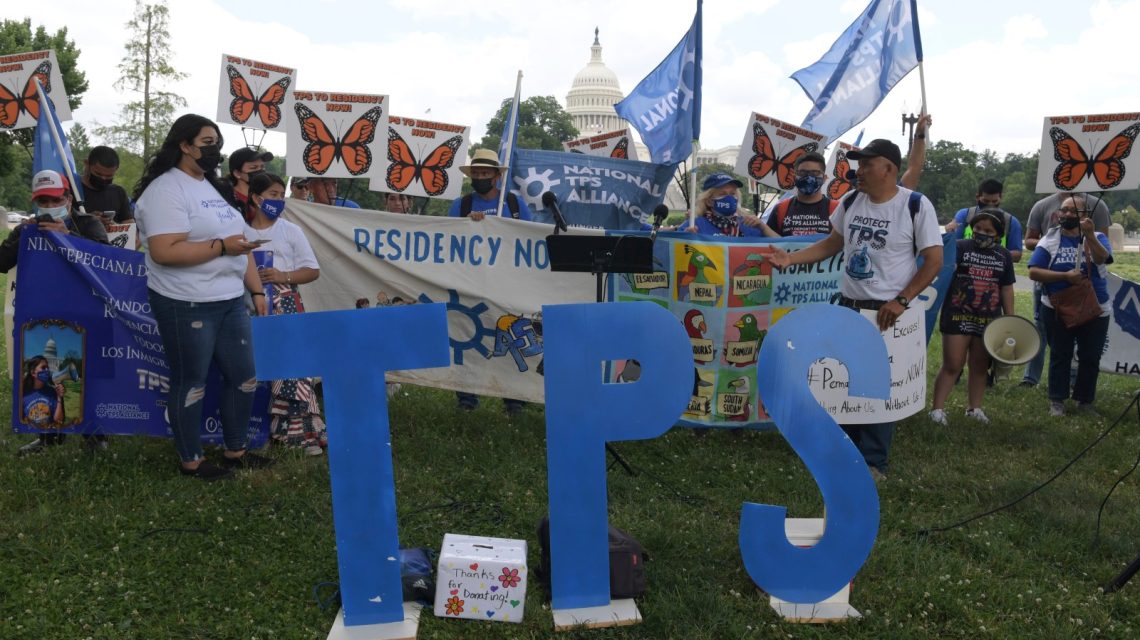
The Trump administration’s Department of Homeland Security (DHS) Secretary, Markwayne Mullin, is under scrutiny from Republicans due to claims of “backdoor amnesty.” The criticism arises as the Supreme Court enables the administration to end Temporary Protected Status (TPS) for approximately 350,000 Haitians and 6,000 Syrians. On June 25, the justices ruled 6-3 in Mullin v. Doe that courts cannot review a Homeland Security secretary’s decision to terminate TPS designation. Justice Samuel Alito authored the majority opinion, while Justice Elena Kagan, along with Sonia Sotomayor and Ketanji Brown Jackson, dissented, warning of immediate deportation risks.
Controversial Remarks Fuel GOP Discontent
Following the Supreme Court decision, Secretary Mullin outlined plans that provoked concern among immigration hardliners. Appearing on CNN, he explained options for TPS holders, including applying for temporary visas or permanent residency. Additionally, Mullin mentioned a stipend of roughly $2,100 and a flight to aid their return to their home countries, emphasizing TPS as “not permanent status.” This appeared to contradict hardliners’ expectations of immediate legal status termination without pathways to lawful residency.
“Backdoor amnesty” refers to the perception that temporary status unintentionally transitions into permanence without legislative authorization.
Hardliner Reaction
The backlash from the right was swift. Critics argued Mullin should have clarified the impending lack of legal status rather than offer residency routes. Prominent figures on Fox News and social media expressed disapproval, with conservative commentator Nick Sortor criticizing the allowance for visas or residency applications.
Mullin took to social media to clarify his comments, asserting TPS as temporary and accusing Democrats of trying to transform the program into a permanent solution. Notably, the stipend amount had increased by $500, raising additional questions.
Origins and Implications
TPS was established in 1990 for individuals unable to return home due to crises. It lacks a pathway to permanent residency, yet some designations, like for Haiti, have persisted. Critics argue that TPS now functions as unintended amnesty, with certain individuals finding pathways to permanent status.
“Backdoor amnesty” language was previously employed by Republicans, including Rep. Brandon Gill and Rep. Andrew Clyde, to describe TPS expansion during Biden’s term. The term has even been used by the White House to credit the recent court ruling for addressing TPS concerns.
Debate Among Analysts
Some analysts maintain Mullin’s comments do not signify policy innovation. Mark Krikorian from the Center for Immigration Studies highlighted TPS holders’ rights to pursue legal status applications.
DHS claims the stipend and flight offer could reduce removal costs by 70%, but the debate hinges less on financial savings than on whether self-deportation packages undermine the temporary nature of TPS.
Geoff Pipoly, a counsel at BCLP, expressed skepticism about TPS holders’ prospects for permanent status, noting that very few can access the narrow relief pathways, such as asylum.
Pipoly refuted claims that TPS holders could return to the U.S. after taking the stipend, pointing to reentry bars and logistical challenges.
Work authorizations for Haitian and Syrian TPS recipients were set to expire by July 10, irrespective of ongoing policy debates.
 The Trump Team’s Challenge to the Military Leadership
  Cargo Plane Crash at Miami International Airport
  Maryland First State to Restrict Electronic Pricing in Grocery Stores
  Activists Push for Nationwide Ban on Child Marriage in the U.S.
  Marine Veteran Suing Oregon School District Over Curriculum Reimbursement
  Democratic Hopes and Historical Warnings in 2026 Senate Race