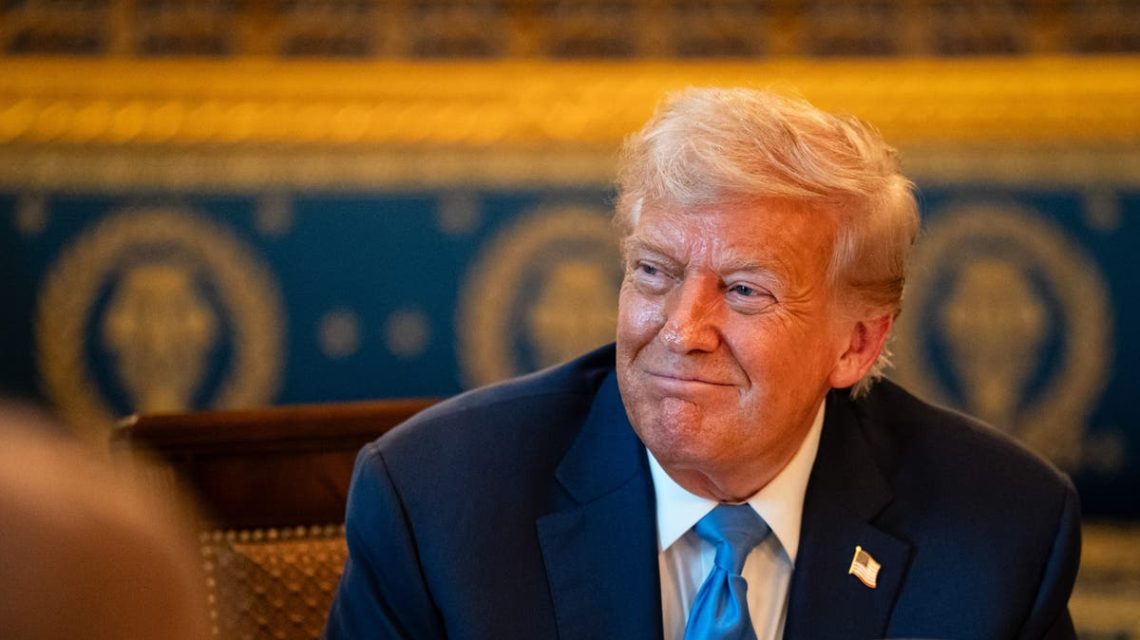
Former President Donald Trump recently expressed disappointment with the Norwegian Nobel Committee for not awarding him the 2026 Nobel Peace Prize. He highlighted multiple achievements he believes warranted recognition, including settling eight wars and progressing towards ending or resolving two others. Trump also noted his role in securing the release of Israeli hostages and other hostages globally, winning a conflict in Venezuela, and preventing the Islamic Republic of Iran from obtaining nuclear weapons.
In his Truth Social post, Trump expressed surprise at not receiving the prize despite what he described as significant accomplishments in promoting peace worldwide: I settled 8 WARS, am close to ending or settling 2 more, got all of the Israeli hostages back, including the final 28, both living and dead, had hundreds of hostages, from countries all over the World, released and sent back home, won a war in Venezuela, and captured the violent dictator who so viciously ran that country, and stopped the number one state sponsor of terror, the Islamic Republic of Iran, from obtaining a Nuclear Weapon – AND MUCH MORE! Yet, with all of that I, or the United States of America, did not get the Noble Peace Prize. WOW!
Trump first received a nomination for the Nobel Peace Prize in 2018, with Norwegian lawmakers recognizing his diplomatic efforts regarding North Korea and nuclear disarmament. In a 2019 press conference, Trump expressed his belief that he deserved the prize due to numerous diplomatic achievements.
The list of Trump’s nominations includes figures such as former Japanese Prime Minister Shinzo Abe and Israeli Prime Minister Benjamin Netanyahu. Despite multiple nominations, including one from Pakistani Prime Minister Shehbaz Sharif, Trump was once again overlooked, with the award going to South African jurist Navi Pillay.
Navi Pillay, at 85 years of age, previously held the position of the first non-White woman appointed to South Africa’s high court. She served as a judge at the International Criminal Tribunal for Rwanda and the International Criminal Court. She was also the United Nations High Commissioner for Human Rights from 2008 to 2014, though her nomination stirred controversy.
Skepticism arose due to her involvement as chair of the U.N.’s Independent International Commission of Inquiry on the Palestinian Territory and Israel, with critics suggesting her approach was anti-Israel.
Anne Bayefsky, president of Human Rights Voices and director of the Touro Institute on Human Rights, expressed criticism of Pillay, labeling her as a prominent figure in international criticism against Israel. Bayefsky stated, Navi Pillay is indeed a world leader, an individual at the forefront of the international spread of the poisonous forms of antisemitism that beset the 21st century.
Despite controversy, U.N. Secretary-General Antonio Guterres commended Pillay’s career and contributions to international law and human rights. He remarked Friday, For decades, she has been a champion of international law and human rights and a steadfast, independent voice of justice amidst some of the most historic international legal cases of our time.
 Pope Leo XIV Criticizes Death Penalty and Pentagon’s Execution Plans
  Trump Calls for Zelensky’s Replacement Amid Escalating Tensions
  Riyadh Airport Missile Strike Prompts Evacuations and Disrupts Flights
  Supporting the Clean Slate Initiative
  Judicial Watch Criticizes FBI for Delayed Document Release in Trump Assassination Attempt
  Hurricane Isaias: Widespread Impact on the Southeast