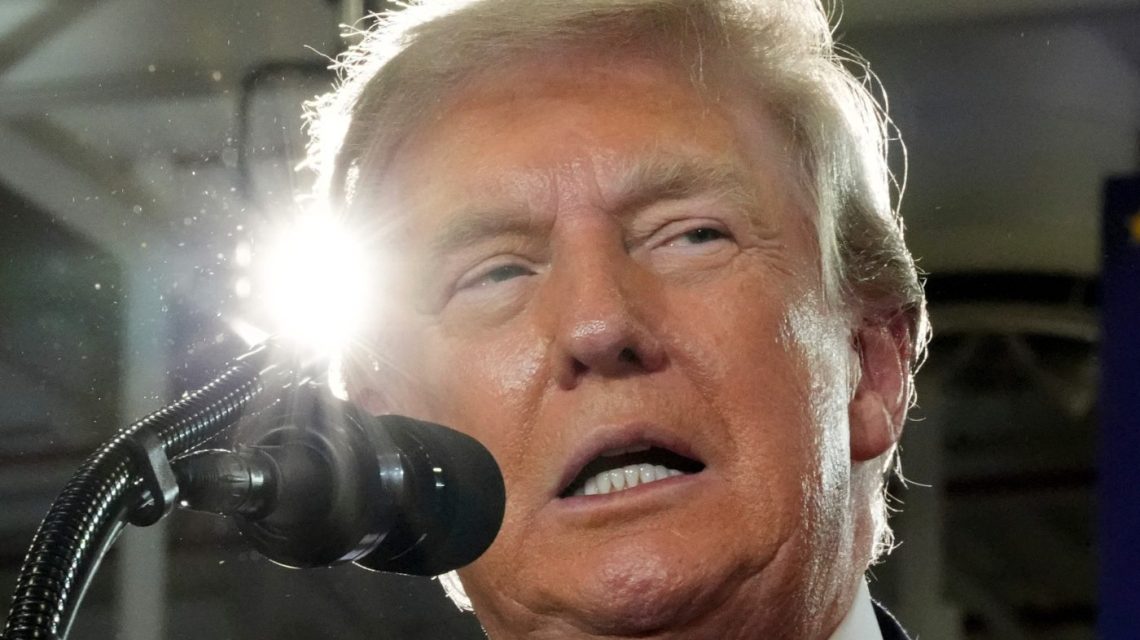
President Donald Trump delivered a campaign speech at General Motors Proving Ground in Milford, Michigan, on July 27, 2026. During his address, he claimed credit for revitalizing Detroit’s auto industry, attributing the success to Republican efforts in Washington. Yet, this claim comes amidst a harsh reality for the auto industry, severely impacted by tariffs.
Since 2025, tariffs have resulted in over 60,000 job losses in the auto industry suppliers sector, in addition to 3,300 layoffs at General Motors last year. Ford executives approached the White House in April to plea for relief from tariffs that deeply affected sales of the F-150 truck, a staple in American automotive history for nearly fifty years. In a related downturn, Stellantis reported a $26.3 billion loss, its first since 2021, following Trump’s withdrawal of electric vehicle tax credits.
Trump’s assertion of success was met with skepticism by many in Detroit, who have felt the adverse effects of his policies. Despite his claims of having benefited workers, his administration has seen a 3.5% drop in auto parts manufacturing jobs over the past year. Trump remarked about the tariffs increasing prosperity, contrary to the lived experiences of industry workers.
Legal challenges compounded the pressure surrounding Trump’s tariffs. The Supreme Court declared these tariffs illegal, pointing to the harm they inflicted on a burgeoning auto industry. Trump’s unwavering focus on his tariff strategy, despite these setbacks, remains a point of contention. Public sentiment echoes this; disapproval of Trump’s tariffs has steadily increased, with nearly 60% against them. Particularly among Republicans, Trump’s insistence on promoting tariffs presents a significant political challenge, as it alienates voters who have experienced raised consumer costs. A survey by Navigator Research in August 2024 showed growing voter dissatisfaction, and by today, a majority strongly disapprove.
Marc Short, a Republican strategist and former chief of staff to Vice President Mike Pence, voiced concern about the political implications. The tariffs not only threaten the economic landscape but trouble the GOP’s electoral standing in swing districts. A Navigator survey indicated 52% of non-MAGA Republicans and independents disapproved of the tariffs, resonating strongly with Democratic narratives on affordability.
Despite historical norms of sidestepping unpopular policies, Trump’s choice to highlight tariffs in Detroit underscores a disconnect with affected workers. His strategy poses risks for the administration and party at large. Analysts argue that Democrats might leverage this miscalculation to their advantage in upcoming elections, emphasizing the hardships tariffs brought onto consumers.
The pressing need for change offers Democrats a pathway to challenge these policies in November elections. Voter engagement on this issue highlights the chance for a broader dialogue on tariffs’ damaging effects on everyday Americans. As strategies unfold, both parties brace for an intensifying debate over trade policies and economic resilience.
 The Trump Team’s Challenge to the Military Leadership
  Maryland First State to Restrict Electronic Pricing in Grocery Stores
  Activists Push for Nationwide Ban on Child Marriage in the U.S.
  Democratic Hopes and Historical Warnings in 2026 Senate Race
  Republicans Face Challenges Amidst Cost of Living Concerns
  A Different Kind of Fall for Congress This Year