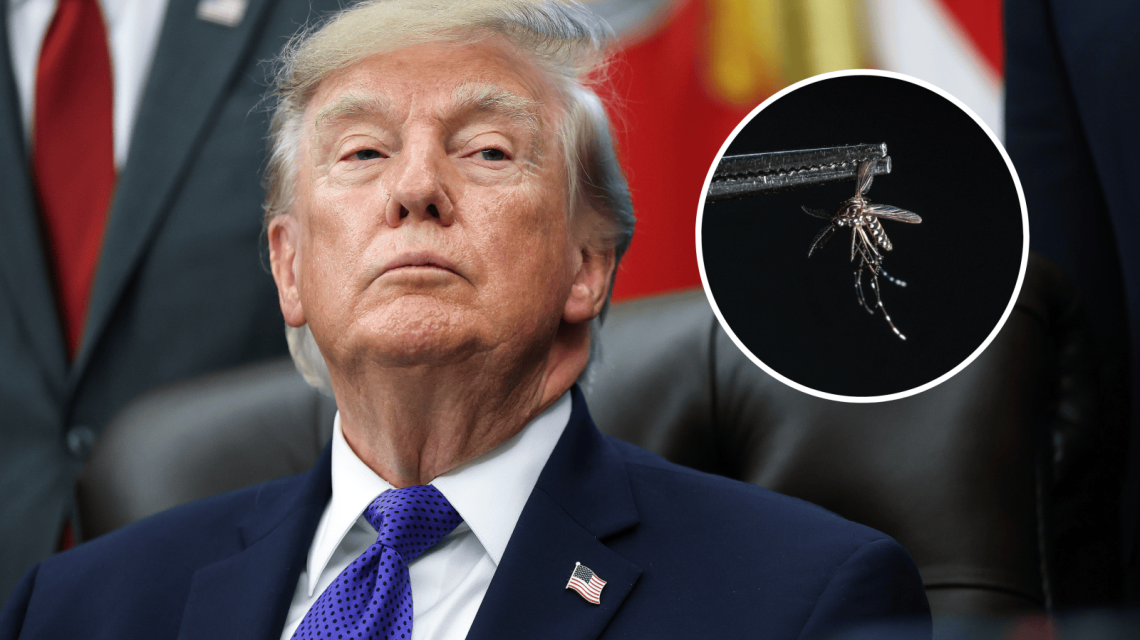
President Trump’s Declaration Against Mosquitoes
President Donald Trump signed an executive order targeting mosquitoes in Washington, D.C. The decision seeks to drastically cut the mosquito population as dengue fever affects Florida.
Details of the Executive Order
The order mandates a coordinated campaign led by Secretary of the Interior Doug Burgum and Agriculture Secretary Brooke Rollins. The goal is to decrease invasive mosquito species by 90% within 60 days. A secondary objective is reducing the tick population by 50% over two years.
The campaign should address breeding grounds on lands under Federal jurisdiction throughout D.C., utilizing practical and technical strategies.
Federal agencies will explore commercial options and cooperative agreements to achieve these objectives.
Research and Innovation
Trump’s order instructs federal bodies to create a regulatory framework for mosquito and tick-control technologies, focusing on non-chemical methods. These approaches are considered safe and effective.
Research into mosquito- and tick-borne diseases will expand. Initiatives may include prize competitions, federal research programs, and public-private partnerships to drive innovation.
Tackling Vector-Borne Diseases
Health and science agencies have been directed to enhance efforts against Lyme disease and other vector-borne illnesses. New technologies to decrease pest populations carrying diseases will be explored.
The order also emphasizes addressing alpha-gal syndrome, a serious red-meat allergy linked to tick bites. Agencies will investigate labeling for products with alpha-galactose.
National and Local Impact
The initiative aims to ensure Americans can enjoy the nation’s capital free from invasive pests. The president’s actions are part of the Make America Healthy Again agenda and beautification efforts in D.C.
Florida’s Dengue Fever Situation
Dengue fever cases are rising in Florida, prompting emergency declarations in three counties. The Florida Department of Health reports 190 locally acquired cases, with Hillsborough County seeing 170 cases. Heavy rainfall is a potential contributor to this surge.
Dengue fever, a viral infection spread by Aedes mosquitoes, poses a growing global health threat.
The Centers for Disease Control and Prevention notes most dengue cases occur in travelers, with potential for local transmission. The disease primarily affects tropical and subtropical regions worldwide.
 Texas Man Arrested for Threatening State Capitol Attack
  Xavier Becerra and Steve Hilton Debate on California’s Future
  The Key Debate Between Xavier Becerra and Steve Hilton: What You Need to Know
  Wisconsin Gubernatorial Race: Tiffany vs. Crowley in a Tight Contest
  California Gubernatorial Debate: Becerra vs Hilton
  Gavin Newsom Seeks Inspiration from Bill Clinton for Potential Presidential Run