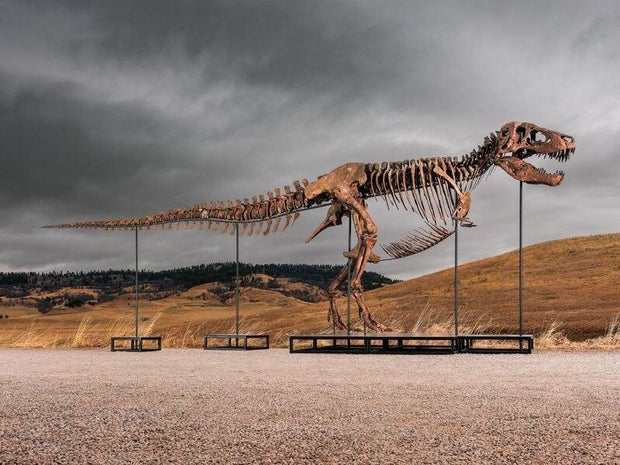
A Tyrannosaurus rex skeleton named Gus set a new record, fetching $50.1 million at a New York auction. This sale represents the highest price ever paid for a dinosaur fossil, according to Sotheby’s.
Gus stands 12.5 feet tall and stretches 38 feet in length. The skeleton comprises 183 bones, plus numerous rare rib specimens, making it one of the largest and most complete T. rex skeletons discovered, Sotheby’s explained.
This fully mounted structure was ready for display at the time of sale. The previous record for a dinosaur skeleton at auction belonged to a stegosaurus dubbed Apex, which sold for nearly $45 million two years ago, beating its $4 to $6 million estimate.
Sotheby’s expected Gus to garner between $20 and $30 million, but within ten minutes of bidding, the T. rex became the most valuable dinosaur ever auctioned. Only seven bidders participated in the event.
Cassandra Hatton, Sotheby’s vice chair, highlighted the years of work to reach this result. She credited Thomas Heitkamp and his team, who excavated the bones in Harding County, South Dakota. The dinosaur’s name honors Gary “Gus” Licking, the late landowner where the fossils were discovered.
Dating back to the late Cretaceous period around 67 million years ago, the T. rex emerged from South Dakota’s Hell Creek Formation, a globally recognized site for dinosaur fossils.
Sotheby’s pointed out that finding a specimen like Gus is extremely rare. Only 32 T. rex skeletons have been uncovered since 1902, when the first was found in southeastern Montana. Before Gus, only two skeletons exceeded 60% completeness. The first, Sue, is housed at the Chicago Field Museum. The second, Stan, resides at the Natural History Museum in Abu Dhabi. Gus is 61% complete, with an exceptionally preserved skull.
Dana Licking, the wife of Gary Licking, expressed the significance of Gus’s discovery, acknowledging the history within their shared land. She noted the anticipation of others enjoying this impressive find.
 Climate-Resistant Rock Glaciers: Hidden Water Resources
  California Voters to Decide on $7.5 Billion State Research Fund
 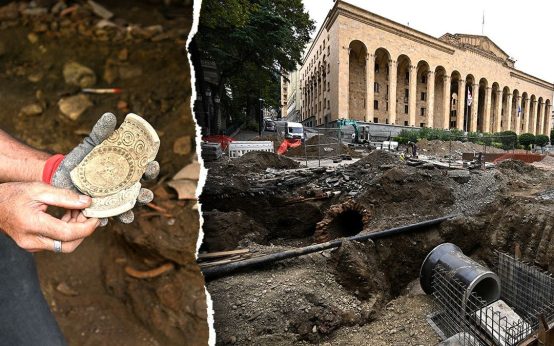 Ancient Pottery Unearthed During Roadworks in Tbilisi
  U.S. Space Academy Announcement
  The Need for New Strategies in Oregon’s Wildfire Management
 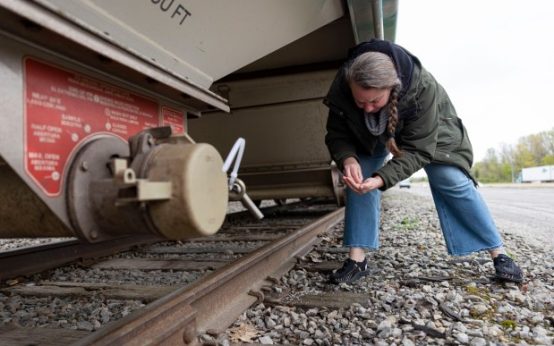 Plastic Pollution in the Great Lakes: A Growing Concern